
Umang Gajjar
Celebrating Diwali Traditions
Diwali is a Hindu festival that occurs every year in autumn during the month of Kartik - which to us Westerners corresponds to mid-October to mid-November.
The exact dates of Diwali change every year, as it takes place on the darkest day of the lunar month, the day of the new moon.
This year, Diwali starts on Thursday, November 4, and lasts for five days, with celebrations peaking on the third day.
Known as the ‘festival of lights,’ Diwali – also called Divali or Deepavali – celebrates the triumph of light over dark and good over evil. The name comes from the Sanskrit word ‘dipavali’, which means row of lights. Many traditions are observed over Diwali, which is celebrated throughout India, Singapore, Nepal, Malaysia, and Sri Lanka to name a few, as well as in other places in the world where there are large Hindu, Sikh, and Jains communities.

Subir Basak
Numerous traditions revolve around family and the lighting of candles and lanterns – which signify bringing light into the world and warding off evil spirits.
Here are just a few of them…

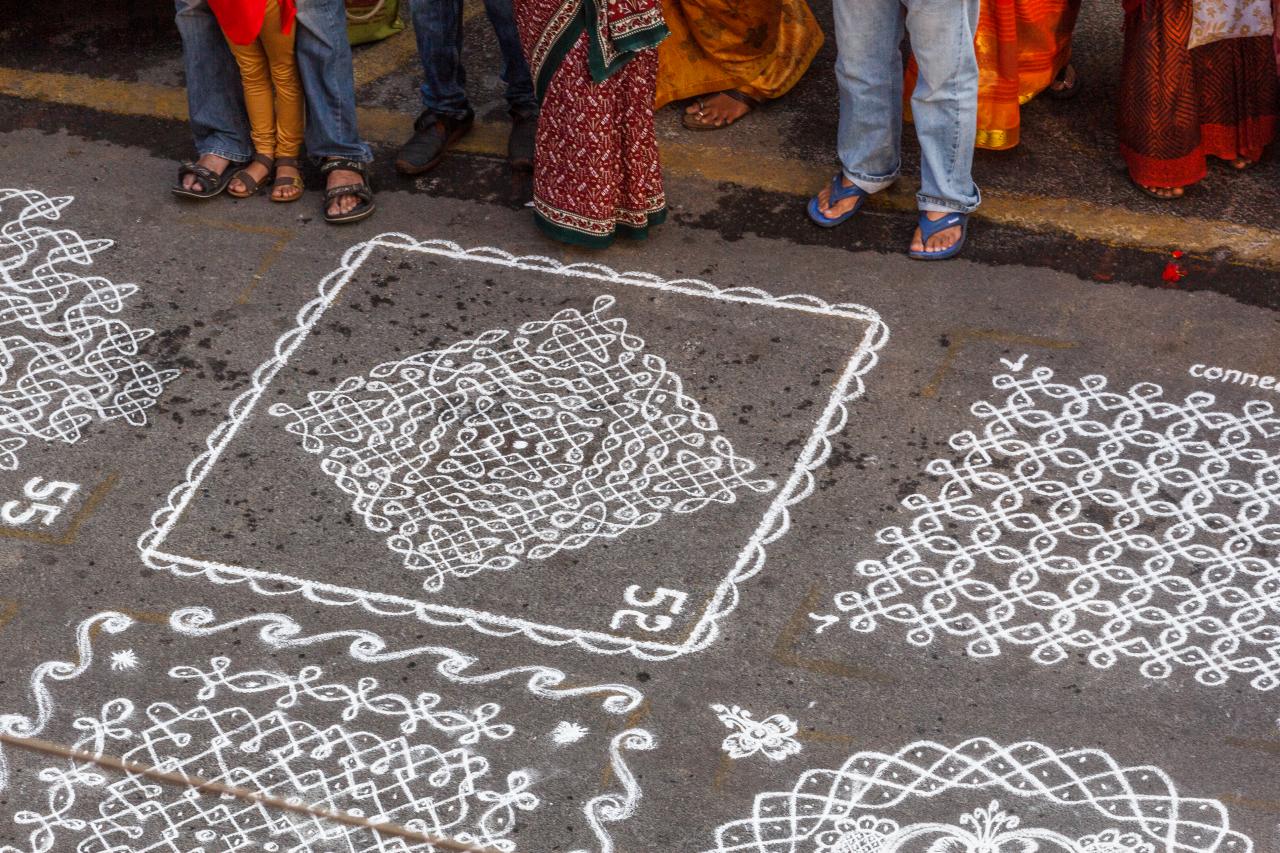
Karthikeyan Gnanaprakasam / EyeEm
Chennai, India
Rangoli
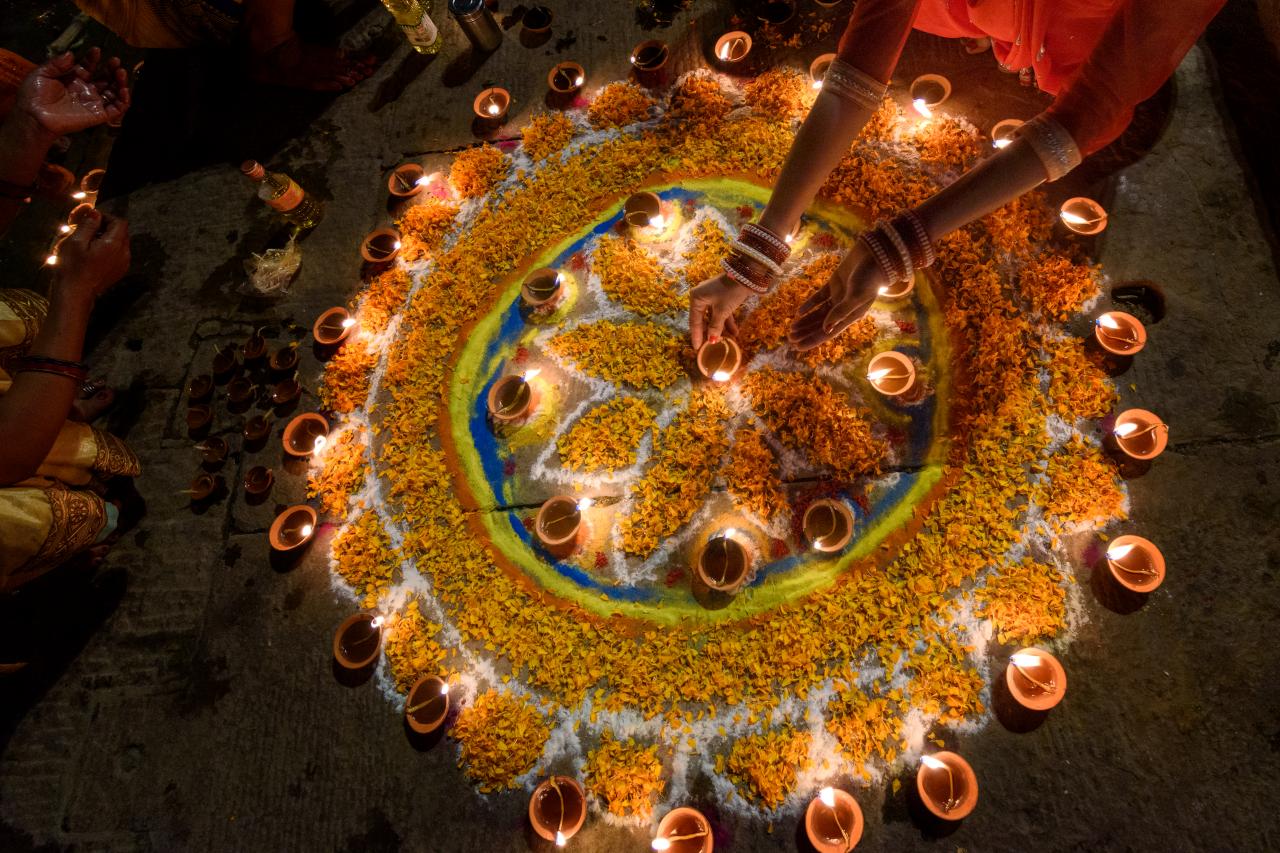
On the first day of Diwali in India, families clean their homes and create intricate patterns on the floor of their houses or on tabletops, using rice, sand, powdered limestone, colored rocks, or flowers. It’s a time-consuming practice and represents the happiness, positivity, and liveliness of a household. Hindus also use it to welcome Lakshmi, the goddess of wealth and good luck. It’s derived from the Sanskrit word ‘rangavalli’ which means color.

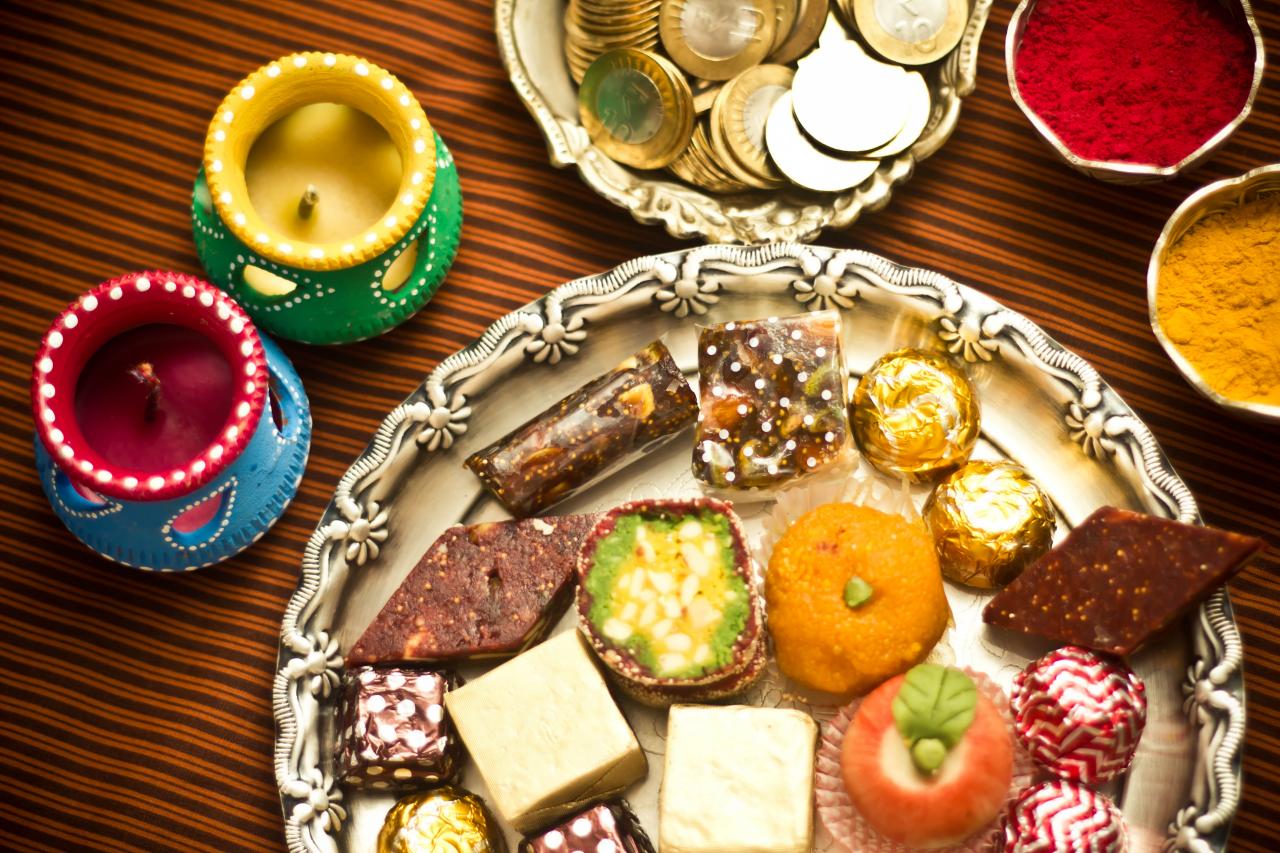
© Manogna Reddy
Diwali festive preparations with a plate of sweets– diyas, money, kumkum, and haldi.
Sweets
On the second day of Diwali, the focus is on preparing or buying food specially for the occasion, particularly a type of sweet called mithai. Many people visit their family and friends and take sweets with them as gifts. They’re considered ‘sweet meats’ and often use nuts or vegetables as a base, condensed down with sugar and sometimes milk. They’re served alongside a cup of masala chai tea as a snack, or as part of a meal. Some of the more common mathai include halwa, the name for a number of desserts made with anything from carrots - gajar ka halwa – and semolina – sooji ka halwa. They have a chewy texture and are most often made with ghee, water, sugar, spices, and occasionally milk. Laddoo is another sweet, fashioned into a spherical shape and is a tiny deep-fried ball of gram flour that is rolled in seeds, nuts, and spices, and then soaked in a sweet syrup. Gulab Jamun is another favorite, made from khoya – milk solids heated and thickened until they reach a soft, dough-like consistency – and then slowly deep-fried in ghee or oil, and finally soaked in a rose, cardamom, or saffron syrup. Delicious!

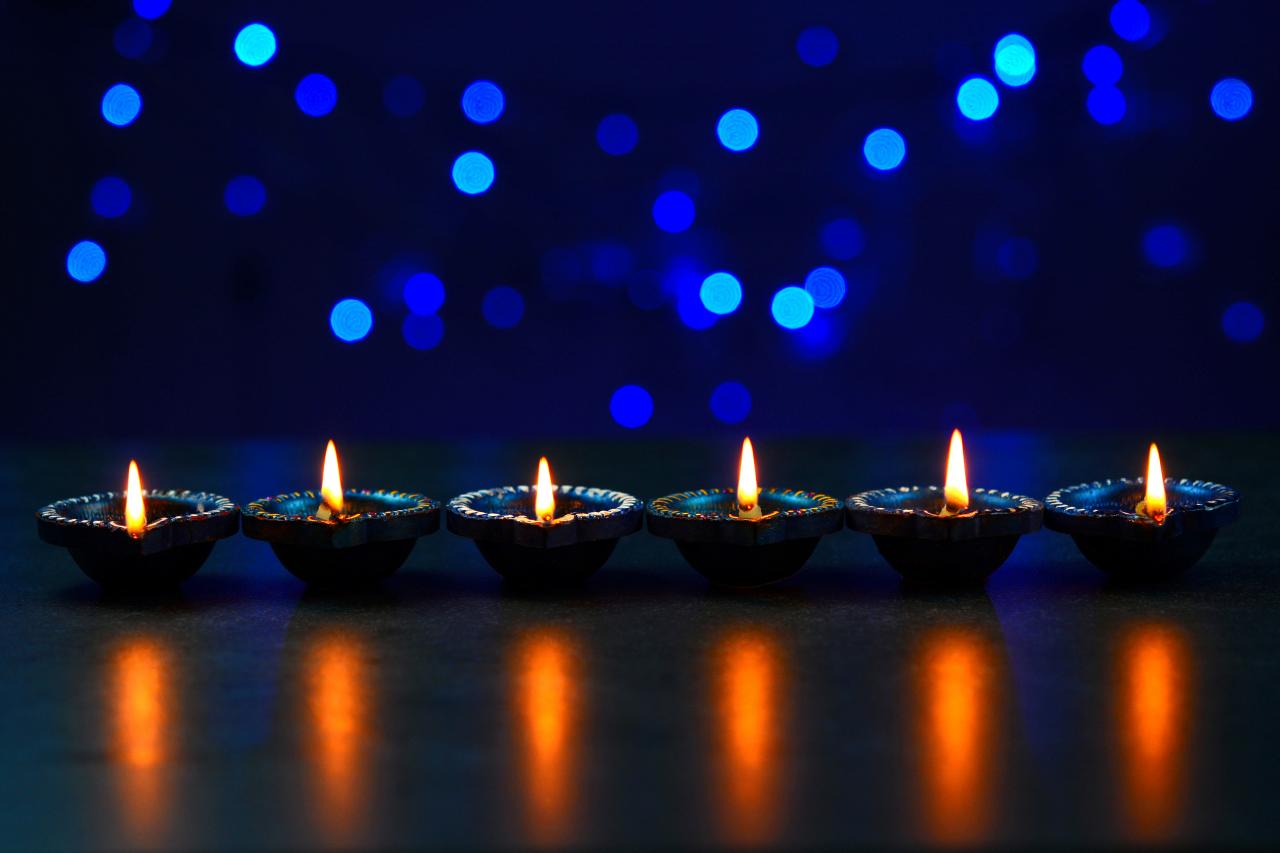
jayk7
Decorated Diwali lights with a colorful Diya oil lamp.
Lights
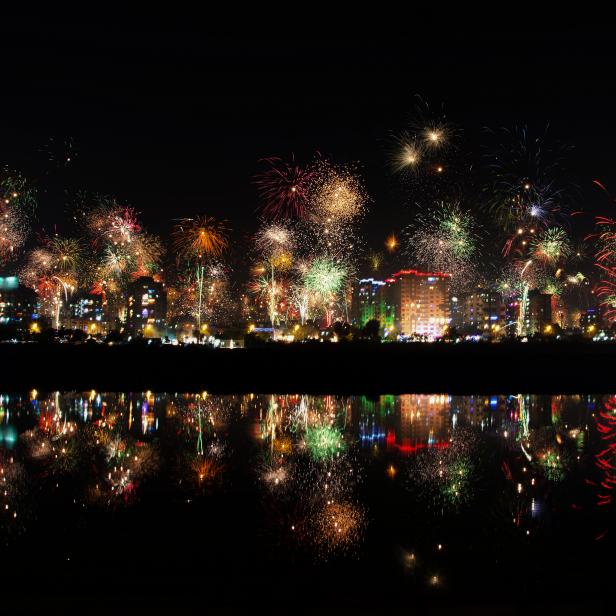
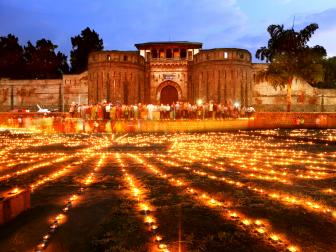
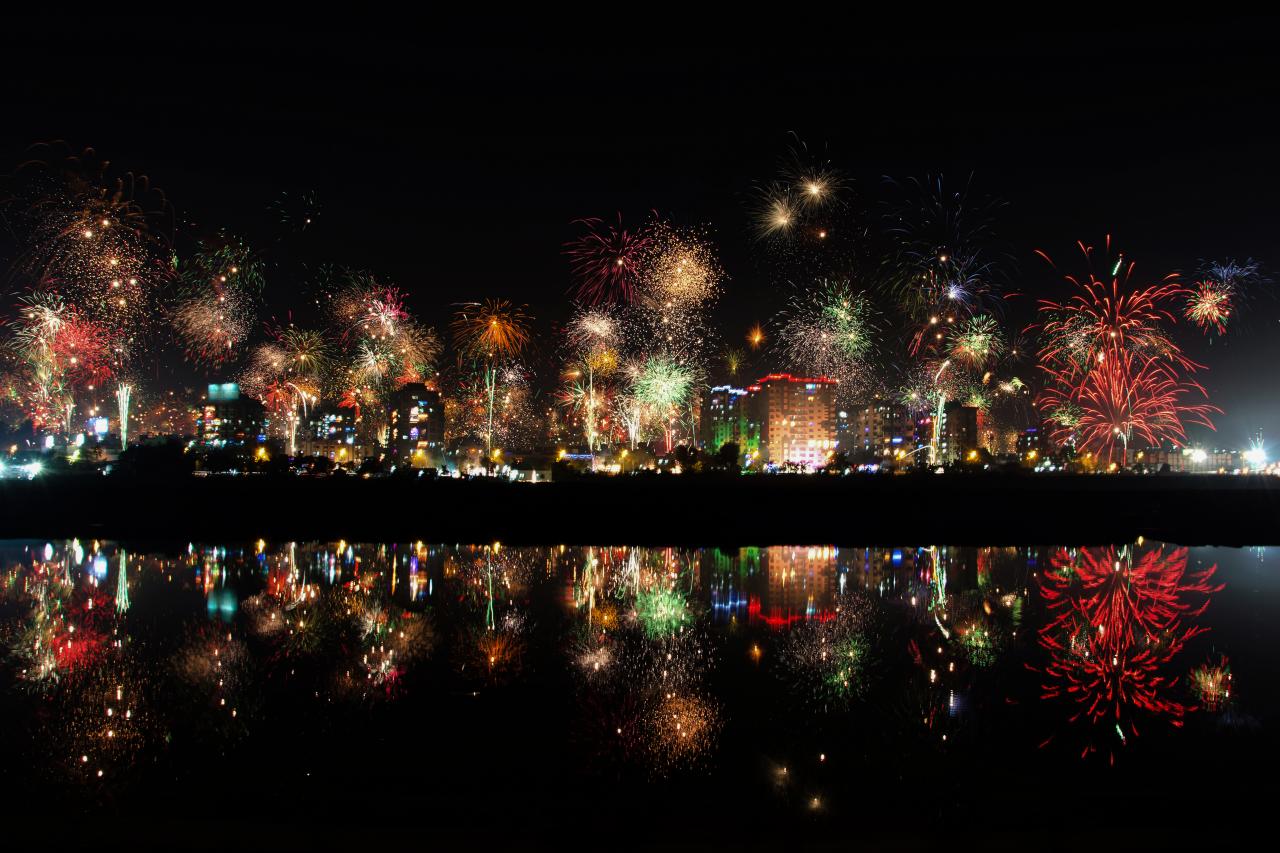
Lights, of course, are the main event. On the third day (or the second day if you’re in southern India), families gather and celebrate by lighting lanterns and candles in their homes at the entrances and out on the streets. Fireworks are set off, sparklers lit, and Diyas, which is an oil lamp made from clay with a cotton wick dipped in ghee or vegetable oil, is used. A Diya will be lit every morning and every evening, and while lighting a Diya, some chant a prayer, the Shubham Karoti Kalyanam, which acknowledges the lamp brings auspiciousness, prosperity, good health, and abundance of money and wealth, as well as asking the light to absolve sins.
The Most Beautiful Places in India to Celebrate Diwali 6 Photos
This year, Diwali is November 14th. Diwali is a festival of new beginnings, the triumph of good over evil, and is celebrated all over India. Here are just some of the places that celebrate Diwali with extra flair.