



Curiosity Daily Podcast: Are There Really Wasps in Figs? Plus: People Like Round Numbers Even When They’re Bad
Learn about why people prefer round numbers over precise ones, thanks to a principle behavioral economists call attribute framing; and whether there really are wasps inside figs.
August 20, 2020
Episode Show Notes:
People prefer round numbers even when the precise number is better news by Kelsey Donk
- Consumers Prefer Round Numbers Even When the Specific Number Is Better News. (2016). Rpi.edu. https://news.rpi.edu/content/2020/07/06/consumers-prefer-round-numbers-even-when-specific-number-better-news
- Jain, G., Gaeth, G. J., Nayakankuppam, D., & Levin, I. P. (2020). Revisiting attribute framing: The impact of number roundedness on framing. Organizational Behavior and Human Decision Processes, 161, 109–119. https://doi.org/10.1016/j.obhdp.2020.04.006
Are there really wasps inside figs? by Cameron Duke
- Cook, J. M., & West, S. A. (2005). Figs and fig wasps. Current Biology, 15(24), R978–R980. https://doi.org/10.1016/j.cub.2005.11.057
- Futuyma, D. J., & Kirkpatrick, M. (2018). Evolution. Sinauer Associates.
- Herre, E. A. (1996). An Overview of Studies on a Community of Panamanian Figs. Journal of Biogeography, 23(4), 593–607. https://www.jstor.org/stable/2845802?seq=1
- Jordan, A. (2014, November 11). How mutualisms evolve in a world of selfish genes. Phys.Org; Phys.org. https://phys.org/news/2014-11-mutualisms-evolve-world-selfish-genes.html
- Vartan, S. (2016). Are There Really Dead Wasps in Your Figs? Treehugger. https://www.treehugger.com/are-there-really-wasps-your-figs-4868822
Subscribe to Curiosity Daily to learn something new every day with Cody Gough and Ashley Hamer. You can also listen to our podcast as part of your Alexa Flash Briefing; Amazon smart speakers users, click/tap “enable” here: https://www.amazon.com/Curiosity-com-Curiosity-Daily-from/dp/B07CP17DJY
Next Up

Scientists Watch as Stars Quake
The European Space Agency’s Gaia spacecraft has managed to watch stars tremble, their light subtly changing as starquakes ripple through their surfaces. Which is pretty cool, because Gaia wasn’t even designed to do it.

Top Five Rarest Bottom Dwellers
National Insect week occurs between June 20 -26. The week focuses on the importance of insects within ecosystems, nature, and wildlife. Insects do have a bad reputation, as some are a nuisance, and some are scary, but each plays a key role in maintaining order in nature. In celebration of the hard-working insects that you may see in your backyard, here’s a list of the ones you won’t be seeing. The rarest insects on the planet.
An Astronomical Review of “Don’t Look Up”
In our annual New Year’s family tradition of struggling to stay awake until midnight, we decided to watch “Don’t Look Up,” the Adam McKay satire starring Leonardo DiCaprio, Jennifer Lawrence, and other fabulously good-looking people.
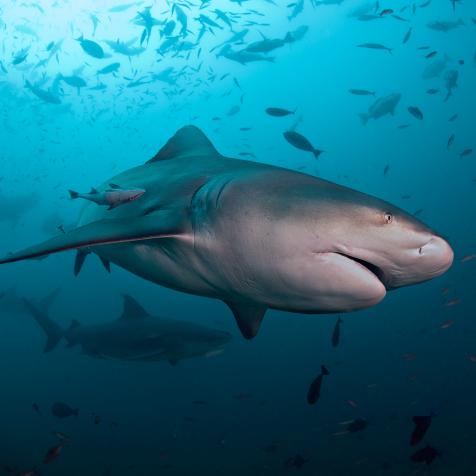
Shark Week: The Podcast - What is the Status of Sharks in our Oceans?
In this season’s final episode, Luke welcomes Emmy-winning filmmaker and conservationist Shawn Heinrichs to discuss the state of sharks in the ocean. They go over how both legal and illegal fishing operations are decimating the ocean’s wildlife, what it’s like to have a hit put out on you for exposing criminal enterprises to the world, and whether or not NOAA’s data on “sustainable” fishing can really be trusted.

Shark Week: The Podcast - Do Scientists Need to Kill Sharks?
Host Luke Tipple welcomes two guests to discuss how researchers can kill sharks in the name of science – and whether they need to at all. The first is Dr. Neil Hammerschlag, shark researcher and founder of Atlantic Shark Expeditions, and an expert on data-gathering in the field. He’s followed by explorer Fred Buyle, a world-record-breaking freediver whose innovative methods of shark tagging are explored. Plus, our researcher Sierra tells us about how a 50-year study changed our understanding of tiger sharks – and much of the work wasn’t even done by scientists.

Shark Week: The Podcast - How Smart Are Sharks?
The discussion turns this week to sharks’ intelligence, and how it varies among species. Host Luke Tipple is joined by Dr. Tristan Guttridge, a behavioral ecologist and veteran of Shark Week whose research has tackled the social smarts, and even personalities, of different kinds of sharks. He sheds light on why we shouldn’t just think of them as dumb fish with rows of razor-sharp teeth. And at the end, our researcher Sierra Kehoe tells us about shark hypnosis.
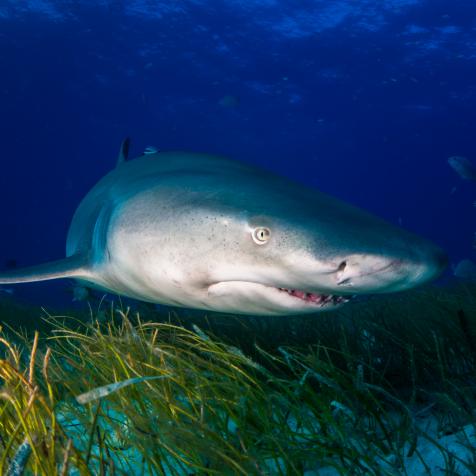
Shark Week: The Podcast - Do You Have the Guts to Be a Shark Handler?
Host Luke Tipple welcomes a pair of divers – Leigh Cobb and Josh Eccles – who have taken their passion for sharks and turned it into a dangerous career. They explore what it takes to swim with sharks for a living, then go into common myths and facts on what to do in the open water – if you ever come face to face with a shark. Plus, our researcher Sierra drops by with a new species of shark discovered in the freezing depths of the ocean.
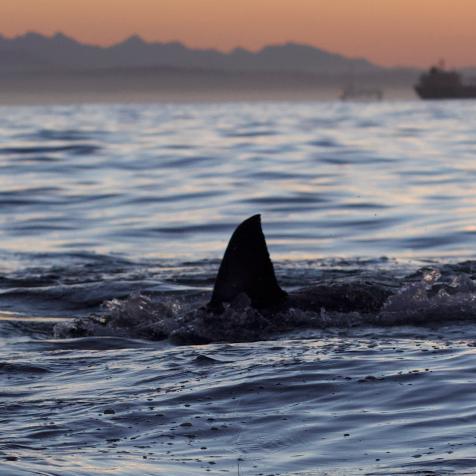
Shipwrecked & Surrounded by Sharks
This week, we do things a little differently, as Shark Week’s Luke Tipple invites Adventure Aaron into the podcast studio to talk about his incredible near-death experience on the open water. Adventure Aaron gets into what it takes to circumnavigate the world in an ocean rowboat, what it’s like to stare eye-to-eye with an oceanic white tip that probably wants you for lunch, and everything else that happened to him when his boat was capsized, and he was lost by himself at sea.
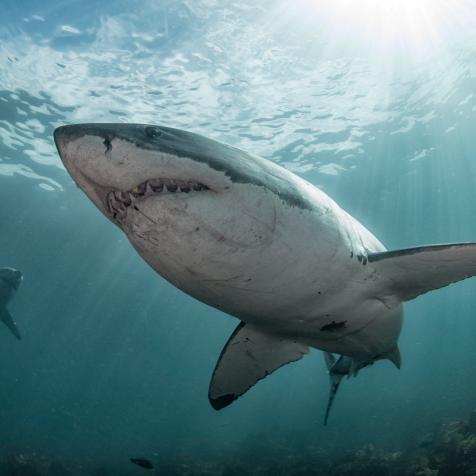
Shark Week: The Podcast - How To Have A Career in Shark Science
Shark Week’s Luke Tipple tackles the question “How can I work with sharks?” alongside two experts in the field – and their answers are not always the obvious ones. Luke is joined first by Kelly Link, Associate Curator of the Georgia Aquarium who talks about what it’s like to be an aquarist, how it differs from field work, and how to get yourself noticed. The second guest is Dr. Neil Hammerschlag who goes into detail on what it takes to become a prominent scientist, and what other paths you can take if a PhD isn’t for you. And at the end, researcher Sierra stops by to tell us about the world’s smallest shark.


Curiosity Daily Podcast: Nobel Prize Winner Richard Thaler on How Nudge Changed the World — Plus, Squirrel-Inspired Robots
Nobel Prize-winning economist Richard Thaler explains how “Nudge” has changed the world. Plus: squirrel-inspired robots!