Curiosity Daily Podcast: Microwaveable Metals, Athlete Nature vs. Nurture, The House On The Rock, and Supernova-Skipping Stars

Learn about what we discovered when astronomers watched a star turn directly into a black hole; new science into how much your genes determine your athleticism; why some materials shouldn’t go in the microwave; and one of the strangest places in the country: the House on the Rock.

September 30, 2018

Episode Show Notes:

In this podcast, Cody Gough and Ashley Hamer discuss the following stories from Curiosity.com to help you get smarter and learn something new in just a few minutes:

Additional resources discussed:

Please tell us about yourself and help us improve the show by taking our listener survey! https://www.surveymonkey.com/r/curiosity-listener-survey

If you love our show and you're interested in hearing full-length interviews, then please consider supporting us on Patreon. You'll get exclusive episodes and access to our archives as soon as you become a Patron!

Learn about these topics and more on Curiosity.com, and download our 5-star app for Android and iOS. Then, join the conversation on Facebook, Twitter, and Instagram. Plus: Amazon smart speaker users, enable our Alexa Flash Briefing to learn something new in just a few minutes every day!

See omnystudio.com/listener for privacy information.

Next Up

Scientists Watch as Stars Quake

The European Space Agency’s Gaia spacecraft has managed to watch stars tremble, their light subtly changing as starquakes ripple through their surfaces. Which is pretty cool, because Gaia wasn’t even designed to do it.

Top Five Rarest Bottom Dwellers

National Insect week occurs between June 20 -26. The week focuses on the importance of insects within ecosystems, nature, and wildlife. Insects do have a bad reputation, as some are a nuisance, and some are scary, but each plays a key role in maintaining order in nature. In celebration of the hard-working insects that you may see in your backyard, here’s a list of the ones you won’t be seeing. The rarest insects on the planet.

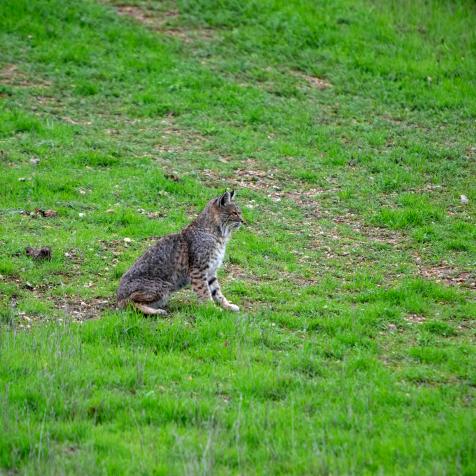
Bobcat on the Hunt

Nature photographer Ian Shive gets a rare close-up of a bobcat hunting ground squirrels in California's Central Coast.

Shark Week: The Podcast - What is the Status of Sharks in our Oceans?

In this season’s final episode, Luke welcomes Emmy-winning filmmaker and conservationist Shawn Heinrichs to discuss the state of sharks in the ocean. They go over how both legal and illegal fishing operations are decimating the ocean’s wildlife, what it’s like to have a hit put out on you for exposing criminal enterprises to the world, and whether or not NOAA’s data on “sustainable” fishing can really be trusted.

Shark Week: The Podcast - Why is Tagging Baby Great White Sharks So Important?

Luke Tipple speaks with Dr. Riley Elliott, a marine biologist from New Zealand who recently tagged baby great white sharks, which are rarely seen in the wild. They talk about how climate change is affecting shark pupping grounds, why fishers are wrong to think there are “too many sharks,” and about Dr. Elliott’s Great White App, which allows users to track great white sharks in the ocean.

Shark Week: The Podcast - Did Alien Tech Crash-Land into the Ocean?

Host Luke Tipple is joined this week by renowned Harvard professor, Dr. Avi Loeb, who recently led a deep-sea expedition to discover if evidence for advanced alien life crash-landed off the coast of Papua New Guinea in 2014. They discuss the recent Congressional UFO hearings, how the last seventy years of research into extraterrestrial life has been potentially misguided, and the challenges of searching for tiny objects on the bottom of the ocean.

Shark Week: The Podcast - Undiscovered Sharks and the State of the Ocean

Luke Tipple invites “The Lost Shark Guy,” Dr. Dave Ebert, who is personally responsible for finding dozens of shark species that were either previously unknown to science or thought to be extinct. He and Luke discuss why shark populations are a direct indicator of how healthy the ocean is, how to find undiscovered sharks, and why diversity in sharks is essential for marine life.

Shipwrecked & Surrounded by Sharks

This week, we do things a little differently, as Shark Week’s Luke Tipple invites Adventure Aaron into the podcast studio to talk about his incredible near-death experience on the open water. Adventure Aaron gets into what it takes to circumnavigate the world in an ocean rowboat, what it’s like to stare eye-to-eye with an oceanic white tip that probably wants you for lunch, and everything else that happened to him when his boat was capsized, and he was lost by himself at sea.

Shark Week: The Podcast - How To Have A Career in Shark Science

Shark Week’s Luke Tipple tackles the question “How can I work with sharks?” alongside two experts in the field – and their answers are not always the obvious ones. Luke is joined first by Kelly Link, Associate Curator of the Georgia Aquarium who talks about what it’s like to be an aquarist, how it differs from field work, and how to get yourself noticed. The second guest is Dr. Neil Hammerschlag who goes into detail on what it takes to become a prominent scientist, and what other paths you can take if a PhD isn’t for you. And at the end, researcher Sierra stops by to tell us about the world’s smallest shark.

Shark Week: The Podcast - Superstar Kesha Lifts the Gag Order on Saving Sharks

Pop superstar Kesha joins Shark Week’s Luke Tipple on the podcast to discuss her love of sharks, how her music funds her addiction to diving, and how you can find inner peace while under the water. And at the end, our researcher Sierra drops in to tell us that some sharks have teeth in their eyes.

Related To: