


Curiosity Daily Podcast: Why Cuttlefish Wore 3-D Glasses for Science
Learn about why your next relationship will probably be like your last one; what scientists learned by studying the oldest material on Earth; and what researchers learned when they had cuttlefish wear 3-D glasses.
December 28, 2020
Episode Show Notes:
Why Your Next Relationship Will Probably Be Like Your Last by Kelsey Donk
- Changing partners doesn’t change relationship dynamics, study shows. (2019). EurekAlert! https://www.eurekalert.org/pub_releases/2019-08/uoa-cpd082719.php
- Johnson, M. D., & Neyer, F. J. (2019). (Eventual) stability and change across partnerships. Journal of Family Psychology, 33(6), 711–721. https://doi.org/10.1037/fam0000523
Scientist Discovered the Oldest Material on Earth by Grant Currin
- WMAP- Life and Death of Stars. (2010). Nasa.Gov. https://map.gsfc.nasa.gov/universe/rel_stars.html
- Meteorite contains the oldest material on Earth: 7-billion-year-old stardust. (2020). EurekAlert! https://www.eurekalert.org/pub_releases/2020-01/fm-mct010820.php
- This ancient stardust is the oldest ever to be examined in a lab. (2020, January 13). Science News. https://www.sciencenews.org/article/ancient-meteorite-stardust-oldest-ever-examined-lab
- 7 billion-year-old stardust is the oldest stuff on Earth. (2020, January 13). The Washington Post. https://www.washingtonpost.com/science/2020/01/13/seven-billion-year-old-stardust-is-oldest-stuff-earth/
- Heck, P. R., Greer, J., Kööp, L., Trappitsch, R., Gyngard, F., Busemann, H., Maden, C., Ávila, J. N., Davis, A. M., & Wieler, R. (2020). Lifetimes of interstellar dust from cosmic ray exposure ages of presolar silicon carbide. Proceedings of the National Academy of Sciences, 117(4), 1884–1889. https://doi.org/10.1073/pnas.1904573117
Why Scientists Put Cuttlefish in 3-D Glasses by Grant Currin
- Yes, This Cuttlefish Is Wearing 3-D Glasses. (2020, January 8). The New York Times. https://www.nytimes.com/2020/01/08/science/3d-glasses-cuttlefish.html
- Cuttlefish use depth perception similar to vertebrate vision when hunting prey. (2020). EurekAlert! https://www.eurekalert.org/pub_releases/2020-01/aaft-cud010620.php
Subscribe to Curiosity Daily to learn something new every day with Cody Gough and Ashley Hamer. You can also listen to our podcast as part of your Alexa Flash Briefing; Amazon smart speakers users, click/tap “enable” here: https://curiosity.im/podcast-flash-briefing
See omnystudio.com/listener for privacy information.
Next Up
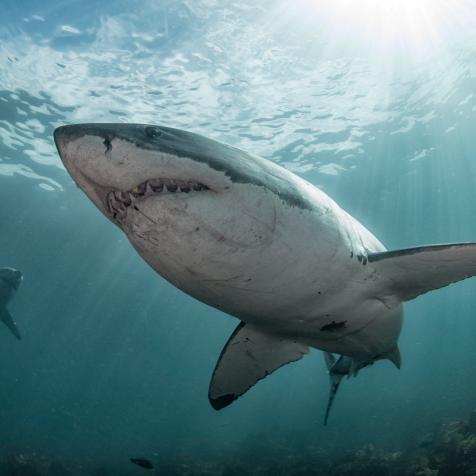
Shark Week: The Podcast - How To Have A Career in Shark Science
Shark Week’s Luke Tipple tackles the question “How can I work with sharks?” alongside two experts in the field – and their answers are not always the obvious ones. Luke is joined first by Kelly Link, Associate Curator of the Georgia Aquarium who talks about what it’s like to be an aquarist, how it differs from field work, and how to get yourself noticed. The second guest is Dr. Neil Hammerschlag who goes into detail on what it takes to become a prominent scientist, and what other paths you can take if a PhD isn’t for you. And at the end, researcher Sierra stops by to tell us about the world’s smallest shark.
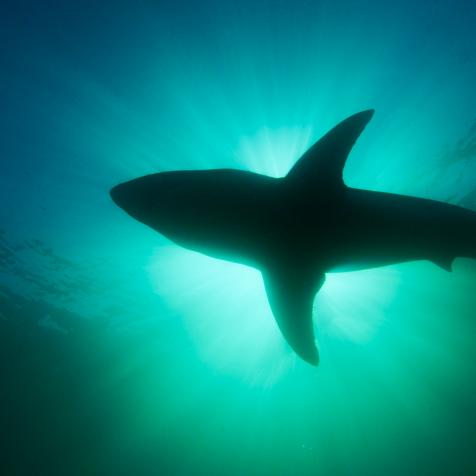
Shark Week: The Podcast - Undiscovered Sharks and the State of the Ocean
Luke Tipple invites “The Lost Shark Guy,” Dr. Dave Ebert, who is personally responsible for finding dozens of shark species that were either previously unknown to science or thought to be extinct. He and Luke discuss why shark populations are a direct indicator of how healthy the ocean is, how to find undiscovered sharks, and why diversity in sharks is essential for marine life.

Shark Week: The Podcast - Do Scientists Need to Kill Sharks?
Host Luke Tipple welcomes two guests to discuss how researchers can kill sharks in the name of science – and whether they need to at all. The first is Dr. Neil Hammerschlag, shark researcher and founder of Atlantic Shark Expeditions, and an expert on data-gathering in the field. He’s followed by explorer Fred Buyle, a world-record-breaking freediver whose innovative methods of shark tagging are explored. Plus, our researcher Sierra tells us about how a 50-year study changed our understanding of tiger sharks – and much of the work wasn’t even done by scientists.

An Astronomical Review of “Don’t Look Up”
In our annual New Year’s family tradition of struggling to stay awake until midnight, we decided to watch “Don’t Look Up,” the Adam McKay satire starring Leonardo DiCaprio, Jennifer Lawrence, and other fabulously good-looking people.

Scientists Watch as Stars Quake
The European Space Agency’s Gaia spacecraft has managed to watch stars tremble, their light subtly changing as starquakes ripple through their surfaces. Which is pretty cool, because Gaia wasn’t even designed to do it.
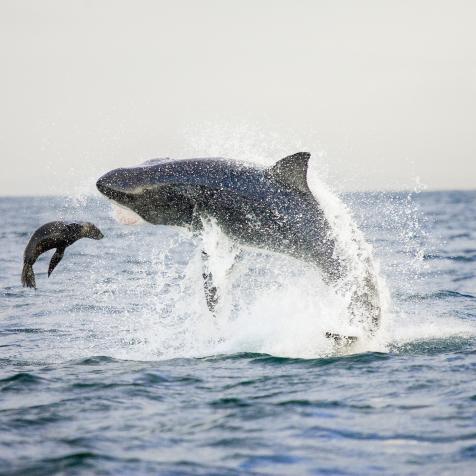
Shark Week: The Podcast – How Sharks Are Built to Hunt
Dive in with marine biologist and shark expert Luke Tipple as he shares amazing facts about sharks' super-hero senses and dispels common shark myths.

Curiosity Daily Podcast: Flirting Cats, Walking Sharks, Preventing Cerebral Palsy
We discuss a new app that can translate a cat’s meow into human languages, how the Epaulette shark is teaching us about climate change, and a potential treatment that might prevent cerebral palsy.
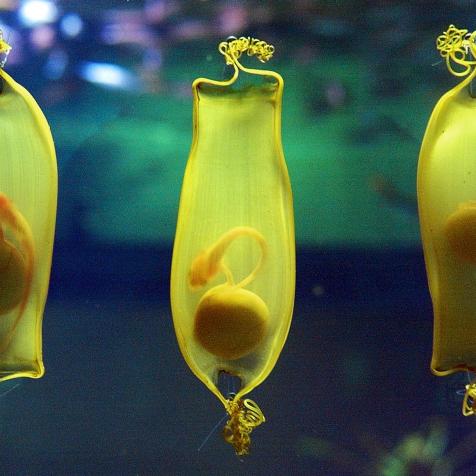
Shark Week: The Podcast – The Life and Life Cycle of Sharks
Dive in with marine biologist and shark expert Luke Tipple as he discusses the evolution and life cycle of a shark from mating and birthing.
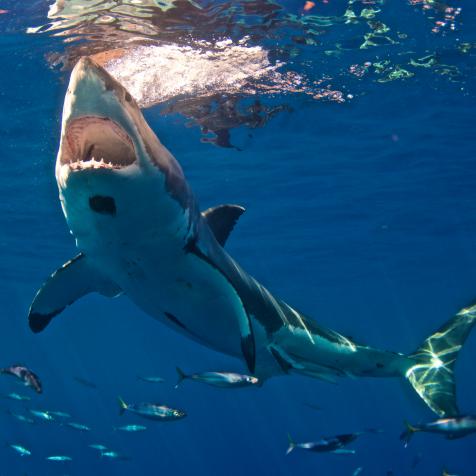
Shark Week: The Podcast – Shark Morphology - The Body of a Shark
Marine biologist and shark expert Luke Tipple recounts a shark interaction with a 20-foot Great White shark as he deep dives on shark anatomy.


Curiosity Daily Podcast:The Myth of Man Flu, Arctic Lakes, Buzzing Bats
Let’s talk about whether “man flu” is fact or fiction, how the Arctic lakes just threw a curveball at our climate change projections, and the genius new way bats are tricking their predators.