


All DNews Articles
Showing 61 - 75 of 605 results

This Little Star Made a Blast Bigger Than Our Sun Ever Could
Small stars can pack a surprisingly powerful punch. For an example look no further than the nearest neighbor to our solar system, Proxima Centauri. This little red dwarf just sent off a blast a hundred times more powerful than anything that our own sun ever has.

The James Webb Space Telescope Launches!
Finally! It was initially proposed way back in 1998 and named the James Webb Space Telescope in 2002. After a decade of delays and over 10 billion dollars past its original budget, NASA’s next great observatory finally launched from the European Space Agency’s Guiana Space Centre in South America.
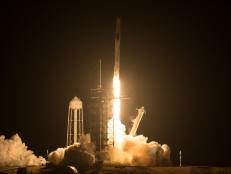
Liftoff of NASA and SpaceX Crew-2!
The NASA and SpaceX Crew-2 mission launched on Friday, April 23 at 5:49A ET from the NASA Launch Complex 39A. This historic milestone marks the second operational mission of SpaceX’s Crew Dragon. Onboard was NASA astronaut Shane Kimbrough, NASA astronaut Megan McArthur, ESA astronaut Thomas Pesquet, and JAXA astronaut Akihiko Hoshide. After a 23-hour journey, Crew-2 successfully docked with the International Space Station (ISS) on April 24 at 5:08A ET. Here's everything that happened from launch day to the Crew-2's arrival at the ISS. (Updated April 24, 2021)

It’s Time to Return to the Land of the Ice Giants
30 years--It’s been over 30 years since the Voyager 2’s historic flyby of Uranus and Neptune, the outermost and most mysterious planets in the solar system. It’s time to go back.
Inspiration4: Successful Liftoff and Splashdown for the First Civilian Mission to Space
SpaceX launched four private citizens to space on Wednesday, September 15, at 8:02PM ET. Following their three-day trip around the Earth, the SpaceX Crew Dragon capsule successfully splashed down off the coast of Florida Saturday evening. There were no professional astronauts aboard the Crew Dragon spacecraft. Let’s learn more about Inspiration4's journey. Updated Monday, September 20.

A Jupiter-Sized Exoplanet Orbiting Two Stars
One of my favorite things about exoplanet systems is just how weird they can get. It seems that every few months we are treated to another surprise. This time around, NASA's TESS observatory delivered a planet almost three times more massive than Jupiter orbiting around not one, but two stars. As an added bonus: that planet orbits its twin suns closer than the Earth does around the sun. Who wants to take a trip?

It's Time for a 2021 Space Flight Round-up
Space is a busy place, with a lot of things going up (most of the time) and coming down (when we want them to). Let’s check in on the latest orbital happenings.

Is Interstellar Travel Really Possible?
Listen folks, I love a good sci-fi movie as much as anyone. Cruising around the galaxy, finding weird stuff, and blowing up aliens--it’s all good. But just because a writer can come up with something, it doesn’t make it possible. I’m sorry to say that we’re going to be bound to our solar system for a really, really long time. As in, probably forever.

When and Where is the Chinese Rocket Falling Back to Earth?
What goes up, must come down. On April 28th, a Chinese Long March 5B rocket went up, successfully delivering its payload, a new section of the Tianhe space station, into orbit. But now the 21-ton rocket is coming down, uncontrolled.

Ingenuity Takes First Flight on Mars
In a historic first, Ingenuity successfully flew on the Red Planet. The Mars helicopter was in the air for about 40 seconds.

It’s Time to Say Goodbye to Arecibo
There aren’t a lot of telescopes that are also movie stars. In fact, I can think of only one: the famed Arecibo Observatory in Puerto Rico.

Going for Gold: The Biggest Explosion in the Universe
Meet the humble Ophiuchus galaxy cluster. It’s just another dense clump of galaxies, one of approximately a bajillion, dotting the universe. It sits about 240 million lightyears away from Earth.And its heart is missing.
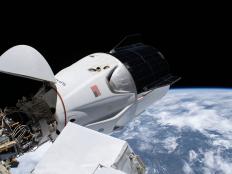
First US Commercial Crew Port Relocation to Air Live on NASA TV
On Monday, April 5, another first will occur for commercial space flight. For a look back at Crew-1's initial journey to the ISS, catch up on SPACE LAUNCH LIVE streaming now on discovery+.

Success! NASA and SpaceX Crew-1 Complete Early Morning Splashdown
(Updated: May 2, 2021) NASA astronauts Michael Hopkins, Victor Glover, Shannon Walker, and JAXA astronaut Soichi Noguchi completed a successful splashdown on Sunday, May 2, after a 165-day space research mission aboard the International Space Station. Here is what we know about their return to Earth.

The Head of NASA Believes in Aliens
“Are we alone? Personally, I don’t think we are,” Bill Nelson, former astronaut and Chief of NASA, said in a video interview.