


Curiosity Daily Podcast: Could Science Stop Aging? And the Milky Way’s “Broken Arm”
Learn about how research into senescent cells and senolytic drugs could change aging. Plus: the Milky Way’s broken arm.
September 30, 2021
Episode Show Notes:
Additional resources from Andrew Steele:
- Pick up "Ageless: The New Science of Getting Older Without Getting Old" at your local bookstore: https://www.indiebound.org/book/9780385544924
- Website: https://andrewsteele.co.uk/
- Follow @statto on Twitter https://twitter.com/statto
- YouTube: https://www.youtube.com/DrAndrewSteele
The Milky Way has a 3,000-light-year-long "break" in its arm, and we don’t know why by Briana Brownell
- Specktor, B. (2021, August 19). Milky Way has a 3,000-light-year-long splinter in its arm, and astronomers don’t know why. Livescience.com; Live Science. https://www.livescience.com/milky-way-sagittarius-arm-break
- Astronomers Find a “Break” in One of the Milky Way’s Spiral Arms. (2018). NASA. https://www.nasa.gov/feature/jpl/astronomers-find-a-break-in-one-of-the-milky-way-s-spiral-arms
- The Milky Way Galaxy | NASA Solar System Exploration. (2017). NASA Solar System Exploration. https://solarsystem.nasa.gov/resources/285/the-milky-way-galaxy/
- Kuhn, M. A., Benjamin, R. A., Zucker, C., Krone-Martins, A., de Souza, R. S., Castro-Ginard, A., Ishida, E. E. O., Povich, M. S., & Hillenbrand, L. A. (2021). A high pitch angle structure in the Sagittarius Arm. Astronomy & Astrophysics, 651, L10. https://doi.org/10.1051/0004-6361/202141198
Follow Curiosity Daily on your favorite podcast app to learn something new every day with Cody Gough and Ashley Hamer. Still curious? Get exclusive science shows, nature documentaries, and more real-life entertainment on discovery+! Go to https://discoveryplus.com/curiosity to start your 7-day free trial. discovery+ is currently only available for US subscribers.
See omnystudio.com/listener for privacy information.
Next Up

Watch Ken Jeong & Rei Ami Make a Splash on 'K-Pop Shark Heroes'
They'll use the power of K-Pop to change the way we view sharks forever!
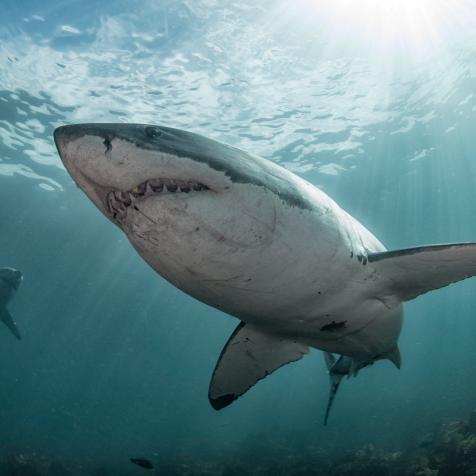
Shark Week: The Podcast - How To Have A Career in Shark Science
Shark Week’s Luke Tipple tackles the question “How can I work with sharks?” alongside two experts in the field – and their answers are not always the obvious ones. Luke is joined first by Kelly Link, Associate Curator of the Georgia Aquarium who talks about what it’s like to be an aquarist, how it differs from field work, and how to get yourself noticed. The second guest is Dr. Neil Hammerschlag who goes into detail on what it takes to become a prominent scientist, and what other paths you can take if a PhD isn’t for you. And at the end, researcher Sierra stops by to tell us about the world’s smallest shark.
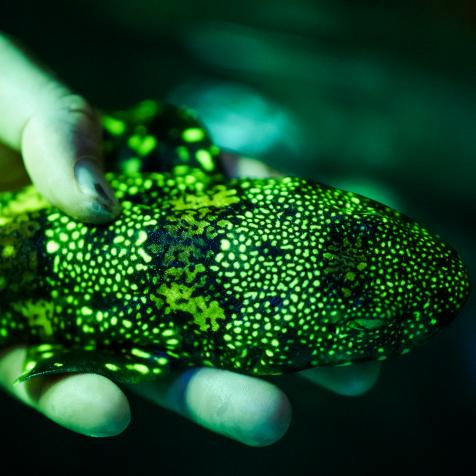
Shark Week: The Podcast - How Many Sharks Are Yet to Be Discovered?
Luke Tipple is joined by Shark Week host and all-around adventurer Forrest Galante. They discuss his upcoming special Alien Sharks: South Africa, Forrest’s remarkable talent for finding creatures once believed to be extinct, and how many shark species may still be unknown. Then, our researcher Sierra stops by to tell us about the world’s most prehistoric shark.
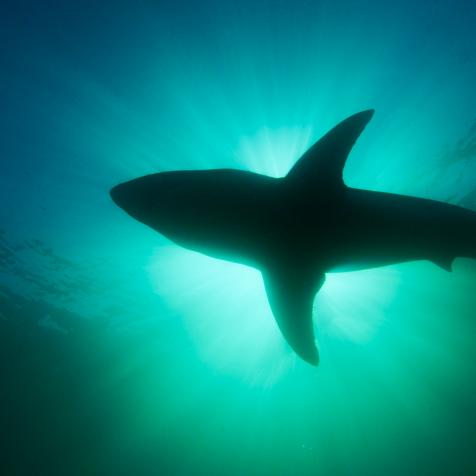
Shark Week: The Podcast - Undiscovered Sharks and the State of the Ocean
Luke Tipple invites “The Lost Shark Guy,” Dr. Dave Ebert, who is personally responsible for finding dozens of shark species that were either previously unknown to science or thought to be extinct. He and Luke discuss why shark populations are a direct indicator of how healthy the ocean is, how to find undiscovered sharks, and why diversity in sharks is essential for marine life.
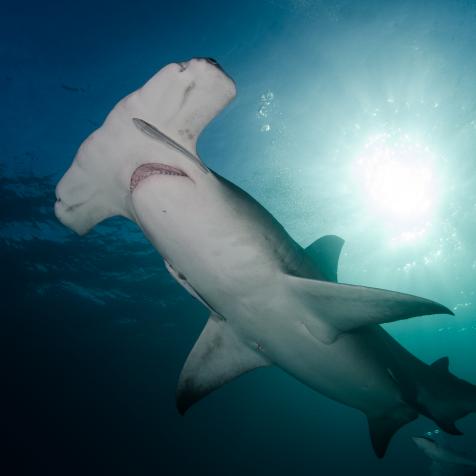
Shark Week: The Podcast - Lights! Camera! TEETH! Making Shark Docs
Shark Week’s Luke Tipple is joined by longtime filmmaker and Emmy-award-winner Andy Casagrande. He’s filmed and appeared in dozens of shark documentaries, and might just be the most prolific shark cinematographer in history. He talks with Luke about his career, the contentious term “shark porn,” and the future of the industry. And at the end, our researcher Sierra talks about the unprecedented ways that sharks are currently endangered.

Shark Week: The Podcast - Do Scientists Need to Kill Sharks?
Host Luke Tipple welcomes two guests to discuss how researchers can kill sharks in the name of science – and whether they need to at all. The first is Dr. Neil Hammerschlag, shark researcher and founder of Atlantic Shark Expeditions, and an expert on data-gathering in the field. He’s followed by explorer Fred Buyle, a world-record-breaking freediver whose innovative methods of shark tagging are explored. Plus, our researcher Sierra tells us about how a 50-year study changed our understanding of tiger sharks – and much of the work wasn’t even done by scientists.

Caves to Condors: Uncovering Pinnacles National Park
Photographer and conservationist Ian Shive explores one of the lesser known National Parks, Pinnacles National Park, finding rare wildlife and extraordinary landscapes along the way.

An Astronomical Review of “Don’t Look Up”
In our annual New Year’s family tradition of struggling to stay awake until midnight, we decided to watch “Don’t Look Up,” the Adam McKay satire starring Leonardo DiCaprio, Jennifer Lawrence, and other fabulously good-looking people.


Scientists Watch as Stars Quake
The European Space Agency’s Gaia spacecraft has managed to watch stars tremble, their light subtly changing as starquakes ripple through their surfaces. Which is pretty cool, because Gaia wasn’t even designed to do it.