Live Now
Street Outlaws: Locals Only
Live Now
Mythbusters
Live Now
Mythbusters
Live Now
Mythbusters
Live Now
Mythbusters
Live Now
Mythbusters
Live Now
Mythbusters
Live Now
Mythbusters
Live Now
Contraband: Seized at the Border
Live Now
Contraband: Seized at the Border
Live Now
Contraband: Seized at the Border
Live Now
Contraband: Seized at the Border
Live Now
Contraband: Seized at the Border
Live Now
Contraband: Seized at the Border
Live Now
Contraband: Seized at the Border
Live Now
Live Now
Contraband: Seized at the Border
Live Now
Contraband: Seized at the Border
Live Now
Contraband: Seized at the Border
Live Now
Live Now
Contraband: Seized at the Border
Live Now
Contraband: Seized at the Border
Live Now
Big Little Brawlers
Live Now
Deadliest Catch
Stream Now
Shows
See All Shows
Gold Rush
Naked and Afraid
Expedition Unknown
Deadliest Catch
Moonshiners
Harpoon Hunters
Homestead Rescue
See All Shows
Schedule
  • Home
  • Shows
  • Digital Originals
  • Space Out

SPACE OUT with Paul M. Sutter

Paul M. Sutter

Paul M. Sutter is an astrophysicist at Stony Brook University and the Flatiron Institute, host of Ask a Spaceman and Space Radio, and author of How to Die in Space.

All SPACE OUT Articles

Showing 16 - 30 of 153 results

Sure, the Sun is big. It’s over a hundred times wider than the Earth and weighs over 330,000 times the mass of our planet.It’s peanuts.

We’re Watching a Giant Star Die Before Our Very Eyes

Sure, the Sun is big. It’s over a hundred times wider than the Earth and weighs over 330,000 times the mass of our planet.It’s peanuts.

Ten years ago scientists at the Large Hadron Collider had finally found evidence for the elusive Higgs boson, a particle that plays a central role in physics. And since then…we haven’t found much.

10 Years of the Higgs Boson

Ten years ago scientists at the Large Hadron Collider had finally found evidence for the elusive Higgs boson, a particle that plays a central role in physics. And since then…we haven’t found much.

There are pulsars, and then there are binary pulsars, and then there are black widow pulsars. Because why can’t nature just stop?

The Latest Thing to Blow Your Mind: A “Black Widow” Binary

There are pulsars, and then there are binary pulsars, and then there are black widow pulsars. Because why can’t nature just stop?

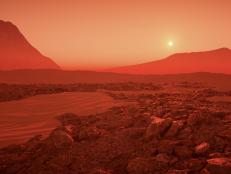
I’ll be the first to admit that it would be really, really cool if we found evidence of life on Mars. It would revolutionize our understanding of the cosmos, help us understand our origins, and give us some bugs and/or friends to play with.

There Isn’t a Door on Mars, but there are Some Cool Rocks

I’ll be the first to admit that it would be really, really cool if we found evidence of life on Mars. It would revolutionize our understanding of the cosmos, help us understand our origins, and give us some bugs and/or friends to play with.

Scientists estimate that our Sun is about 4.57 billion years old. They’re surprisingly confident about that number, too, which opens up an immediate question: how do we know that? The short answer is “a lot of science and math”, but I have a feeling you’re not here for the short answer.

How Do We Know How Old the Sun Is?

Scientists estimate that our Sun is about 4.57 billion years old. They’re surprisingly confident about that number, too, which opens up an immediate question: how do we know that? The short answer is “a lot of science and math”, but I have a feeling you’re not here for the short answer.

How do you see a perfectly black object in the middle of a pitch-dark night? It sounds like the start of an annoying riddle, but it’s really the question faced by astronomers when they want to search for black holes.

Astronomers May Have Found a Rare “Free-Floating” Black Hole

How do you see a perfectly black object in the middle of a pitch-dark night? It sounds like the start of an annoying riddle, but it’s really the question faced by astronomers when they want to search for black holes.

There’s more to NASA than space. The agency’s full acronym stands for National Aeronautics and Space Administration. I’ve covered plenty of interesting stories in the space sector, so it’s time to the aeronautics side some love too.

NASA Has a New Supersonic Jet and It’s Super-Quiet

There’s more to NASA than space. The agency’s full acronym stands for National Aeronautics and Space Administration. I’ve covered plenty of interesting stories in the space sector, so it’s time to the aeronautics side some love too.

The European Space Agency’s Solar Orbiter reached the halfway point between the Earth and the Sun to snap an amazing super-high-res picture. You can zoom in on the image to reveal the stunning details of the Sun’s surface. It’s like a Google Earth…but for the Sun.

Behold, the Sun as You’ve Never Seen It Before

The European Space Agency’s Solar Orbiter reached the halfway point between the Earth and the Sun to snap an amazing super-high-res picture. You can zoom in on the image to reveal the stunning details of the Sun’s surface. It’s like a Google Earth…but for the Sun.

The most distant spacecraft launched by humans, Voyager 1, is currently 155 times farther away from the Sun than the Earth is. That’s almost four times more distant than Pluto, and the Voyager 1 craft has been traveling at over 38,000 mph for over four decades.

Take a Trip Through the Oort Cloud, It’s Fun

The most distant spacecraft launched by humans, Voyager 1, is currently 155 times farther away from the Sun than the Earth is. That’s almost four times more distant than Pluto, and the Voyager 1 craft has been traveling at over 38,000 mph for over four decades.

In space, even the smallest explosions are insanely powerful. Take for instance the newly discovered “micronova,” which sounds cute and cuddly and not at all deadly…except for the fact that it’s the explosive equivalent of a nuclear bomb a million times bigger than Mount Everest.

You Love Supernova, So How About Micronova?

In space, even the smallest explosions are insanely powerful. Take for instance the newly discovered “micronova,” which sounds cute and cuddly and not at all deadly…except for the fact that it’s the explosive equivalent of a nuclear bomb a million times bigger than Mount Everest.

What if there was another you, somewhere out there, doing all the things you wished you could’ve done? What if there was a multiverse, where all the possibilities and choices of our lives became real? It seems like just another fantasy of science fiction, but it’s closer to reality than you might think.

What is the Multiverse?

What if there was another you, somewhere out there, doing all the things you wished you could’ve done? What if there was a multiverse, where all the possibilities and choices of our lives became real? It seems like just another fantasy of science fiction, but it’s closer to reality than you might think.

It’s a tough game to determine if a distant planet orbiting some nameless star hosts life on it or not. You can’t just walk up to it and start flipping over rocks or poking into the dirt. You can only use your telescopes, and the planets are so extremely distant that you can’t see the surface itself.

We Might Smell Life Before We See It

It’s a tough game to determine if a distant planet orbiting some nameless star hosts life on it or not. You can’t just walk up to it and start flipping over rocks or poking into the dirt. You can only use your telescopes, and the planets are so extremely distant that you can’t see the surface itself.

Personally speaking, I feel like we’ve been focusing on Mars a little bit too much recently. Sure, the Red Planet is all sorts of awesome – so awesome it may have once been a home for life – but with more than half a dozen orbiters, landers, and rovers, it’s certainly got its due.

NASA Has Announced Plans for the Next Decade of Space Missions, And It’s Awesome

Personally speaking, I feel like we’ve been focusing on Mars a little bit too much recently. Sure, the Red Planet is all sorts of awesome – so awesome it may have once been a home for life – but with more than half a dozen orbiters, landers, and rovers, it’s certainly got its due.

Most people in the United States have lost access to the night sky. This may not be a surprise to you if you’re living in a major metropolitan area. Perhaps you can pick out some of the brightest stars or a few planets on a clear night, but that’s it.

Participate in International Dark Sky Week, April 22–30; their mission is to reduce light pollution and bring better lighting to communities around the world so that all life can thrive.

The Night Sky is Part of Our Natural Environment

Most people in the United States have lost access to the night sky. This may not be a surprise to you if you’re living in a major metropolitan area. Perhaps you can pick out some of the brightest stars or a few planets on a clear night, but that’s it. Participate in International Dark Sky Week, April 22–30; their mission is to reduce light pollution and bring better lighting to communities around the world so that all life can thrive.

Even though NASA’s latest flagship instrument, the James Webb Space Telescope, is touted as the successor to the venerable Hubble, it has one major difference.

Why NASA’s New Super-Telescope Can’t See Visible Light

Even though NASA’s latest flagship instrument, the James Webb Space Telescope, is touted as the successor to the venerable Hubble, it has one major difference.

  • Previous
  • 1
  • 2
  • 3
  • 4
  • …
  • 11
  • Next
  • Site Map
  • Visitor Agreement
  • Privacy Policy
  • AdChoices
  • About
  • Advertise
  • Careers at Discovery
  • TV Ratings
  • Help
  • Accessibility
  • The Discovery Family of Networks
    • HGTV
    • Animal Planet
    • Cooking Channel
    • Discovery Life
    • Food Network
    • Travel Channel
    • MotorTrend
    • TLC
    • Science Channel
    • Destination America
    • Investigation Discovery
    • Food.com
    • HGTV Poland
    • American Heroes Channel
  • © 2026 Warner Bros. Discovery, Inc. or its subsidiaries and affiliates. All rights reserved.