


SPACE OUT with Paul M. Sutter

Paul M. Sutter is an astrophysicist at Stony Brook University and the Flatiron Institute, host of Ask a Spaceman and Space Radio, and author of How to Die in Space.
All SPACE OUT Articles
Showing 31 - 45 of 146 results
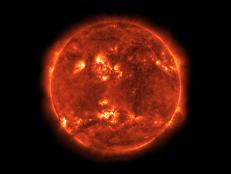
This Is How Our Sun Will Die
Every star you see in the sky, including the sun, will someday die. It’s best to get used to that idea now, before things start to get heavy.

Odd Radio Waves Coming From Outer Space
First, some background. A huge collaboration of astronomers is currently busy spending some hard-won cash to build the world’s largest radio telescope array, called the Square Kilometre Array.
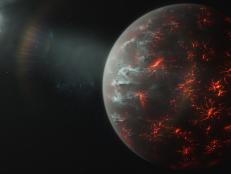
Say Hello to a Planet So Hot that the Oceans are Lava and it Rains Rocks
Exoplanets are planets orbiting stars outside the solar system, and every month seems to bring in a new batch of weird, wild, and wonderful worlds.

There’s Gold in Them Thar... Asteroids?
Gold had to come to Earth from somewhere, right? So why not outer space?

The Nobel Prize Fell Into a Black Hole (and That’s a Good Thing)
The 2020 Nobel Prize in Physics is being awarded to scientists to have dedicated their careers to the study of black holes.
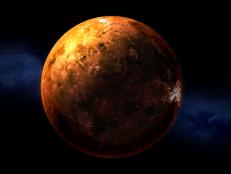
Life on Venus… Maybe Not So Lively
All planets with evidence of life please take a step forward. Not so fast, Venus.
How Stars Die: The Fate of a Hypernova
All Stars die. Some stars go out with a bang. Some stars go out with a big bang — a supernova. And some stars are capable of something so spectacular, so rare, we don't even have a name for it yet.

Is There Life on Venus? Something Smells Fishy…
Does the presence of a stinky gas mean there was once life on Venus?

An Asteroid is Going to Kill Us All Before the Election... Or Not
So you may have heard the news by now that an asteroid is hurtling towards the Earth.

Could Sharks Live in Space?
Europa to be specific. Yes, I know it’s a crazy question, but hear me out. This will be fun.
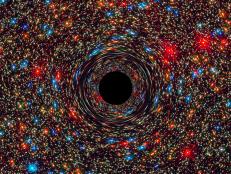
The Death of Black Holes
According to NASA, "A black hole is a place in space where gravity pulls so much that even light can not get out. The gravity is so strong because matter has been squeezed into a tiny space. This can happen when a star is dying." But what happens when a black hole dies?

The End of the Universe: The Fall of Light
There was a time, a time long, long ago, before the first stars appeared. The universe was young then and less than a billion years old. But will the fall of light be the end of the universe?

Why Charting the Most Extreme Objects in the Solar System Matters
So the astronomers called it “FarFarOut”, which is mostly a joke because the last time they found such a distant object it they nicknamed it “FarOut”, and this new world is much, much, farther out.

The New Warp Drive Idea Isn’t Very Warpy
Headline after headline is sharing the exciting news: a pair of theoretical physicists have realized that our sci-fi dreams may be real: it may be possible to build an actual, operational warp drive. One problem: it doesn’t go all that fast.

What Is a “Super Earth” and Why Do We Care?
Super Earths are super cool, and you should really know about them. In short, they are planets slightly bigger than the Earth (hence the name). And the cool part? They might be a home for life, and they’re way easier to study than regular Earths.