


SPACE OUT with Paul M. Sutter

Paul M. Sutter is an astrophysicist at Stony Brook University and the Flatiron Institute, host of Ask a Spaceman and Space Radio, and author of How to Die in Space.
All SPACE OUT Articles
Showing 61 - 75 of 146 results

It’s Time to Return to the Land of the Ice Giants
30 years--It’s been over 30 years since the Voyager 2’s historic flyby of Uranus and Neptune, the outermost and most mysterious planets in the solar system. It’s time to go back.

How Common are Water Worlds in the Galaxy?
If Kevin Costner wanted to make a sequel, he’s got plenty of opportunities. Water is by far the most common molecule in the universe. It’s made of two parts hydrogen and one part oxygen. Hydrogen is element number 1 (both on the period table and in abundance), and has been hanging around since the first 15 minutes of the Big Bang. Oxygen is forged in the hearts of sun-like stars, and spreads around when those stars die and turn themselves inside out. And since sun-like stars are also very popular, oxygen gets quite a boost.
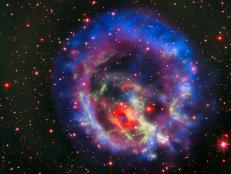
How to Make a Neutron Star at Home
First, take a bunch of matter. It doesn’t matter what kind – a piece of paper, some leftover gum. Then, press it, and press it, and press it some more. Don’t stop now! We’ve got a long way to go.
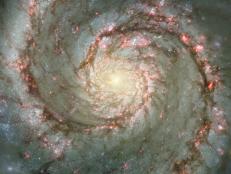
The First Exoplanet Found…Outside the Galaxy!
This new planet has had a pretty rough life.

Going for Gold: The Biggest Explosion in the Universe
Meet the humble Ophiuchus galaxy cluster. It’s just another dense clump of galaxies, one of approximately a bajillion, dotting the universe. It sits about 240 million lightyears away from Earth.And its heart is missing.

The 5 Greatest Robotic Space Explorers
Our little silicon friends have been exploring the harshest environments in the universe - space itself - in humanity’s name for decades. And while tales of their robotic exploits could fill an entire book, let’s count down the top five.

Evidence for Water on Mars Might be Clay Instead (Bummer!)
What’s shiny and lives under the Martian ice? No, it’s not a joke. It’s clay. Just…clay.

The Eeriest Place in the Universe
Imagine being completely, utterly alone. Surrounded by no planets, no stars, no galaxies. Not a single scrap of matter – not even a hydrogen atom – within hundreds of millions of lightyears. Welcome to the loneliest place in the cosmos: the great cosmic voids.
The Cost of Global Satellite Internet: Worse Astronomy
A few billionare-backed companies have ambitious goals: launching tens of thousands of communication satellites to provide global high-speed internet access. Elon Musk’s StarLink, Jeff Bezos’ Project Kuiper, One Web, GuoWang, and more are all competing for this lucrative market. In less than a decade, we can expect over 50,000 new satellites to encircle the Earth. That’s about ten times more than are currently active.

Check Out NASA’s DART Mission
It’s like “Armageddon” but in real life.

Do Giant Water Worlds Host Alien Life?
We all wish we could find an Earth 2.0 – a planet about the size of our own, made of roughly the same chemical mixture, orbiting a sun-like star at just the right distance so that all its water doesn’t evaporate or freeze.
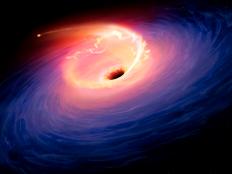
The Case of the Missing Black Hole
You would think that objects weighing billions of times the mass of the sun would be easy to find. Alas, it’s rarely that simple.

Want to See a Black Hole’s Magnetic Field? Now’s Your Chance
A couple years ago, the team of astronomers with the Event Horizon Telescope wowed the world by providing our first-ever snapshot of a real-life black hole. Now they’ve done one better and mapped out the swirling magnetic fields around the monster. It’s our first ever glimpse of the forces that power the largest engines in the universe.

Why Pluto Isn’t a Planet, but (Maybe) Should Be
What, exactly, is a “planet”? For ancient astronomers it was pretty easy. When they stared up at the night sky, they saw a) the sun, b) the moon, c) a lot of fixed stars, d) a few wandering points of light. Those vagabonds were the planets. Indeed, our word planet comes from the Greek word for “wanderer”.

What Do Pulsar Waves Tell Us About the Universe?
Using a network of dead stars, astronomers get closer to seeing the background ripples of the universe.