



Curiosity Daily Podcast: Robot Workers May Change Prejudices, Hormonal Changes in Dads-to-Be, and How Salamanders Regrow Their Limbs
Learn about why a rising robot workforce may make humans less prejudiced towards other people; how studying a salamander that can regrow lost limbs could help us figure out how to help humans heal faster; and hormonal changes that happen in dads-to-be.
March 19, 2020
Episode Show Notes:
A rising robot workforce may make humans less prejudiced by Kelsey Donk
- Conrad, J. (2020). Opinion: Robot co-workers could reduce prejudice among humans. Los Angeles Times; Los Angeles Times. https://www.latimes.com/opinion/story/2020-01-01/robots-workers-racial-prejudice-psychology
- Jackson, J. C., Castelo, N., & Gray, K. (2020). Could a rising robot workforce make humans less prejudiced? American Psychologist. https://psycnet.apa.org/record/2020-00794-001
Can knowing how salamanders regrow their limbs help humans do the same? by Andrea Michelson
- Regeneration: The amphibian’s opus. (2020, January). Knowable Magazine | Annual Reviews. https://www.knowablemagazine.org/article/living-world/2020/axolotl-limb-regeneration
- Elizabeth Preston, Quanta Magazine. (2018, July 7). Salamander’s Genome Guards Secrets of Limb Regrowth. Scientific American. https://www.scientificamerican.com/article/salamander-rsquo-s-genome-guards-secrets-of-limb-regrowth/
- Currie, J. D., Kawaguchi, A., Traspas, R. M., Schuez, M., Chara, O., & Tanaka, E. M. (2016). Live Imaging of Axolotl Digit Regeneration Reveals Spatiotemporal Choreography of Diverse Connective Tissue Progenitor Pools. Developmental Cell, 39(4), 411–423. https://doi.org/10.1016/j.devcel.2016.10.013
- Smith, J. J., Timoshevskaya, N., Timoshevskiy, V. A., Keinath, M. C., Hardy, D., & Voss, S. R. (2019). A chromosome-scale assembly of the axolotl genome. Genome Research, 29(2), 317–324. https://doi.org/10.1101/gr.241901.118
- Nowoshilow, S., Schloissnig, S., Fei, J.-F., Dahl, A., Pang, A. W. C., Pippel, M., Winkler, S., Hastie, A. R., Young, G., Roscito, J. G., Falcon, F., Knapp, D., Powell, S., Cruz, A., Cao, H., Habermann, B., Hiller, M., Tanaka, E. M., & Myers, E. W. (2018). The axolotl genome and the evolution of key tissue formation regulators. Nature, 554(7690), 50–55. https://doi.org/10.1038/nature25458
- Gerber, T., Murawala, P., Knapp, D., Masselink, W., Schuez, M., Hermann, S., Gac-Santel, M., Nowoshilow, S., Kageyama, J., Khattak, S., Currie, J. D., Camp, J. G., Tanaka, E. M., & Treutlein, B. (2018). Single-cell analysis uncovers convergence of cell identities during axolotl limb regeneration. Science, 362(6413), eaaq0681. https://doi.org/10.1126/science.aaq0681
Dads-to-Be Experience Hormonal Changes, Too by Ashley Hamer
- Hamer, A. Dads-to-Be Experience Hormonal Changes, Too. (2017). Curiosity.com. https://curiosity.com/topics/dads-to-be-experience-hormonal-changes-too-curiosity
- Edelstein, R. S., Chopik, W. J., Saxbe, D. E., Wardecker, B. M., Moors, A. C., & LaBelle, O. P. (2016). Prospective and dyadic associations between expectant parents’ prenatal hormone changes and postpartum parenting outcomes. Developmental Psychobiology, 59(1), 77–90. https://doi.org/10.1002/dev.21469
Subscribe to Curiosity Daily to learn something new every day with Cody Gough and Ashley Hamer. You can also listen to our podcast as part of your Alexa Flash Briefing; Amazon smart speakers users, click/tap “enable” here: https://curiosity.im/podcast-flash-briefing
Next Up

Watch Ken Jeong & Rei Ami Make a Splash on 'K-Pop Shark Heroes'
They'll use the power of K-Pop to change the way we view sharks forever!

Investigate the Mind of a Shark on 'How to Train a Great White'
See how these apex predators actually think. Will they completely transform our understanding of their intelligence?

A Guide to Defending the Earth
Let’s say one day astronomers announce that our worst nightmare has come true: a large object is headed towards the Earth with a significant chance of impact. What do we do?

Sing Along to the Shark Week Song
Listen to the first official Shark Week song and catch all the action July 26 through August 1 on Discovery!

'My Strange Shark Addiction' Is Coming to Shark Week 2026
Meet the most shark-obsessed "fin-atics" around and take a plunge into their wild fascinations on "My Strange Shark Addiction." Learn all about the new special here!

Top Five Rarest Bottom Dwellers
National Insect week occurs between June 20 -26. The week focuses on the importance of insects within ecosystems, nature, and wildlife. Insects do have a bad reputation, as some are a nuisance, and some are scary, but each plays a key role in maintaining order in nature. In celebration of the hard-working insects that you may see in your backyard, here’s a list of the ones you won’t be seeing. The rarest insects on the planet.
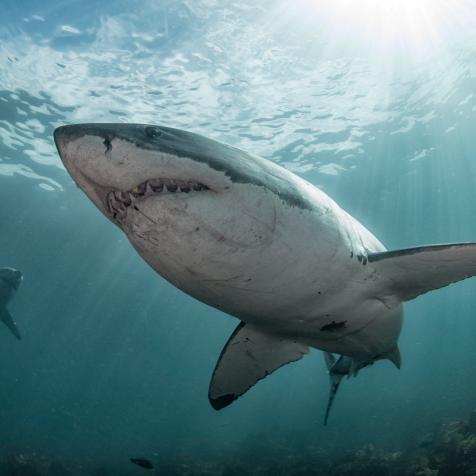
Shark Week: The Podcast - How To Have A Career in Shark Science
Shark Week’s Luke Tipple tackles the question “How can I work with sharks?” alongside two experts in the field – and their answers are not always the obvious ones. Luke is joined first by Kelly Link, Associate Curator of the Georgia Aquarium who talks about what it’s like to be an aquarist, how it differs from field work, and how to get yourself noticed. The second guest is Dr. Neil Hammerschlag who goes into detail on what it takes to become a prominent scientist, and what other paths you can take if a PhD isn’t for you. And at the end, researcher Sierra stops by to tell us about the world’s smallest shark.
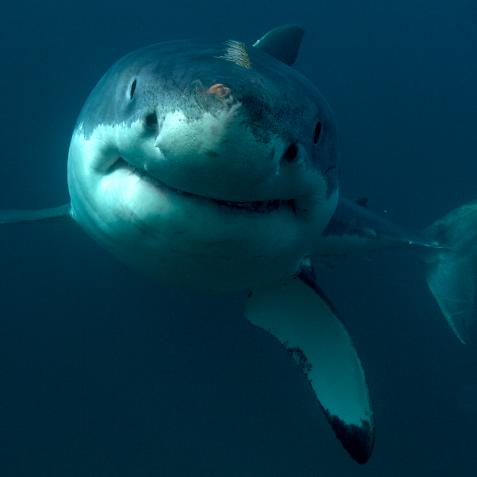
Shark Week: The Podcast - Why is Tagging Baby Great White Sharks So Important?
Luke Tipple speaks with Dr. Riley Elliott, a marine biologist from New Zealand who recently tagged baby great white sharks, which are rarely seen in the wild. They talk about how climate change is affecting shark pupping grounds, why fishers are wrong to think there are “too many sharks,” and about Dr. Elliott’s Great White App, which allows users to track great white sharks in the ocean.
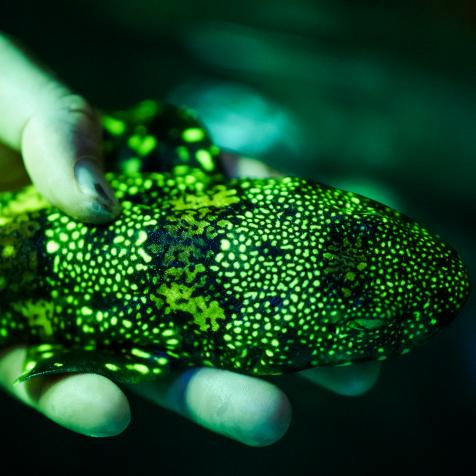

Shark Week: The Podcast - How Many Sharks Are Yet to Be Discovered?
Luke Tipple is joined by Shark Week host and all-around adventurer Forrest Galante. They discuss his upcoming special Alien Sharks: South Africa, Forrest’s remarkable talent for finding creatures once believed to be extinct, and how many shark species may still be unknown. Then, our researcher Sierra stops by to tell us about the world’s most prehistoric shark.