



All Science Articles
Showing 241 - 255 of 341 results

All Rainwater is Unsafe to Drink According to Study
A study by Stockholm University and ETH Zurich scientists found that all rainwater on Earth is unsafe to drink due to the levels of PFAS, or toxic chemicals. These PFAS or ‘forever chemicals’ are becoming a part of a future reality that humans must, unfortunately, learn to live with.

Ultraviolet Light Could Be the Answer to Future Disease Outbreaks
Coronavirus and the pandemic have made people hyper-aware of reducing their exposure to infection indoors by wearing masks, ventilating rooms, and social distancing. But a new way of using ultraviolet light to kill microbes could rapidly reduce virus particles in public spaces and help prevent future disease outbreaks.
Scientists Are Resurrecting the Tasmanian Tiger from Extinction
Colossal Biosciences has announced it has begun work on the de-extinction of the thylacine, an iconic Australian marsupial eradicated by human hunting in 1936. Learn how they plan to do it in an exclusive interview with marsupial evolutionary biologist Andrew Pask Ph.D. and Colossal Co-Founder Ben Lamm.

Waste Heat Can Be Transformed Into Abundant Clean Electricity
Waste heat is a worldwide energy problem most people have probably never heard about. Every machine and power station, even renewable energy like wind and solar, creates heat that is simply lost in the atmosphere. Thankfully, scientists and engineers are devoted to capturing heat and transforming it into useful electricity.

Can this New 'iTEARS' Technology Help Detect Diseases?
New technology is helping scientists decipher microscopic tear particles to offer clues to what’s going on inside the body. With a simple few drops of tears, this technology can help doctors and scientists detect eye disease and signs of diabetes.
How 3D Print Building is Changing the Future
Building with 3D printing technology is sparking widespread interest in the construction industry. Besides reducing waste and our impact on the environment, it can speed up construction from weeks, or months, to days. Projects that use simple raw materials like soil, straw, and even salt, can be built in a fraction of the time and cost of traditional construction.

Canadian Museum Rediscovers a New Ancient Shark Species - The First of its Kind
The Canadian Fossil Discovery Centre has recently “rediscovered” an ancient shark skeleton that has been sitting in the museum’s collection for nearly 50 years. Could this shark be a part of a newly discovered ancient shark species?
Scientists in China Discover Rare Moon Crystal that Could Power Earth
A rare lunar crystal found on the near side of the moon is giving scientists hope of providing limitless power for the world – forever.
Can this New Wetsuit Technology Protect Against Shark Bites?
Shark Stop is a wetsuit company working to connect environmentally-friendly resources with human and shark co-existence in the ocean. With a price point of around $569, the Shark Stop wetsuit aims to reduce the harm of shark bites using newly developed polymer fiber technology.

There's a Biodiversity Crisis--Here's What You Need to Know
Despite the world slowing down during the pandemic and studies hailing the slowdown of pollution and positive benefits on the environment, there’s one thing that continued full throttle: the globe’s biodiversity crisis.

Thousands of Bacterial Enzymes Hold the Key to Plastic Pollution Clean-up
Scientists suggest that people ingest at least 50,000 plastic particles a year. Health issues linked to the way plastic chemicals act on the body include cancer and infertility. And investigations show that we are breathing in 100 times more microplastics in our homes than was previously thought. So what can help tackle plastic pollution?

Raining Sulfur in the Biblical City of Sodom Could Be Explained by an Impact Event
About 3,600 years ago, Tall el-Hammam was a bustling city-state in the Jordan Valley near the Dead Sea. It thrived for 1,500 years — until a devastating event destroyed the city and contaminated the surrounding farmland with salt. What had once been an extremely fertile area became completely barren overnight. Humans left the region for at least 500 years afterward, and researchers have struggled to explain what happened.

Sea Drones are the Robot Scientists That Help Protect the World's Oceans
Marine conservationists and oceanographers are increasingly using drones to help them study sea and coastal habitats. Stream SHARK WEEK on discovery+.

Soft Robots Ape Nature to Operate in the Harshest Conditions
You could be forgiven for assuming that soft robotics is simply about making robots without rough edges – a kind of warm, fuzzy android experience. If machines that hug humans are the aim, then that’s probably true, but soft robots are often designed to operate in harsh or dangerous environments where others would struggle.
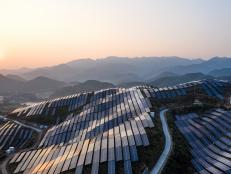
Solar-Powered Robots are the Sustainable Answer to a Cleaner, Connected Planet
Solar energy is virtually unlimited and one of the cleanest forms of renewable power. So building machines driven by the sun makes perfect environmental sense.