



All Science Articles
Showing 211 - 225 of 341 results

Digital Twin Cities Can Shrink the Impact of Planet’s Largest Polluters
Cities are the planet’s largest emitters of greenhouse gas emissions, so they offer the greatest opportunity to tackle climate change. Hitting net zero emissions by 2050, a target set at the COP26 summit, could be achieved more quickly using city digital twins – working virtual replicas – that help track, manage and reduce environmental damage rapidly.

Doing Renewables Right
Having a “net-zero future” – where the world isn’t emitting excess carbon dioxide – can seem like a far-off pipe dream.With sea levels still rising, wildfires becoming more and more frequent – alongside other extreme weather like floods and storms – and biodiversity rapidly dwindling, it’s imperative we focus on expanding renewable energy across the world, increasing energy sources to help mitigate the impact that fossil fuels have on the climate.

Plucking CO2 from the Air Could Decarbonize Food, Fuel, and Fashion
Products made from carbon dioxide (CO2) captured from the atmosphere are part of a fast-growing trend to decarbonize nearly everything we use. Food, drink, fuel, and plastics can all be made using CO2 from the air. And recycling carbon could create a circular economy that vastly reduces pollution and waste.

Inspiring Women in Science
Dr. Lisa Hoopes, Director of Research and Nutrition at Georgia Aquarium shares her experiences in the field and what International Women and Girls in Science Day means to her.

Supercomputers and Artificial Intelligence Create Future Green Industries
Supercomputers and artificial intelligence (AI) are indispensable tools for cooking up the next generation of advanced materials. Advanced computers allow scientists to rapidly design better alloys, chemical catalysts, and plastics using millions of potential candidates. Tomorrow’s high-tech materials are being road-tested this way to cut down human trial and error.

Carbon Conversion Turns Dangerous Greenhouse Gas into Fuel
Carbon dioxide (CO2) emissions are a grave environmental problem. This persistent greenhouse gas produced by fossil fuels is relentlessly warming Earth’s climate. Technologies to reduce its levels and climate impact concern us all. So can breakthroughs that use CO2 to create new fuels help solve the problem? Potentially, yes.

Canada Bans Single-Use Plastics to Combat Climate Change
Canada is taking a conscientious step towards reducing plastic pollution. On Monday, the Minister of Environment and Climate Change, Steven Guilbeault, and the Minister of Health, Jean-Yves Duclos, announced their move to prohibit single-use plastics which include: checkout bags, cutlery, food service made from hard-to-recycle plastics, ring carriers, stir sticks, and straws.
Building Atlantropa: One Man’s Plan To Drain the Mediterranean Sea
Atlantropa may be the most bizarre and ambitious environmental project you have never heard of.

Gold Miner Discovers Mummified Baby Woolly Mammoth in Canada
A young miner struck something other than gold while digging in the permafrost of Canada’s Klondike. He stumbled across a 35,000-year-old preserved carcass of a woolly mammoth in impeccable condition.
This Country is Transforming an Abandoned Airport into a Green Oasis
Most old, disused airports are torn down to make way for shiny new developments, although at a huge cost and via a lengthy process.Not Tegel airport, in Berlin, Germany.

AI Tools Help to Predict Extreme Weather and Save Lives
Predicting extreme weather events is a tricky business. Changing climate conditions have increased the frequency of severe storms, floods, and heatwaves, along with larger wildfires. As a result, scientists are using artificial intelligence (AI) techniques for more accurate forecasts that help to minimize damage and save lives.

Can this New AI Technology Help Us Understand the Languages of Animals?
A California-based nonprofit is searching to build an AI language that allows humans more deeply understand non-human languages to help change our ecological impact on our Earth.

Wild Climate Ride Expected as Cryptocurrency Popularity Fuels Power Consumption
Bitcoin’s wild speculation and surging popularity has caused scientists and economic analysts to rate the digital cryptocurrency as a danger to the environment. More than 60% of Bitcoin’s mining cost is in the electricity it uses. And as its value rises, so does the entire currency’s energy consumption and its potential impact on climate change.
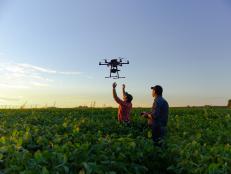
Food Growers Use AI and Robotics to Tackle Pest Problem
Farmers around the world face serious challenges in growing food more effectively. Climate warming increases the risk of crop damage from insects, fungi, and bacteria. So to manage the threat farms are turning to artificial intelligence (AI), robotics, and computer vision to target pests more effectively.

Air Conditioning: Reinventing Cool Technology to Reduce Climate Change
Air conditioning (AC) units have become an essential part of modern life, but this simple refrigeration technology has remained relatively unchanged since the 1940s. As climate change effects like rising temperatures and heat waves encourage more AC use, the increase in energy needed to cool us down could easily accelerate climate change.