


Articles
Showing 1,081 - 1095 of 2,639 results
Curiosity Daily Podcast: Your Exposome Germ Cloud, The Tree That Owns Itself, and Bosses Don’t Encourage Curiosity
Learn about your exposome, the friendly cloud of germs that surrounds you; why bosses don’t encourage curiosity as much as they think they do (and what that’s a bad thing); and the aptly named Tree That Owns Itself in Athens, Georgia.
Curiosity Daily Podcast: Cure for the Common Cold, What Really Killed the Dinosaurs, and Beatboxing in MRI Machines
Learn about how researchers may have figured out a way to cure the common cold; what exactly happened when the dinosaur-killing asteroid struck the Earth; and, why researchers have been putting beatboxers in a real-time MRI machine.
Curiosity Daily Podcast: Many Worlds Theory Explains the Universe (w/ Sean Carroll) and What Causes Static Electricity
Learn how friction causes static electricity. Then, learn from renowned theoretical physicist Sean Carroll why understanding the Many Worlds Theory could be the best way for us to understand the universe.
Curiosity Daily Podcast: We Don’t Know How Gravity Works (w/ Sean Carroll) and the Milky Way’s Bubble Mystery
Learn from theoretical physicist Sean Carroll why we don’t understand how gravity works — and how we can figure it out. You’ll also learn about enormous balloon-like structures that scientists have discovered in the center of our galaxy.
Curiosity Daily Podcast: How to Deal with Having Too Many Choices, Wormhole Shadows, and a Language “Wug Test”
Learn about why having too many choices stresses us out; how wormholes might cast a visible shadow; and the adorable Wug Test that measures how well children understand the rules of language.
Curiosity Daily Podcast: The Science of Cooking Meat with ButcherBox Head Chef Yankel Polak (Special Episode)
Learn about how to choose the right cooking method for different cuts of meat; how to figure out the perfect temperature for your meat; pro tips for searing and tempering; and the best way to capture that juicy flavor, including the science of what’s actually happening to those juices while you’re cooking.
Curiosity Daily Podcast: Cherenkov Radiation, How to Be More Extroverted, and Changing Your Perception of Time
Learn about how introverts can be happier by tapping into the powers of extroverts; how something can produce Cherenkov radiation by going faster than the speed of light; and, how the language you speak changes your perception of time.
Curiosity Daily Podcast: Quitting Smoking Doesn’t Lead to Food Cravings, Narcissism Over Time, and Seeing Photons
Learn about how people become less narcissistic as they get older; how it’s possible that we can see a single photon with the naked eye; and, new research that says cigarette smokers won’t crave more food if they quit smoking.
Curiosity Daily Podcast: Women’s Restroom Lines, Superhuman Memory, and Is Bamboo Good for the Environment?
Learn about the surprising reasons why the women’s restroom line is always longer; HSAM, the incredibly rare condition of having superhuman memory; and, how bamboo products impact the environment.
Curiosity Daily Podcast: Types of Teen Popularity, Milky Way’s Black Holes, and Are Conspiracy Theories on the Rise?
Learn about whether conspiracy theories are really on the rise; why there may be tens of thousands of black holes in the center of the Milky Way; and, the 3 versions of teen popularity, according to research.
Curiosity Daily Podcast: Why People Love (or Hate) Horror Movies, Stopping Overpopulation, and Orionids Meteor Shower
Learn about the scientific reasons why people either love or hate horror movies; the surprising way life expectancy affects population growth; and, where you can catch the Orionids meteor shower this weekend.

You Love Supernova, So How About Micronova?
In space, even the smallest explosions are insanely powerful. Take for instance the newly discovered “micronova,” which sounds cute and cuddly and not at all deadly…except for the fact that it’s the explosive equivalent of a nuclear bomb a million times bigger than Mount Everest.
What We Learn from the Lunar Surface
Sure, the Moon is cool to look at, and fun to think about it. And it literally affects us here on the Earth: without the Moon, we’d be missing half our tides, and likely our planet’s rotation wouldn’t be as stable as it is.
Jupiter Makes Its Closest Approach to Earth in Nearly 60 Years
The last time Jupiter appeared this large and bright in the sky was in October 1963.
Why Mercury Matters
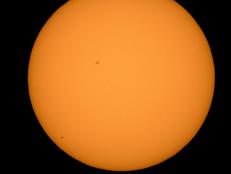
At first, the planet Mercury isn't much to look at. It has a surface only a mother could love, as desolate and empty as the Moon and pock-marked with crater after crater. But this planet has a secret, which has folks wanting to know more.