


Articles
Showing 1,111 - 1125 of 2,639 results

What’s the Farthest Thing We Can See?
Beyond the most distant star you can see with the naked eye, beyond the most extreme faint galaxy that we discern with our telescopes, lays something extraordinary: the leftover light from the big bang itself.
How Exoplanets Became the Next Big Thing in Astronomy
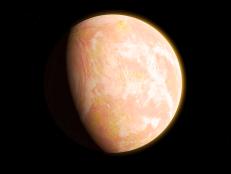
To date, we know of over 5,000 planets outside the solar system. And astronomers suspect that there may be *checks notes* around a trillion more in our galaxy alone. The search for exoplanets is one of the hottest topics in astronomy, with expensive telescopes and giant collaborations all searching for the holy grail of the 21st century: an Earth 2.0, a habitable world like our own.

Watch NASA's Asteroid-Crashing DART Mission Make Impact
NASA sent a spacecraft on a mission to crash into an asteroid, so how did it go?Updated 9/26/22

When We’ll Know if NASA’s Asteroid Impact Test was a Success
Recently NASA’s DART mission succeeded in its primary goal, which was to slam a spacecraft face-first into an asteroid. For science. The intention of the mission was to test if we could actually redirect an asteroid and send it into a different orbit. But how and when will we know if it worked?
See the First Image of the Milky Way’s Huge Black Hole
For the first time, a colorized image of the supermassive black hole located at the center of our own Milky Way Galaxy was shared by astronomers.

The Latest Thing to Blow Your Mind: A “Black Widow” Binary
There are pulsars, and then there are binary pulsars, and then there are black widow pulsars. Because why can’t nature just stop?

6 Months in Space Permanently Ages Bones by 10 Years
Astronauts on long-term space missions can experience bone loss equivalent to two decades of aging. New research suggests more weight-bearing exercises in space could help offset that decline.
The First Native American Woman Travels into Space with NASA's Crew-5 Mission
NASA's SpaceX Crew-5 mission is headed to the International Space Agency with 4 astronauts led by Mission Commander Nicole Aunapu Mann.

Behold as Two Black Holes Prepare to Collide
It’s the ultimate galactic showdown. The wrestling match to end all wrestling matches. A cosmic collision of epic proportions. And you won’t want to miss it.
An Astronomical Review of “Don’t Look Up”
In our annual New Year’s family tradition of struggling to stay awake until midnight, we decided to watch “Don’t Look Up,” the Adam McKay satire starring Leonardo DiCaprio, Jennifer Lawrence, and other fabulously good-looking people.
The Best Planets are Rogue Planets
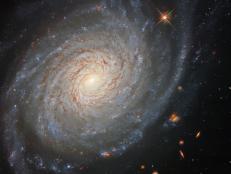
We can debate the status of objects in the solar system all day long, arguing if little Pluto is a planet or not. But to tell you the truth, any planet in any solar system got the short end of the stick. The real winners of the galactic game are the travelers, the roamers, the rogue planets.
Asteroid Ryugu Has Dust Grains Older Than the Sun. How?
In 2018 the Japanese space agency sent the Hayabusa2 mission to the asteroid Ryugu, As a part of that mission, the spacecraft blasted material off the surface of the asteroid, put it in a bottle, and sent it back to Earth. Two years later that sample landed in the western deserts of Australia.

What is “Dark Flow”?
It sounds super-scary: something from outside the universe, a force so unimaginable, is pulling every single galaxy towards it. What monstrosity of cosmic physics could it be?
How to Make a Neutron Star at Home
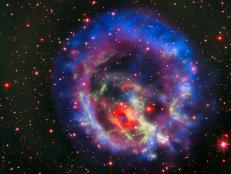
First, take a bunch of matter. It doesn’t matter what kind – a piece of paper, some leftover gum. Then, press it, and press it, and press it some more. Don’t stop now! We’ve got a long way to go.

The Head of NASA Believes in Aliens
“Are we alone? Personally, I don’t think we are,” Bill Nelson, former astronaut and Chief of NASA, said in a video interview.