


Articles
Showing 1,126 - 1140 of 2,639 results

How Common are Water Worlds in the Galaxy?
If Kevin Costner wanted to make a sequel, he’s got plenty of opportunities. Water is by far the most common molecule in the universe. It’s made of two parts hydrogen and one part oxygen. Hydrogen is element number 1 (both on the period table and in abundance), and has been hanging around since the first 15 minutes of the Big Bang. Oxygen is forged in the hearts of sun-like stars, and spreads around when those stars die and turn themselves inside out. And since sun-like stars are also very popular, oxygen gets quite a boost.

Fireball Meteor Soars Over Vermont
NASA identifies a meteor as it shoots over the Northeast, causing buildings to shake and a ‘nice little firework’ in the sky.

The 5 Greatest Robotic Space Explorers
Our little silicon friends have been exploring the harshest environments in the universe - space itself - in humanity’s name for decades. And while tales of their robotic exploits could fill an entire book, let’s count down the top five.
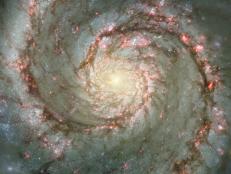
The First Exoplanet Found…Outside the Galaxy!
This new planet has had a pretty rough life.
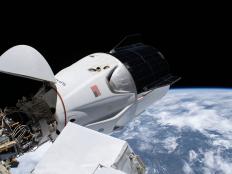
First US Commercial Crew Port Relocation to Air Live on NASA TV
On Monday, April 5, another first will occur for commercial space flight. For a look back at Crew-1's initial journey to the ISS, catch up on SPACE LAUNCH LIVE streaming now on discovery+.

Success! NASA and SpaceX Crew-1 Complete Early Morning Splashdown
(Updated: May 2, 2021) NASA astronauts Michael Hopkins, Victor Glover, Shannon Walker, and JAXA astronaut Soichi Noguchi completed a successful splashdown on Sunday, May 2, after a 165-day space research mission aboard the International Space Station. Here is what we know about their return to Earth.

Going for Gold: The Biggest Explosion in the Universe
Meet the humble Ophiuchus galaxy cluster. It’s just another dense clump of galaxies, one of approximately a bajillion, dotting the universe. It sits about 240 million lightyears away from Earth.And its heart is missing.

For $3.5 Million, You Can Join Jeff Bezos in Space
The richest man in the world announced his spaceflight this month in a rocket designed by his own company, Blue Origin.

Check Out NASA’s DART Mission
It’s like “Armageddon” but in real life.
Do You Want to Go to Space?
Have you always dreamed of going to space? Former NASA astronaut Mike Massimino answers our questions about life at the International Space Station.

Do Giant Water Worlds Host Alien Life?
We all wish we could find an Earth 2.0 – a planet about the size of our own, made of roughly the same chemical mixture, orbiting a sun-like star at just the right distance so that all its water doesn’t evaporate or freeze.
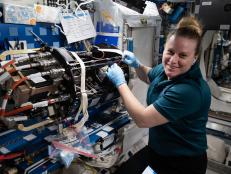
Expedition 64 to Return Home on April 17
After 185 days in space aboard the ISS, NASA astronaut Kate Rubins, Roscosmos cosmonaut Sergey Ryzhikov, and Roscosmos cosmonaut Sergey Kud-Sverchkov are coming home. They are scheduled to land back on Earth in their Soyuz MS-17 spacecraft at 12:56A EDT on Saturday, April 17.

The Eeriest Place in the Universe
Imagine being completely, utterly alone. Surrounded by no planets, no stars, no galaxies. Not a single scrap of matter – not even a hydrogen atom – within hundreds of millions of lightyears. Welcome to the loneliest place in the cosmos: the great cosmic voids.

Evidence for Water on Mars Might be Clay Instead (Bummer!)
What’s shiny and lives under the Martian ice? No, it’s not a joke. It’s clay. Just…clay.
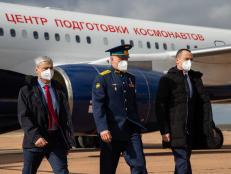
Expedition 65 to Launch on April 9
On April 9 at 3:42A ET, Expedition 65 will launch with three space travelers aboard a Soyuz MS-18 spacecraft from the Baikonur Cosmodrome in Kazakhstan to the International Space Station.