


All Space Articles
Showing 196 - 210 of 387 results

Why Pluto Isn’t a Planet, but (Maybe) Should Be
What, exactly, is a “planet”? For ancient astronomers it was pretty easy. When they stared up at the night sky, they saw a) the sun, b) the moon, c) a lot of fixed stars, d) a few wandering points of light. Those vagabonds were the planets. Indeed, our word planet comes from the Greek word for “wanderer”.

Romeo and Juliet: The Story of Galaxy Collisions
Our Milky Way galaxy is on a collision course. With destiny. With destruction. With fate. With our nearest neighbor, Andromeda. You can stream HOW THE UNIVERSE WORKS on discovery+.
Richard Branson of Virgin Galactic Successfully Travels to Space
On Sunday, July 11, around 11:30A ET, Richard Branson, the founder of Virgin Galactic, soared to the edge of space as a passenger aboard Virgin Galactic’s VSS Unity. The space plane then landed safely at Spaceport America in New Mexico, making Branson's space tourism dream come true.

NASA’s DART Mission Launches: Defending our Planet from an Asteroid
NASA’s first mission to test asteroid deflection technology launched yesterday. DART, or Double Asteroid Redirection Test, is a mission to slam a rocket into an asteroid… hopefully altering its path.

What Do Pulsar Waves Tell Us About the Universe?
Using a network of dead stars, astronomers get closer to seeing the background ripples of the universe.

Are Aliens Calling Us From Proxima Centauri?
The internet and news media alike are abuzz with news about a radio buzz coming from Proxima Centauri, the nearest neighbor star to our sun a mere four and a quarter light-years away. That star happens to host a planet, called Proxima b (because we don’t have a cooler name for it yet), that sits in the habitable zone of its parent star. That means that the planet can potentially host liquid water, and where there’s liquid water there’s a chance for life.

NASA is Going Back to Venus. Here’s Why You Should Care.
Recently NASA announced two brand-spanking new missions to our sister planet, Venus. This is the first time in over 40 years that Americans have led a mission to that enigmatic planet. What do they hope to find? Clues to our past…and answers to our future.
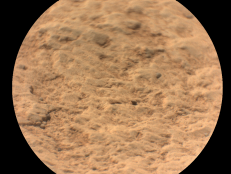
NASA is using Navajo Language to Name Rocks and Soil on Mars
NASA’s Perseverance team is working in tandem with the Navajo Nation to use their native language in defining rocks and soil found on Mars. 50 words have been approved to name these landmarks.
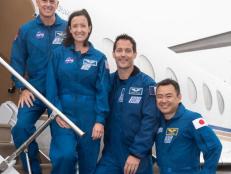
Countdown to Launch: NASA and SpaceX Crew-2 Mission
Liftoff set for Friday, April 23, at 5:49A EDT marks the second operational flight of SpaceX’s Crew Dragon. Four space explorers are heading to the International Space Station for a six-month stay. It will take them 23 hours to reach their destination.

NASA’s Perseverance Rover Has Landed on Mars
After a harrowing landing and traveling nearly 292.5 million miles, NASA's Perseverance with Ingenuity touched down on Mars at 3:55P ET today, February 18, 2021.Congratulations to the teams at NASA and JPL. We cannot wait to see what research comes from this incredible mission.Experience more Mars on discovery+. Download and subscribe to stream NASA Mars Landing: Inside the Mission and When We Left Earth.

Astronomy’s Newest Tool: Artificial Intelligence
In a bowl, combine a tablespoon of hydrogen and a teaspoon of helium to a cup of dark matter. Add a pinch of neutrinos and sprinkling of radiation. Mix well to combine. Heat to several million Kelvin. When mixture has risen, leave to cool for 13 billion years.

Astronomers See Flashes from Behind a Black Hole
Want to see what’s behind a black hole? Easy. You just…stare at it. The whole thing is pretty weird to contemplate, but an excellent example of the space-bending (and mind-bending) powers of black holes.
Astronomers Have a Plan for the Next…Decade
It’s that time of the year. Pumpkin spice and cinnamon lattes compete for our taste buds. Carols worm into our ears. Holiday greetings and pretty lights.And astronomers decide the fate of their field.

All Hail Ganymede, King of the Moons
NASA’s Juno probe, the supremely awesome Jupiter orbiter, recently captured some stunning images of Ganymede, the largest moon of Jupiter, during the orbiter’s 34th trip around the giant.

All Aboard the James Webb Space Telescope!
All hail the James Webb, the ultra-powerful super-telescope for the next generation. Or for about 5-10 years when its fuel runs out.