


All Space Articles
Showing 181 - 195 of 387 results

William Shatner Becomes Oldest Man to Travel to Space After Successful Blue Origin Space Flight
On the morning of October 13, William Shatner joined the crew of New Shepard for its second crewed flight, NS-18. Due to a few holds, the scheduled 10A liftoff was delayed by about 50 minutes from Blue Origin's Launch Site One in Texas. Despite the delays, liftoff and touchdown went off without a hitch, making Star Trek star William Shatner the oldest man to go to space.
This All-Civilian Space Mission Wants to Achieve the Highest Human Orbit Ever
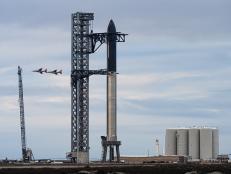
Last year marked a fascinating turning point in the history of spaceflight. For the first time ever, more civilians went into space than professional ones. The private companies Virgin Galactic, Blue Origins, and SpaceX all offer seats for sale, with missions as brief as just a few minutes to as long as a few days.

Curiosity Daily Podcast: Contagious Yawning, Conformal Cyclic Cosmology, Exercising for Mental Health, and Why Glitches Are “Bugs”
Learn about a controversial theory that says our universe is one of many previous universes; why we call computer glitches “bugs”; and the largest study ever showing how much exercise you need to boost your mental health. We’ll also answer the question: is yawning contagious?
Curiosity Daily Podcast: Pavlov’s Dog Myths, Three Types of Perfectionism, and What The Universe Is Expanding Into
Learn about Ivan Pavlov’s dogs, and why you might not know them as well as you thought. Then, learn about the three types of perfectionism that are ruining your life. Plus: if the universe is expanding, then what is it expanding into?

The Origin of Cosmic Cows
Keep reading, I'm serious... Yes, there is a certain kind of astronomical object called a “cow” and it’s actually pretty awesome.

Take a Trip Through the Oort Cloud, It’s Fun
The most distant spacecraft launched by humans, Voyager 1, is currently 155 times farther away from the Sun than the Earth is. That’s almost four times more distant than Pluto, and the Voyager 1 craft has been traveling at over 38,000 mph for over four decades.
Six Planets are Retrograde, What Does that Mean for You?
Spoiler alert: It's an optical illusion.

The Night Sky is Part of Our Natural Environment
Most people in the United States have lost access to the night sky. This may not be a surprise to you if you’re living in a major metropolitan area. Perhaps you can pick out some of the brightest stars or a few planets on a clear night, but that’s it. Participate in International Dark Sky Week, April 22–30; their mission is to reduce light pollution and bring better lighting to communities around the world so that all life can thrive.
NASA Launches CAPSTONE to Test Experimental Orbit Around the Moon
In preparation for future missions, NASA is testing a never-been-flown-before orbit around the Moon in search of the most efficient deep space route for space travel.
An Out-of-Control Rocket is about the Hit the Moon
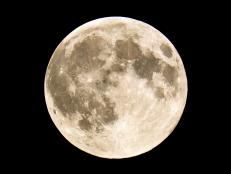
Watch out, moon! On March 4 at precisely 7:25 am ET, a piece of rocket junk will slam into the moon.

Quantum Messages Could be the Future of Alien Communication with Earth
Quantum signals can travel over interstellar distances, shows new findings.
Want to Name a Planet? Now’s Your Chance
Read on to learn about this rare opportunity to name a distant world observed by the James Webb Telescope.

NASA Has Announced Plans for the Next Decade of Space Missions, And It’s Awesome
Personally speaking, I feel like we’ve been focusing on Mars a little bit too much recently. Sure, the Red Planet is all sorts of awesome – so awesome it may have once been a home for life – but with more than half a dozen orbiters, landers, and rovers, it’s certainly got its due.
Curiosity Daily Podcast: How to Stop Procrastinating, Astronauts Seeing Cosmic Rays, and What Causes That Fresh Rain Smell
Learn what causes that fresh rain smell; how astronauts can actually see cosmic rays; and a trick you can use to stop procrastinating called the “frog rule.”
Curiosity Daily Podcast: SpaceX’s First Private Passenger in Space, Running Myths Busted, and Bright-Line Rule Goal Setting
Learn about the first private passenger going to space, thanks to SpaceX; a trick for setting goals that you can actually stick to; and myths about running that we’ll bust so you can run with some peace of mind.