


All Space Articles
Showing 241 - 255 of 387 results

The Eeriest Place in the Universe
Imagine being completely, utterly alone. Surrounded by no planets, no stars, no galaxies. Not a single scrap of matter – not even a hydrogen atom – within hundreds of millions of lightyears. Welcome to the loneliest place in the cosmos: the great cosmic voids.
The Cost of Global Satellite Internet: Worse Astronomy
A few billionare-backed companies have ambitious goals: launching tens of thousands of communication satellites to provide global high-speed internet access. Elon Musk’s StarLink, Jeff Bezos’ Project Kuiper, One Web, GuoWang, and more are all competing for this lucrative market. In less than a decade, we can expect over 50,000 new satellites to encircle the Earth. That’s about ten times more than are currently active.

Check Out NASA’s DART Mission
It’s like “Armageddon” but in real life.
A Guide to Defending the Earth
Let’s say one day astronomers announce that our worst nightmare has come true: a large object is headed towards the Earth with a significant chance of impact. What do we do?
10 Years of the Higgs Boson
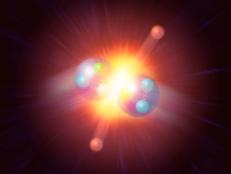
Ten years ago scientists at the Large Hadron Collider had finally found evidence for the elusive Higgs boson, a particle that plays a central role in physics. And since then…we haven’t found much.
James Webb Space Telescope Successfully Reached Its Final Destination
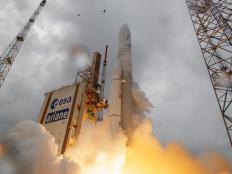
Nearly a month after the James Webb Space Telescope launched from French Guiana on December 25, the telescope has reached its final destination–almost a million miles from Earth.
NASA's Jessica Watkins to be first Black Female Astronaut to Spend Six Months in Space
At age 33, Watkins will soon make history as the first Black woman to join the International Space Station on an extended mission. She will serve as a mission specialist in a four-person crew on board a SpaceX Crew Dragon spacecraft named Freedom.
It’s Not You, It’s Me: How a Planet Left Our Solar System
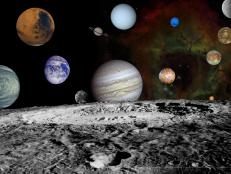
Sometimes you just know. Something clicks, you have a realization that this relationship isn’t right, and it’s simply time to go. It can happen to anyone, at any time, even to planets, and even billions of years ago.
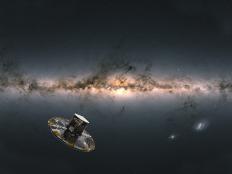
Scientists Watch as Stars Quake
The European Space Agency’s Gaia spacecraft has managed to watch stars tremble, their light subtly changing as starquakes ripple through their surfaces. Which is pretty cool, because Gaia wasn’t even designed to do it.

What’s the Farthest Thing We Can See?
Beyond the most distant star you can see with the naked eye, beyond the most extreme faint galaxy that we discern with our telescopes, lays something extraordinary: the leftover light from the big bang itself.

6 Months in Space Permanently Ages Bones by 10 Years
Astronauts on long-term space missions can experience bone loss equivalent to two decades of aging. New research suggests more weight-bearing exercises in space could help offset that decline.

When We’ll Know if NASA’s Asteroid Impact Test was a Success
Recently NASA’s DART mission succeeded in its primary goal, which was to slam a spacecraft face-first into an asteroid. For science. The intention of the mission was to test if we could actually redirect an asteroid and send it into a different orbit. But how and when will we know if it worked?
Watch NASA's Asteroid-Crashing DART Mission Make Impact
NASA sent a spacecraft on a mission to crash into an asteroid, so how did it go?Updated 9/26/22

The Latest Thing to Blow Your Mind: A “Black Widow” Binary
There are pulsars, and then there are binary pulsars, and then there are black widow pulsars. Because why can’t nature just stop?
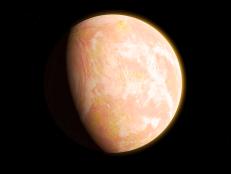
How Exoplanets Became the Next Big Thing in Astronomy
To date, we know of over 5,000 planets outside the solar system. And astronomers suspect that there may be *checks notes* around a trillion more in our galaxy alone. The search for exoplanets is one of the hottest topics in astronomy, with expensive telescopes and giant collaborations all searching for the holy grail of the 21st century: an Earth 2.0, a habitable world like our own.