


All Space Articles
Showing 136 - 150 of 387 results
The First Native American Woman Travels into Space with NASA's Crew-5 Mission
NASA's SpaceX Crew-5 mission is headed to the International Space Agency with 4 astronauts led by Mission Commander Nicole Aunapu Mann.

Behold as Two Black Holes Prepare to Collide
It’s the ultimate galactic showdown. The wrestling match to end all wrestling matches. A cosmic collision of epic proportions. And you won’t want to miss it.
An Astronomical Review of “Don’t Look Up”
In our annual New Year’s family tradition of struggling to stay awake until midnight, we decided to watch “Don’t Look Up,” the Adam McKay satire starring Leonardo DiCaprio, Jennifer Lawrence, and other fabulously good-looking people.
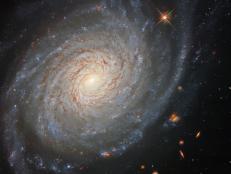
The Best Planets are Rogue Planets
We can debate the status of objects in the solar system all day long, arguing if little Pluto is a planet or not. But to tell you the truth, any planet in any solar system got the short end of the stick. The real winners of the galactic game are the travelers, the roamers, the rogue planets.
Asteroid Ryugu Has Dust Grains Older Than the Sun. How?
In 2018 the Japanese space agency sent the Hayabusa2 mission to the asteroid Ryugu, As a part of that mission, the spacecraft blasted material off the surface of the asteroid, put it in a bottle, and sent it back to Earth. Two years later that sample landed in the western deserts of Australia.

What is “Dark Flow”?
It sounds super-scary: something from outside the universe, a force so unimaginable, is pulling every single galaxy towards it. What monstrosity of cosmic physics could it be?
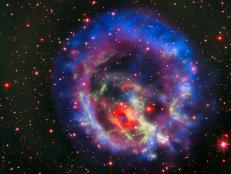
How to Make a Neutron Star at Home
First, take a bunch of matter. It doesn’t matter what kind – a piece of paper, some leftover gum. Then, press it, and press it, and press it some more. Don’t stop now! We’ve got a long way to go.

The Head of NASA Believes in Aliens
“Are we alone? Personally, I don’t think we are,” Bill Nelson, former astronaut and Chief of NASA, said in a video interview.

How Common are Water Worlds in the Galaxy?
If Kevin Costner wanted to make a sequel, he’s got plenty of opportunities. Water is by far the most common molecule in the universe. It’s made of two parts hydrogen and one part oxygen. Hydrogen is element number 1 (both on the period table and in abundance), and has been hanging around since the first 15 minutes of the Big Bang. Oxygen is forged in the hearts of sun-like stars, and spreads around when those stars die and turn themselves inside out. And since sun-like stars are also very popular, oxygen gets quite a boost.

Fireball Meteor Soars Over Vermont
NASA identifies a meteor as it shoots over the Northeast, causing buildings to shake and a ‘nice little firework’ in the sky.

The 5 Greatest Robotic Space Explorers
Our little silicon friends have been exploring the harshest environments in the universe - space itself - in humanity’s name for decades. And while tales of their robotic exploits could fill an entire book, let’s count down the top five.
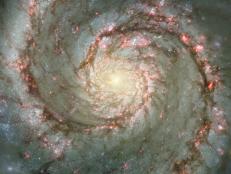
The First Exoplanet Found…Outside the Galaxy!
This new planet has had a pretty rough life.
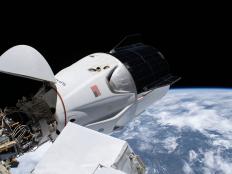
First US Commercial Crew Port Relocation to Air Live on NASA TV
On Monday, April 5, another first will occur for commercial space flight. For a look back at Crew-1's initial journey to the ISS, catch up on SPACE LAUNCH LIVE streaming now on discovery+.

Success! NASA and SpaceX Crew-1 Complete Early Morning Splashdown
(Updated: May 2, 2021) NASA astronauts Michael Hopkins, Victor Glover, Shannon Walker, and JAXA astronaut Soichi Noguchi completed a successful splashdown on Sunday, May 2, after a 165-day space research mission aboard the International Space Station. Here is what we know about their return to Earth.

Going for Gold: The Biggest Explosion in the Universe
Meet the humble Ophiuchus galaxy cluster. It’s just another dense clump of galaxies, one of approximately a bajillion, dotting the universe. It sits about 240 million lightyears away from Earth.And its heart is missing.