


All Space Articles
Showing 286 - 300 of 387 results

Quantum Messages Could be the Future of Alien Communication with Earth
Quantum signals can travel over interstellar distances, shows new findings.

Is Interstellar Travel Really Possible?
Listen folks, I love a good sci-fi movie as much as anyone. Cruising around the galaxy, finding weird stuff, and blowing up aliens--it’s all good. But just because a writer can come up with something, it doesn’t make it possible. I’m sorry to say that we’re going to be bound to our solar system for a really, really long time. As in, probably forever.

Ingenuity Takes First Flight on Mars
In a historic first, Ingenuity successfully flew on the Red Planet. The Mars helicopter was in the air for about 40 seconds.

It's Time for a 2021 Space Flight Round-up
Space is a busy place, with a lot of things going up (most of the time) and coming down (when we want them to). Let’s check in on the latest orbital happenings.

A Jupiter-Sized Exoplanet Orbiting Two Stars
One of my favorite things about exoplanet systems is just how weird they can get. It seems that every few months we are treated to another surprise. This time around, NASA's TESS observatory delivered a planet almost three times more massive than Jupiter orbiting around not one, but two stars. As an added bonus: that planet orbits its twin suns closer than the Earth does around the sun. Who wants to take a trip?
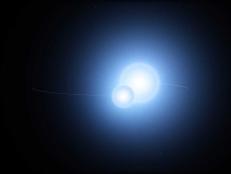
Like Stars? How About 6 in the Same Solar System?
Meet TYC 7037-89-1, a six-star solar system. Astrophysicist Paul M. Sutter explains this stellar surprise discovery.

The James Webb Space Telescope Launches!
Finally! It was initially proposed way back in 1998 and named the James Webb Space Telescope in 2002. After a decade of delays and over 10 billion dollars past its original budget, NASA’s next great observatory finally launched from the European Space Agency’s Guiana Space Centre in South America.

It’s Time to Return to the Land of the Ice Giants
30 years--It’s been over 30 years since the Voyager 2’s historic flyby of Uranus and Neptune, the outermost and most mysterious planets in the solar system. It’s time to go back.

It’s Time to Say Goodbye to Arecibo
There aren’t a lot of telescopes that are also movie stars. In fact, I can think of only one: the famed Arecibo Observatory in Puerto Rico.

The End of the Universe: The Fall of Light
There was a time, a time long, long ago, before the first stars appeared. The universe was young then and less than a billion years old. But will the fall of light be the end of the universe?

Expedition 64 to Launch on October 14
One NASA astronaut and two Roscosmos cosmonauts of Expedition 64 are scheduled to launch to the ISS on Wednesday, October 14 at 1:45AM ET for a six month stay. Let’s learn the details!

Expedition 63 to Return Home on October 21
After 196 days in space aboard the ISS, NASA astronaut Chris Cassidy, Roscosmos cosmonaut Anatoli Ivanishin, and Roscosmos cosmonaut Ivan Vagner are coming home! Let’s learn the details of their return to Earth.
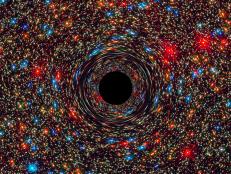
The Death of Black Holes
According to NASA, "A black hole is a place in space where gravity pulls so much that even light can not get out. The gravity is so strong because matter has been squeezed into a tiny space. This can happen when a star is dying." But what happens when a black hole dies?

An Asteroid is Going to Kill Us All Before the Election... Or Not
So you may have heard the news by now that an asteroid is hurtling towards the Earth.
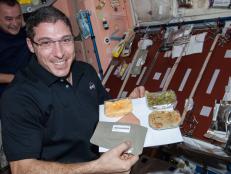
Celebrating 20 Years of Food in Space on the ISS
This year marks the 20th anniversary of continuous human presence aboard the International Space Station. Do you ever wonder what the astronauts have been eating for the past 20 years in zero gravity? Let’s find out!