


All Space Articles
Showing 316 - 330 of 387 results

Romeo and Juliet: The Story of Galaxy Collisions
Our Milky Way galaxy is on a collision course. With destiny. With destruction. With fate. With our nearest neighbor, Andromeda. You can stream HOW THE UNIVERSE WORKS on discovery+.

What Do Pulsar Waves Tell Us About the Universe?
Using a network of dead stars, astronomers get closer to seeing the background ripples of the universe.

Splashdown! NASA and SpaceX Crew-1 Return to Earth
On Sunday, May 2, at 2:56A ET, NASA astronauts Michael Hopkins, Victor Glover, Shannon Walker, and JAXA astronaut Soichi Noguchi returned home. From undocking to splashdown, here's everything you need to know. Catch up on NASA's SpaceX Crew-1 mission on SPACE LAUNCH LIVE: CREW-1 LIFTOFF, streaming on discovery+.

NASA is Going Back to Venus. Here’s Why You Should Care.
Recently NASA announced two brand-spanking new missions to our sister planet, Venus. This is the first time in over 40 years that Americans have led a mission to that enigmatic planet. What do they hope to find? Clues to our past…and answers to our future.
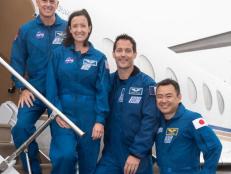
Countdown to Launch: NASA and SpaceX Crew-2 Mission
Liftoff set for Friday, April 23, at 5:49A EDT marks the second operational flight of SpaceX’s Crew Dragon. Four space explorers are heading to the International Space Station for a six-month stay. It will take them 23 hours to reach their destination.

When Was There Life on Venus?
What we have is a cosmic whodunit. Venus, the second planet from the sun and considered by the more romantic types as "Earth's twin" and the avatar of love, is dead.

Why We'll (Probably) Never Be Able to Teleport
For many of us, teleportation would be the absolute best way to travel. Imagine just stepping into a transporter and being able to go thousands of miles in nearly an instant.

Where should we go? The Moon or Mars?
There’s been a lot of excitement around space exploration recently. Astrophysicist Paul M. Sutter discusses the viability between the Moon and Mars.
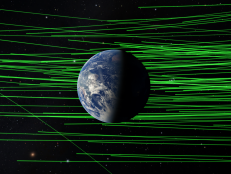
Saving Earth from Killer Asteroids
Only about 40% of an estimated 25,000 near-Earth asteroids with the potential to destroy the planet have been detected. Scientist Dr. Ed Lu, along with his nonprofit B612 are working to create a way to detect the other 60%.
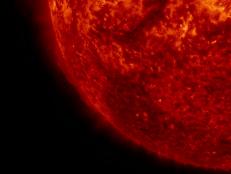
How Do We Know How Old the Sun Is?
Scientists estimate that our Sun is about 4.57 billion years old. They’re surprisingly confident about that number, too, which opens up an immediate question: how do we know that? The short answer is “a lot of science and math”, but I have a feeling you’re not here for the short answer.

Tune in to the 92nd Astronomical Awards!
With award season in high gear and movie stars flocking to Hollywood, let’s look up to the real stars in our lives and celebrate some of astronomy’s biggest results from last year.
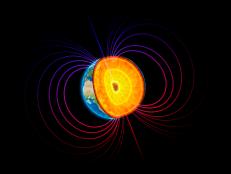
Something Funky is Happening to the Earth’s Magnetic Field
Recently a weak spot in the Earth's magnetic field over the southern Atlantic Ocean has been getting weaker, which could signal the beginnings of a global magnetic reversal event. Or not. It’s complicated.

See Comet NEOWISE Before it Disappears
Discovered in late March, Comet NEOWISE has shown itself in the skies all over the world. Dr. David Schleicher, Senior Astronomer at Lowell Observatory gives us some details about this cool comet gracing the night skies.
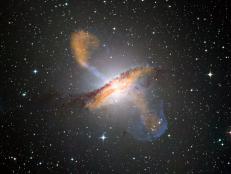
Astronomers May Have Found a Rare “Free-Floating” Black Hole
How do you see a perfectly black object in the middle of a pitch-dark night? It sounds like the start of an annoying riddle, but it’s really the question faced by astronomers when they want to search for black holes.
William Shatner is going where no 90-year-old has gone before
The Star Trek star will become the oldest person to go to space when he launches aboard a Blue Origin rocket on Wednesday, October 13. Watch live coverage on Space Launch LIVE: Shatner in Space on Discovery and Science Channel starting at 8:30A ET with liftoff scheduled for 10A ET.