


All Space Articles
Showing 331 - 345 of 387 results
NASA's Biggest 2021 Milestones
From making history on Mars to supersonic aircraft, NASA continues to astound us with science from this past year.
What are the Chances of Life Appearing On…Earth?
Just how lucky are we on Earth? What were the chances that life would arise, let alone lead to intelligence?

What Could Delay the Historic SpaceX and NASA Launch?
Detailed planning and test after test do not always mean smooth sailing in space flight.
Reusable Rockets: Expanding Space Exploration Possibilities with Retrievable Spacecraft
With the evolution of reusable rockets through commercial companies such as SpaceX and Blue Origin, the cost of space exploration is decreasing. Learn more about today's "space race."
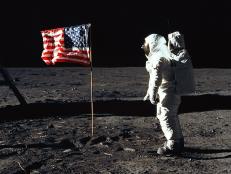
Why Aren't There Stars in the Moon Landing Photos?
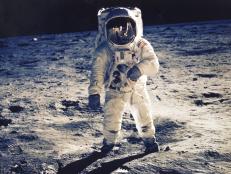
A vocal minority believes that the moon landing was all an elaborate hoax filmed on a sound stage in Hollywood, but it's no hoax. Here's why...
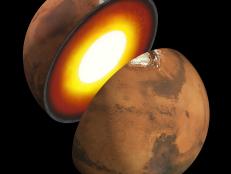
Welcome to the Surface of Mars
Through the use of cutting-edge instruments, scientists finally have the opportunity to probe deep beneath the surface and ascertain exactly how the terrestrial planet formed.
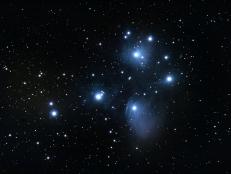
Get Celestial with Lowell Observatory LIVE!
Our friends at Lowell Observatory are serving up our solar system on a platter live!

Farewell, Earth’s Mini-moon
It's time to say goodbye to the mini-moon that's no bigger than your car.

The Future of Space Exploration
Over the past couple decades, the space-minded folks around the world have debated the relative merits of the two possible destinations for space exploration. Moon or Mars?

NASA is Helping Save Sharks
As the battle to save species across the world wages on, conservation efforts are becoming more and more technological in tracking, monitoring and collecting data.And perhaps one of the most advanced techniques is currently being deployed by NASA, an unlikely ally in the fight to save sharks.
4 Reasons Why Earth is the Best Planet to Call Home
Since 1970, folks from around the world have gathered together to celebrate Earth Day, an appreciation for all the good stuff we’ve got here on the Earth – and a reminder to try not to mess it up. But what’s so special about the Earth, anyway?
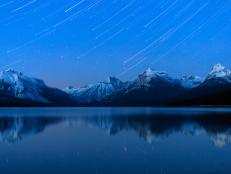
Why are Dark Skies Important?
There is no better time to consider the quality of the night sky and the celestial magic it embodies than during International Dark Sky Week, taking place April 22-30!

That’s a (Weirdly) Big Black Hole!
Recently astronomers identified a black hole near a star called LB-1 and they found out that the black hole is 70 times the mass of the sun. This is a mystery because the biggest black holes we can get from the deaths of the most massive stars are around 30 times the mass of the sun, so how did black hole get this big?
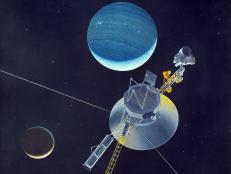
Voyager 2 is Really Far Out There, Man
Currently Voyager 2 is about 11 billion miles from the Earth, and has been traveling at speeds of tens of thousands of miles per hour since its launch in 1977. Read more to see where it is now and what we've learned.