


All Space Articles
Showing 301 - 315 of 387 results

The Halloween Hunter’s Blue Moon Explained
There will be 13 full moons in 2020. Take that how you will, but the full moon coming up this Halloween night is a hunter's blue moon. So what does that mean?
How Stars Die: The Fate of a Hypernova
All Stars die. Some stars go out with a bang. Some stars go out with a big bang — a supernova. And some stars are capable of something so spectacular, so rare, we don't even have a name for it yet.

First Week Complete for Crew-1 Astronauts
NASA astronauts Michael Hopkins, Victor Glover, and Shannon Walker, along with Soichi Noguchi of the Japan Aerospace Exploration Agency launched in a new Crew Dragon spacecraft atop a Falcon 9 rocket on November 15, 2020, at 7:27P ET from the NASA Kennedy Launch Complex 39A. After a 27-hour journey, the spacecraft docked with the ISS on November 16, 2020, at 11:01P ET. Let’s see what the astronauts of NASA’s SpaceX Crew-1 mission have been up to since their arrival to the station!

First Meteor Shower of 2021 Peaks This Weekend
Meet the Quadrantids. An annual meteor shower that graces the skies right around January 1. This year the shower will be competing with the light of the moon, but if you're lucky you may be able to catch it in the sky this weekend.

Expedition 63 to Return Home on October 21
After 196 days in space aboard the ISS, NASA astronaut Chris Cassidy, Roscosmos cosmonaut Anatoli Ivanishin, and Roscosmos cosmonaut Ivan Vagner are coming home! Let’s learn the details of their return to Earth.
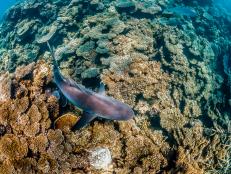
Could Sharks Live in Space?
Europa to be specific. Yes, I know it’s a crazy question, but hear me out. This will be fun.
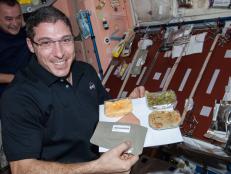
Celebrating 20 Years of Food in Space on the ISS
This year marks the 20th anniversary of continuous human presence aboard the International Space Station. Do you ever wonder what the astronauts have been eating for the past 20 years in zero gravity? Let’s find out!
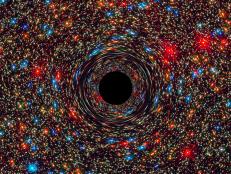
The Death of Black Holes
According to NASA, "A black hole is a place in space where gravity pulls so much that even light can not get out. The gravity is so strong because matter has been squeezed into a tiny space. This can happen when a star is dying." But what happens when a black hole dies?

The End of the Universe: The Fall of Light
There was a time, a time long, long ago, before the first stars appeared. The universe was young then and less than a billion years old. But will the fall of light be the end of the universe?

Expedition 64 to Launch on October 14
One NASA astronaut and two Roscosmos cosmonauts of Expedition 64 are scheduled to launch to the ISS on Wednesday, October 14 at 1:45AM ET for a six month stay. Let’s learn the details!
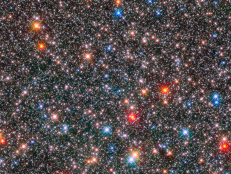
Small Galaxies Matter Too
Long ago, our universe was without stars. When that first generation ignited, it completely transformed the cosmos, ripping away the veil of neutral gas that had persisted for hundreds of millions of years. This process, called reionization, is largely mysterious to astronomers. But new research is revealing that the smallest of galaxies may have played the biggest of roles.

Why Pluto Isn’t a Planet, but (Maybe) Should Be
What, exactly, is a “planet”? For ancient astronomers it was pretty easy. When they stared up at the night sky, they saw a) the sun, b) the moon, c) a lot of fixed stars, d) a few wandering points of light. Those vagabonds were the planets. Indeed, our word planet comes from the Greek word for “wanderer”.
Richard Branson of Virgin Galactic Successfully Travels to Space
On Sunday, July 11, around 11:30A ET, Richard Branson, the founder of Virgin Galactic, soared to the edge of space as a passenger aboard Virgin Galactic’s VSS Unity. The space plane then landed safely at Spaceport America in New Mexico, making Branson's space tourism dream come true.

Are Aliens Calling Us From Proxima Centauri?
The internet and news media alike are abuzz with news about a radio buzz coming from Proxima Centauri, the nearest neighbor star to our sun a mere four and a quarter light-years away. That star happens to host a planet, called Proxima b (because we don’t have a cooler name for it yet), that sits in the habitable zone of its parent star. That means that the planet can potentially host liquid water, and where there’s liquid water there’s a chance for life.

NASA’s DART Mission Launches: Defending our Planet from an Asteroid
NASA’s first mission to test asteroid deflection technology launched yesterday. DART, or Double Asteroid Redirection Test, is a mission to slam a rocket into an asteroid… hopefully altering its path.