Shutterstock
Austria's Grüner See Has A Park That's Underwater All Summer
This emerald-green lake is one of Austria's most beautiful bodies of water.
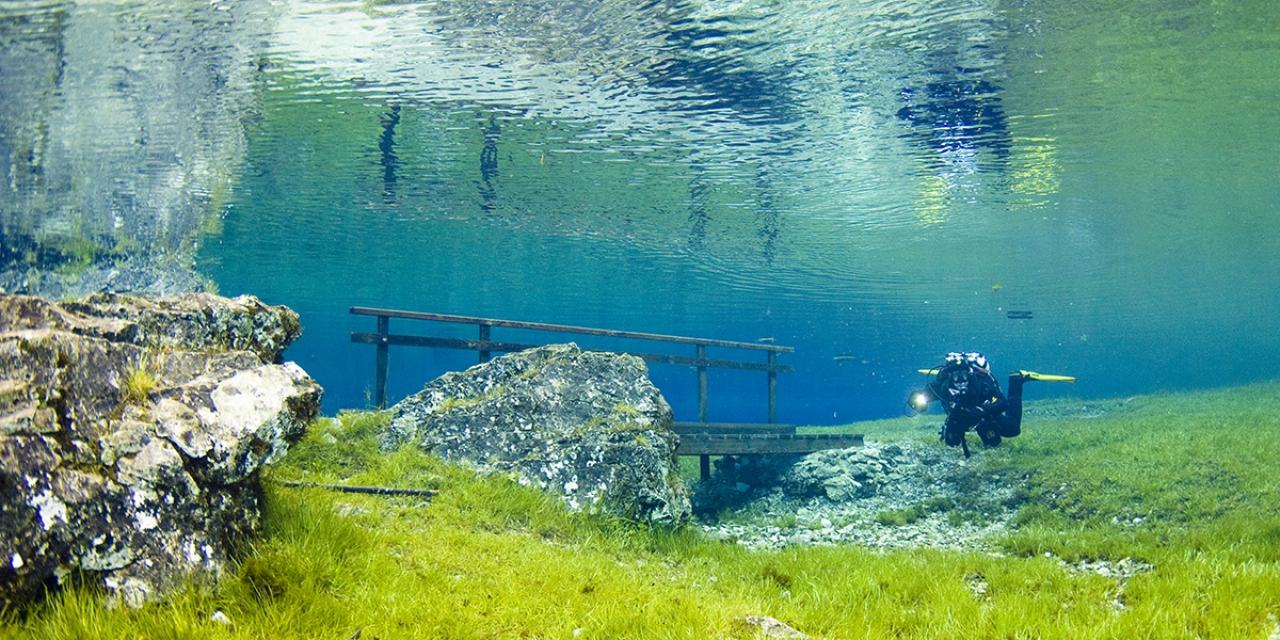
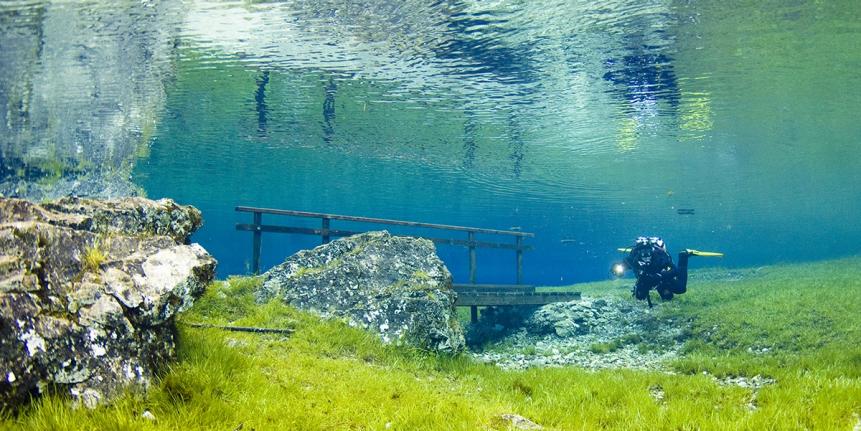
If you visit Austria's Grüner See during fall, you might stroll over a picturesque bridge and take a seat at a park bench to listen to the birds sing in the trees. If you visit in summer, however, those same activities would require scuba gear. From late spring through early summer, the park is fully submerged underwater.
Shutterstock
Rise from the Runoff
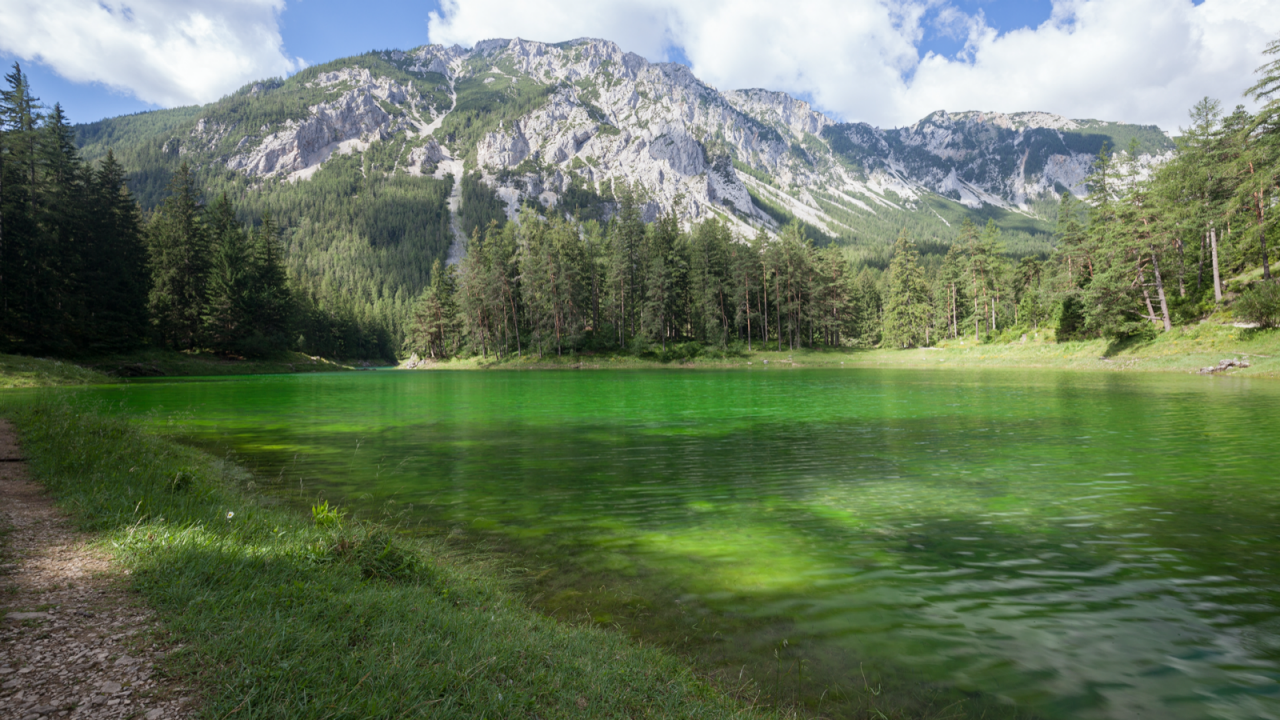
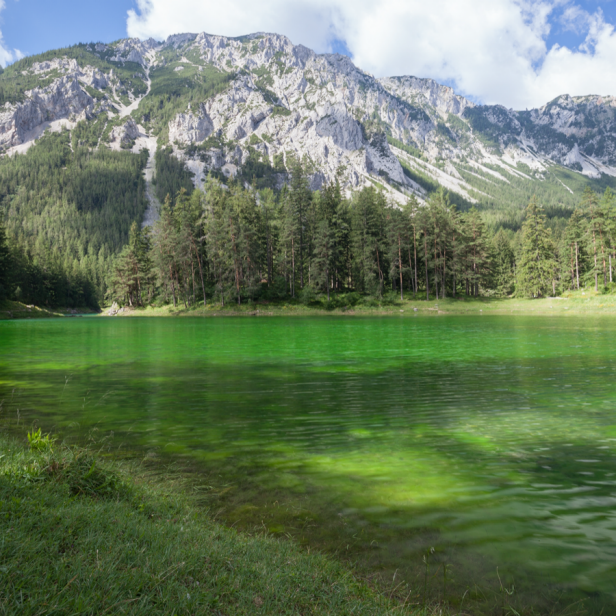
Located in Styria, Austria, Grüner See—Green Lake, in English—is surrounded by the Hochschwab Mountains, which are famously snow-covered for much of the year. In the late summer, fall, and winter, the lake is around 21,500 square feet and surrounded by your standard park furnishings, perfect for hikers to rest and take in the surrounding area.
But when the snow begins to melt at the start of spring and into July, the lake slowly grows larger. Its surface area doubles to more than 4,000 square meters (43,000 square feet). Its depths climb from 1 meter (3 feet) to 12 meters (39 feet) at its deepest. The benches, the pathways, the bridges, and many surrounding trees are underwater, but small crabs and a few species of trout then have more room to breathe. With all this framed by the panoramic views of the Hochschwab Mountains, Grüner See becomes a breathtaking natural spectacle. It isn't named "Green Lake" for nothing: the surface really does have a striking green hue, thanks to the grass and foliage submerged underneath.
Look, But Don't Touch
If you're there to hike, Grüner See is an essential stop on the trails. However, because of its relatively newfound popularity, the local parks department has made all watersports illegal—that includes scuba diving, one of its most alluring tourism pulls. Swimming, fishing, boating, fetch-playing with your water-loving dog, and other water activities have been prohibited as well.
But the prohibition is for good reason: with all that sediment-stirring traffic, the green color might be lost and corrosion might gradually change the landscape. Better to not risk it than to open the gates simply because we want to see underneath its surface during the height of the melting season. For now, we'll have to live vicariously through the internet's wealth of videos, and maybe the tides will turn for scuba enthusiasts someday.
This article first appeared on Curiosity.com.