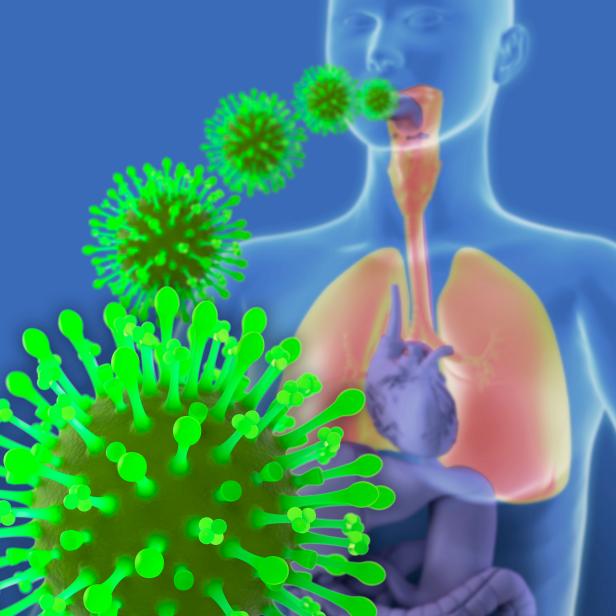
Flu infection, computer artwork. Influenza virus particles entering the lungs.

478186599

Flu infection, computer artwork. Influenza virus particles entering the lungs.

Photo by: ROGER HARRIS

ROGER HARRIS

The Flu: How It Spreads, and How You Can Stop It

By: Leah Weber

Every year like clockwork, we are confronted with the dreaded flu season. Scientists work tirelessly to understand Influenza and how we can prevent the spread.

January 31, 2020

Flu Season is upon us. Influenza activity is high across the country and is expected to stay that way for weeks. The Center for Disease Control (CDC) keeps detailed records about the spread of the virus on their page dedicated to the seasonal flu. It seems that this epidemic gets worse every year and the question always is, what can we do to keep ourselves safe from this virus?

Step one of prevention is understanding what we’re fighting against. In 2018, a study was published about the flu virus and how long it was able to survive once is it spread outside of the human body through touching, coughing, and sneezing. It was found that it truly depends on the environment and the mode of transmission, but that there is opportunity for the virus to survive outside of minutes, and even past an hour once it leaves the body.

Flu virus particles, computer artwork.

478186587

Flu virus particles, computer artwork.

Photo by: ROGER HARRIS

ROGER HARRIS

Our best bet in combatting the flu this year is an individual effort to prevent the spread of this virus that can be potentially fatal to high-risk groups. Take a look at the list below and see how you can prevent the spread of the flu.

  • Get Vaccinated!

    • Everyone past the age of 6 months old should get the flu shot. Make sure to confirm with your healthcare provider which version of the flu vaccine is right for you and if you’re eligible.
  • Stay Home!

    • If you are sick, stay home! You can prevent the spread of the virus to people who could be fatally harmed by the virus. Get advice from your doctor about when you are no longer contagious.
  • Wash Your Hands!

    • Sing the “Happy Birthday” song to yourself or count to 20 slowly while you are washing your hands with soap and running water. If you can’t get your hands on soap, hand sanitizer can be an acceptable substitute, but make sure it is alcohol based.
  • Cover Your Mouth!

    • If you feel a cough or a sneeze or cough coming on, protect those around you by aiming into your shirt or a tissue. Avoid using your hands as a shield, especially if you are not able to wash them immediately without touching other surfaces.

You can always use the CDC as a resource if you feel you need more information about flu treatment and prevention. Always remember to check with a medical professional before following any instructions or protocols suggested.


Next Up

Scientists Are Resurrecting the Tasmanian Tiger from Extinction

Colossal Biosciences has announced it has begun work on the de-extinction of the thylacine, an iconic Australian marsupial eradicated by human hunting in 1936. Learn how they plan to do it in an exclusive interview with marsupial evolutionary biologist Andrew Pask Ph.D. and Colossal Co-Founder Ben Lamm.

How 3D Print Building is Changing the Future

Building with 3D printing technology is sparking widespread interest in the construction industry. Besides reducing waste and our impact on the environment, it can speed up construction from weeks, or months, to days. Projects that use simple raw materials like soil, straw, and even salt, can be built in a fraction of the time and cost of traditional construction.

How a Lizard Loses Its Tail (and More Importantly, Keeps it Attached)

Thanks to a complex internal structure, lizards can shed a tail in a pinch… yet keep their tails attached when they need them.

How to Save Humanity from Extinction

Here are some goals we need to achieve if we want to reach our 500,000th birthday as a species.

How Do We Know How Old the Sun Is?

Scientists estimate that our Sun is about 4.57 billion years old. They’re surprisingly confident about that number, too, which opens up an immediate question: how do we know that? The short answer is “a lot of science and math”, but I have a feeling you’re not here for the short answer.

Doctors and Scientists 3D-Print Living Organs

How bioprinting, the medical equivilent of 3D printing can revolutionize organ donation and beyond.

During a Plague, Newton Discovered Gravity

The world is currently locked in the grip of the deadly novel coronavirus. Around the globe, schools are closed, businesses are shuttered, and families are staying home as much as possible in order to curb the spread of the disease.

DNA's Building Blocks May Have Their Origins in Outer Space

One of life's building blocks could have originated in outer space. But if this experiment shows how these building blocks actually formed, how exactly did they get to Earth?

Celebrating Black History Month with Dr. Blue from The Vet Life

We spoke with Dr. Diarra Blue about how The Vet Life has provided visibility and inspired minorities to pursue veterinary medicine.

Counting Fish: Making Sealife Sustainable for Future Generations

Do we really know how many fish there are in the sea? The short answer is no, but science is bringing us closer to understanding marine populations and maintaining them for future generations.