
These Mesmerizing Alaskan Ice Caves Will Very Soon Be Gone
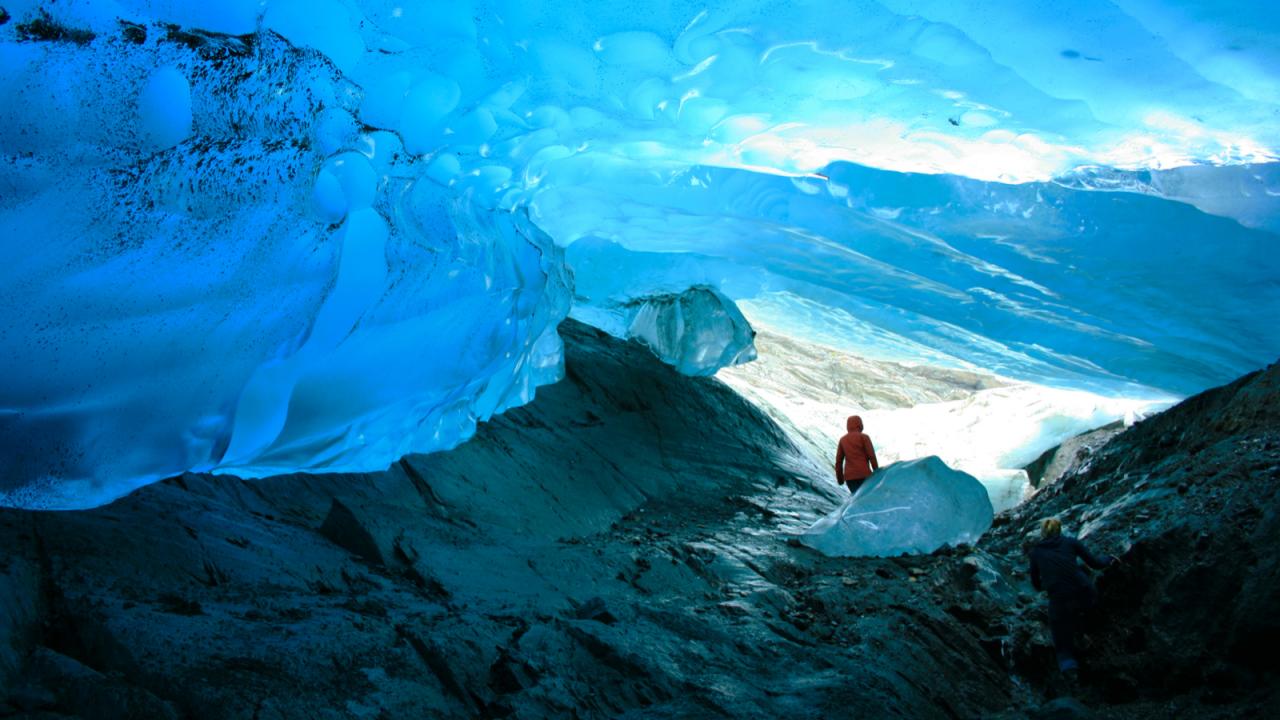
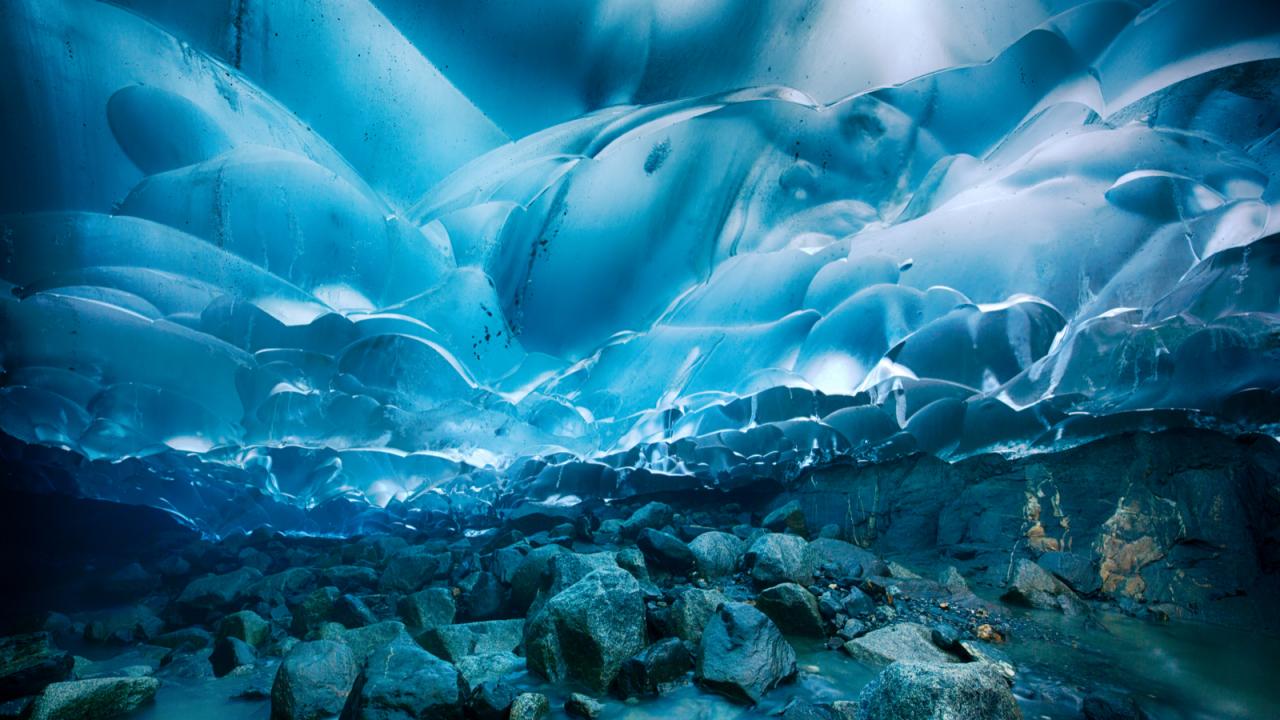
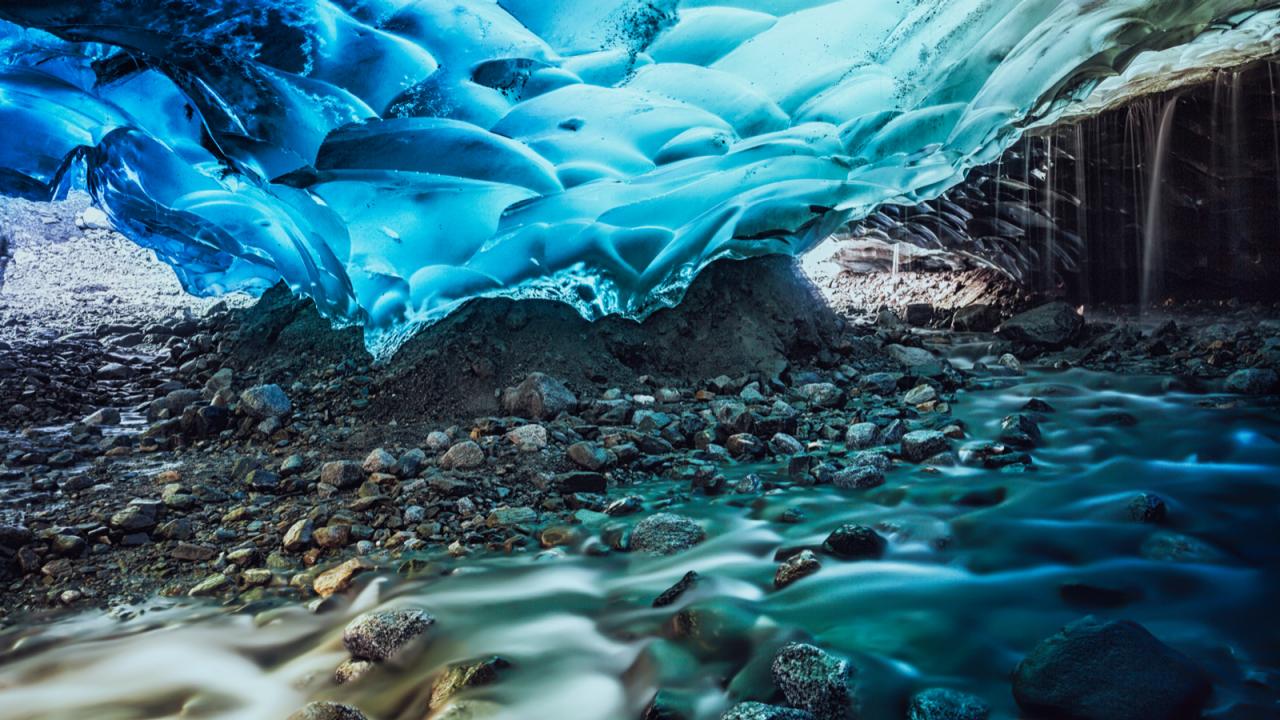
In Juneau, Alaska, you can take a walk not just on, but in a glacier. That's right — inside the partially hollow Mendenhall Glacier is a surreal landscape of breathtakingly bright blue ice caves, accessible via hike, kayak, and a climb over the ice. You better get there soon, though, because this natural marvel is melting ... fast.
Little Ice Age
Formed 3,000 years ago during the "Little Ice Age" — a period of cooling that occurred from the mid-14th century through the mid-19th century — the Mendenhall Glacier today is 13 miles long. The word "today" is particularly important in this context because it speaks volumes about the impermanence of our natural world. A recent study on Mendenhall's melting rate showed that the Alaskan glacier retreated 100 feet (30 meters) a year since 2005 and almost 2 miles (3.2 kilometers) since 1950 — a rapid increase from decades prior. But what do scientists believe is behind this drastic change in such a massive natural structure? Arguably the most contentious of environmental subjects, of course: climate change.

Understanding how a globally changing climate affects massive sheets of ice is a complicated and fascinating area of science. But before we can begin to discuss the disappearance of these natural marvels, we need to understand how they got there in the first place.
Glaciers are formed from snow falling in a specific area long enough for it to accumulate and become ice. Eventually, the weight of the ice forces itself down a slope and creates large fields of ice sheets. It's not until the ice's melting rate exceeds the glacier's accumulation rate — due to increased air temperature and less snowfall — that the glacier eventually begins to retreat. While the rapid disappearance of these landscapes is worrisome, in the case of Mendenhall there's at least an icy silver lining.

Glacial Blues
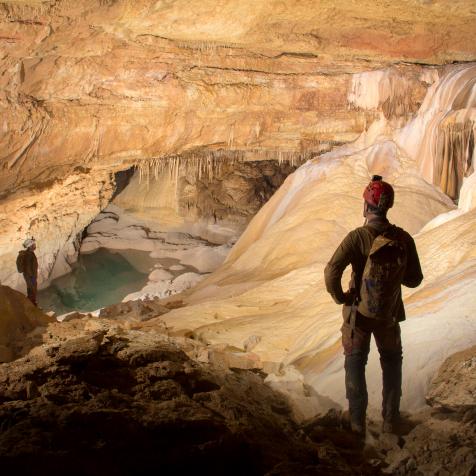
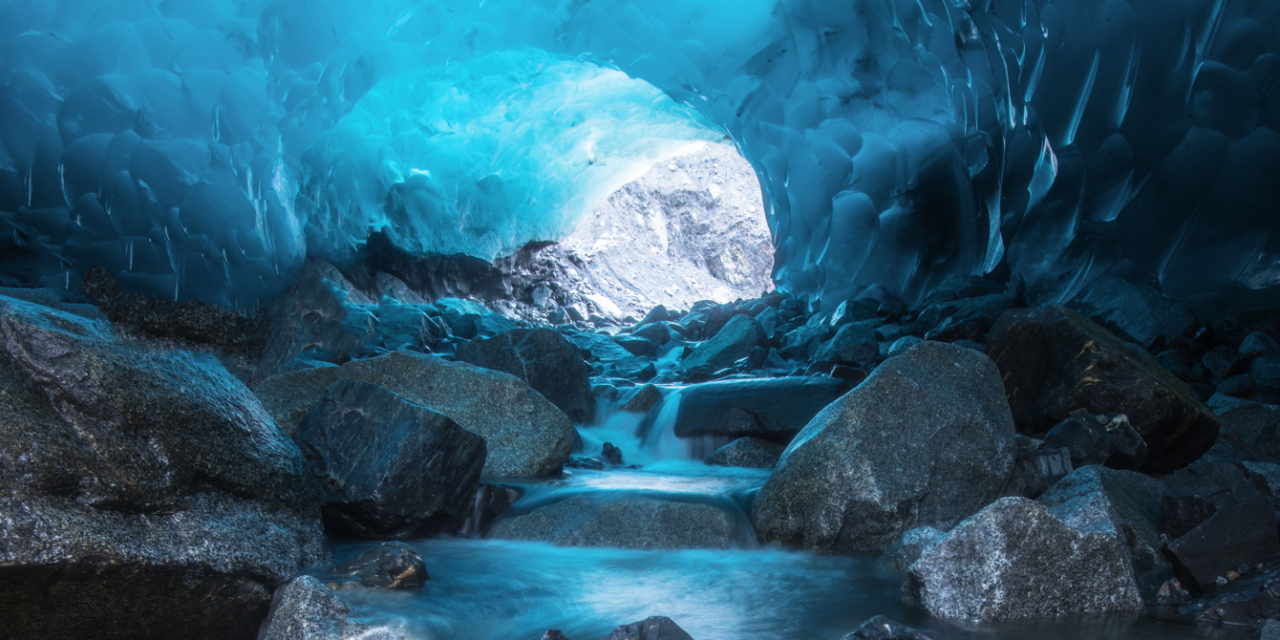
As the glacier continues to melt, its underside forms an ever-changing, otherworldly scene. Located directly under the glacier, the Mendenhall Ice Caves are hollows in the ice that are turquoise blue, twisty-turny, and (in some places) dripping wet tunnels of glacial ice that can be accessed through precarious entrances with extreme care. Why their mesmerizing color? Glacial ice appears blue because as light travels through it, colors on the red end of the light spectrum are absorbed by the ice, leaving the blue wavelengths to shine through.
Mendenhall's size may be shrinking, but there's no shortage of visitors. This is likely thanks to the caves' predictably short lifespan and a desire to see them before they're gone. Every year more than 500,000 adventurous visitors visit Mendenhall Glacier. Companies like Alaska Shore Excursions offer guided tours both over and under the ice (with appropriate gear and the understanding that large chunks of melting ice could fall on your head at any time).

While scientists and parks services report that many tourists are skeptical of Mendenhall's rapid retreat, it's important to continually educate the public. Experts predict that within 100 years, Mendenhall Glacier will not even be visible from the visitor center — an exceptionally sad prospect. Melting ice waits for no one though, so gear up and experience this natural wonder before it's too late.
This article first appeared on Curiosity.com. Click here to read the original article