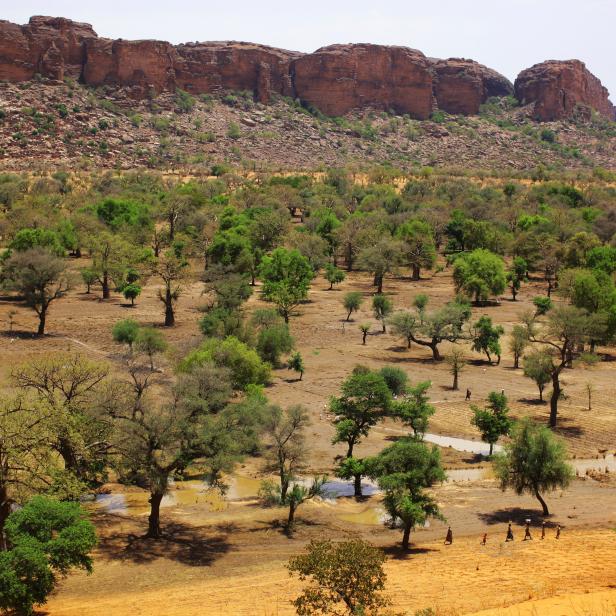
A family plough a field in the Sahel at the foot of the Bandiagara Escarpment ( The cliffs of Bandiagara ), Dogon Country, Mopti Region, The Sahel, Mali.

179770375

A family plough a field in the Sahel at the foot of the Bandiagara Escarpment ( The cliffs of Bandiagara ), Dogon Country, Mopti Region, The Sahel, Mali.

Photo by: Timothy Allen

Timothy Allen

An Epic Plan to Build a Giant Green Wall in Africa

By: Lucy Sherriff

King Canute couldn’t stop the ocean's tide from rolling in – can Africa hold back the desert? That’s certainly what the continent is trying to do with its proposed “Great Green Wall”, 8,000km (almost 5,000 miles) worth of trees that officials hope will stop the advancement of the Sahara desert, which has been rapidly expanding southward.

January 24, 2022

The project aims to plant 100 million hectares, or almost 250 million acres, of trees by 2030 across the entire width of Africa.

The initiative is a decade in, and around 15% completed, and there have already been benefits for many communities and wildlife. It’s bringing life back to the continent’s degraded landscapes at an unprecedented scale, providing not only food security and jobs but a reason to stay for the millions who live along its path.

Efforts will be concentrated along the Sahel, a region in Africa that lies between the Sahara in the north and the more tropical savanna in the south. Burkina Faso, Cameroon, Chad, The Gambia, Guinea Mauritania, Mali, Niger, Nigeria, and Senegal all form the Sahel region, where there are up to 50 million people who still live as nomads, depending on cattle to sustain their livelihoods. It’s one of the poorest places on the planet: a region of famine, conflict, and low job prospects, made even harder by the ongoing drought.
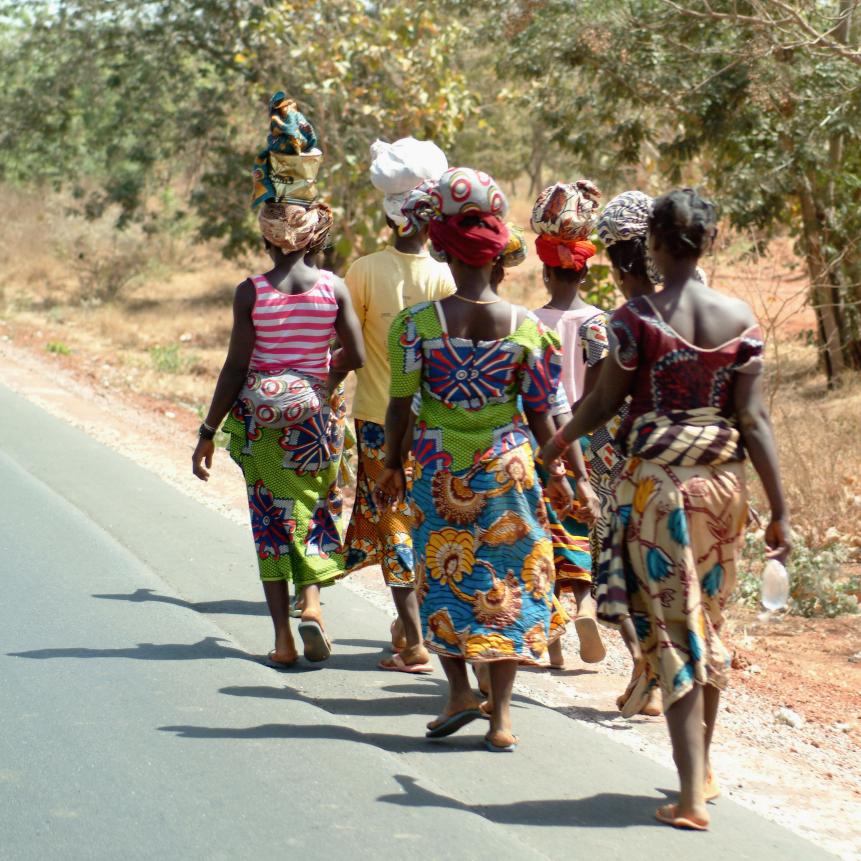
Africa, Burkina Faso, View Of Woman Walking Carrying Objects On Head (Year 2007)

607535540

Burkina Faso, part of the Sahel region in Africa.

Photo by: Kypros

Kypros

Burkina Faso, part of the Sahel region in Africa.

The creators of the wall hope it will bring an urgently needed solution to the threats facing the African continent, creating 10 million jobs in rural areas, as well as sequestering 250 million tons of carbon.

The initiative is Africa-driven, which for those on the continent, is vital, and may hold the key to success. “The Great Green Wall…is about ownership, and that has been the failure of development aid because people were never identified with it,” said Elvis Paul Tangam, African Union Commissioner for the Sahara and Sahel Great Green Wall Initiative. “But this time they identify. This is our thing.”

The idea was sparked in the 1970s when the once-fertile region turned barren thanks to climate change and intensive land use. But it’s not a new idea; China has its own desert vegetation project to hold back the Gobi Desert.

At a science conference held in December, experts estimated that the wall could have far-reaching implications on weather patterns. Climate models presented at the American Geophysical Union’s autumn conference projected that the finished wall could quadruple rainfall in the Sahel and lower average summer temperatures over most of northern Africa and into the Mediterranean. However, the hottest sections of the desert may become even hotter, increasing by up to 2.7F (1.5C).

The wall may seem like a moonshot, but all the best ideas usually are. As Thomas Sankara, former president of Burkina Faso said in 1985, "You cannot carry out fundamental change without a certain degree of madness...The courage to turn your back on the old formulas, the courage to invent the future."

Next Up

What You Can't Miss on Discovery This Week

In need of plans? We've got you covered! Here's what you can watch on Discovery all week!

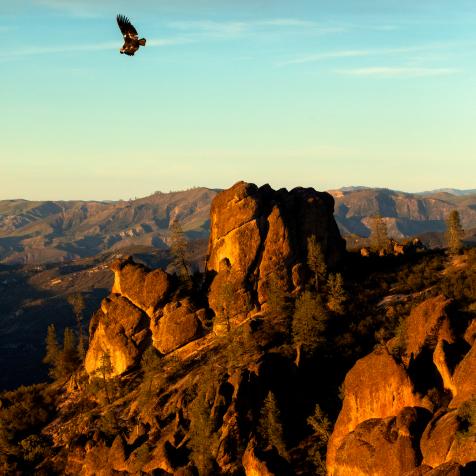
Caves to Condors: Uncovering Pinnacles National Park

Photographer and conservationist Ian Shive explores one of the lesser known National Parks, Pinnacles National Park, finding rare wildlife and extraordinary landscapes along the way.

Explore the Rugged, Remote Chaco Canyon in New Mexico

Photographer and conservationist Ian Shive photographs one of the most remote and rugged parts of the United States to take us on a journey to Chaco Canyon in New Mexico's Chaco Culture National Historical Park.

Water Cremation Offers Eco-Alternative For Funerals

Funeral traditions around the world vary widely depending on cultural and religious practices, but they often use burial or cremation. Neither method is good for the environment, and green alternatives are gaining in popularity. Aquamation, or water cremation, is a low-carbon, less energy-intensive process that could replace both.

Explore the California Redwoods

Coastal redwoods are a type of evergreen tree that can live to be more than 2,000 years old. They are the tallest trees on Earth, with some reaching more than 250 feet tall. Redwoods provide habitats for many forest creatures and pull more carbon out of the air than any other tree species. Where can you find these magnificent perennial plants?

A Spanish Sunken Galleon Has a $17B Bounty Onboard - and Now You Can See It

Way back in 1708, when the War of Spanish Succession was waging across Europe and Latin America to decide who should be the next King of Spain, three Spanish galleons set sail from Panama. They were loaded to the brim with gold, silver, emeralds, and other jewels that had been extracted from the mines of Bolivia – and were vital in financing Spain’s costly war against its enemies.

This World-Famous Chicago Skyscraper Can Sway Up to 3 Feet in the Wind

Constructing this tower was a major feat of engineering.

Why the People of Myanmar are Fighting Conservation Groups

The project, called Ridge to Reef, has become a highly controversial initiative despite being led by the UN’s development program.

The Wine from Greek Myth is Making a Comeback

According to legend, desperate Tanit wanted to attract Apollo, one the most admired and respected gods. Following the advice of Venus, the Goddess of Love, Tanit served Apollo a glass of wine made from the vines of Pantelleria. The rest is history…. or myth!

Aztec Secrets Unearthed in New Science Channel Special

LOST PYRAMIDS OF THE AZTECS highlights rarely seen archeological sites, as experts conduct excavations and attempt to build an Aztec pyramid. The special premieres Sunday, June 28 at 8P ET on Science Channel.