Photo Credit: martinhosmart / iStock / Getty Images Plus
This Little-Known Hiking Path Explores One of the Deepest Gorges in the World
A trek through China's Tiger Leaping Gorge is a journey into the country's most ethnically diverse region, where beauty and fear hang intoxicatingly in the air.
The Hike You've Never Heard Of
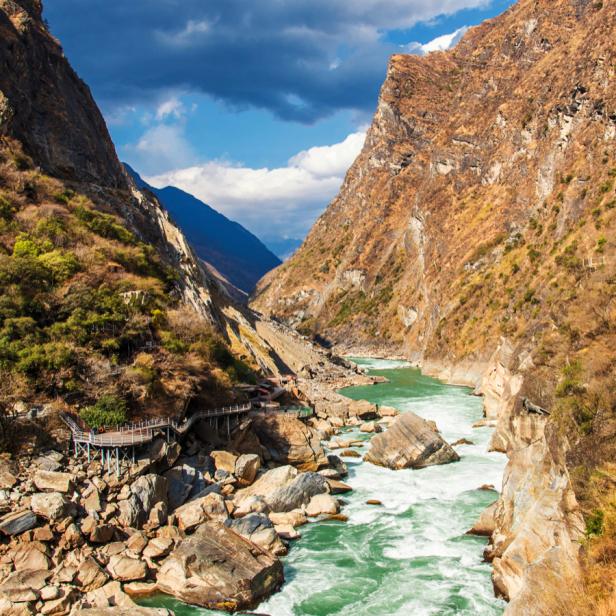
Far off China's beaten path, in the remote southwestern province of Yunnan, a winding bus ride from the UNESCO world heritage town Lijiang, lies one of the world's most beautiful and spiritual hikes. But, chances are you've never heard of it. While gaining in popularity among tourists and hikers throughout Asia, Tiger Leaping Gorge remains far from the well-worn circuit, and if you ask the hikers along the climb — few and far between — they would like to keep it that way, thank you very much.
More than just an epic hike through breathtaking and back-breaking landscapes, a trek through Tiger Leaping Gorge is a journey into a China rapidly changing. As China's most ethnically diverse province, Yunnan is a mixture of Bai, Naxi, and Dai people, along with dozens of other smaller groups ethnic minorities who maintain many of their original customs and traditional dress. Far from the lights and wealth of Beijing, Shanghai, and Hong Kong, Yunnan is a pocket where the country's rampant modernization hasn't yet completely permeated. And there's no better way to take it in than hiking through it.
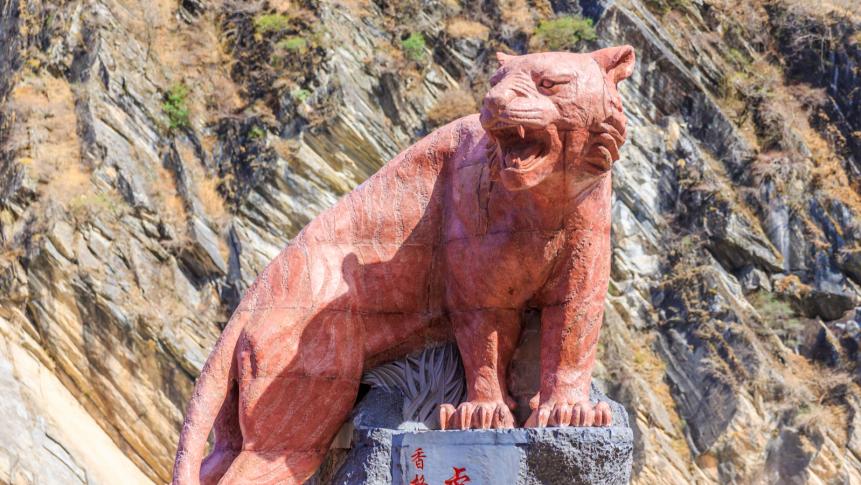
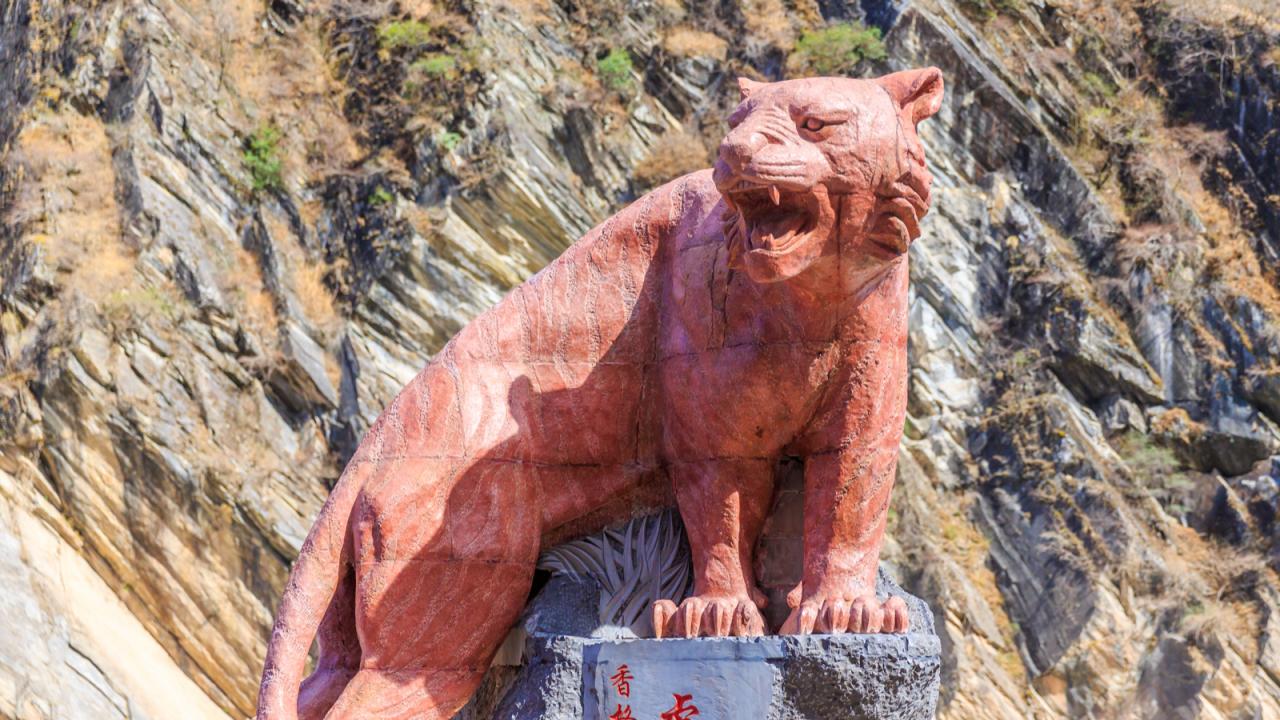
Tiger Sculpture at Tiger Leaping Gorge, Shangri-La, Yunnan province, China (Photo Credit: Png-Studio / iStock / Getty Images Plus)
This Way to Enlightenment
A through-hike of Tiger Leaping Gorge will take at least two days, and the easiest method to find your way is to simply continue going up. Just follow the signs spray-painted on rocks pointing the way to Tibet and the strings of prayer flags hanging from almost every village dwelling. A full hike of the gorge — one of the deepest in the world — will land you in Shangri-La, the high-altitude Tibetan border town named for the mythical land depicted in James Hilton's 1933 novel, Lost Horizon. Far from fictitious, the real Shangri-La's beauty and mystery shine clearly through the mist. And its name alone makes it one of the most epic ways to end a hike we can think of.
Watching Your Step
Hiking the gorge in any season has its risks, and even winter, the safest season for the climb, can bring a hailstorm and a perilous waterfall crossing. Guided by the intoxicating landscape of the jagged peaks that lead deeper into the mist and clouds, and further from civilization, Tiger Leaping Gorge is at once a profoundly spiritual journey and one firmly rooted in the real world, where watching your step can be a matter of life or death.
Despite its beauty, this isn't a hike for the faint of heart. A climb of narrow and steep paths, the crown jewel is the infamous and much talked of (and feared) "28 Bends": sharp, successive switchbacks at a painful incline. Local villagers along the trail will hawk their donkeys to lessen your burden, an option that seems altogether more precarious and deadly. After conquering the bends, hikers are rewarded with a mix of wide valleys and sweeping vistas and, most likely, no other humans as far as the eye can see.
After a full day of hiking, hikers can lay their head at one of a few guest houses, perched high in the mountains, coated in the freezing mountain air. No heat, no hot water, no problem. It's the view that matters, and a promise of a new day leading to Shangri-La. Just follow the signs and keep going up.
This article first appeared on Curiosity.com. Click here to read the original article.