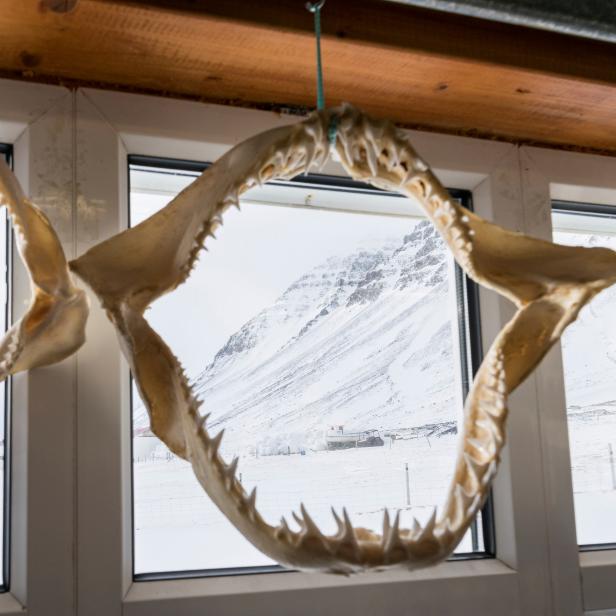
Bjarnarhoefn. a local museum dealing with the iconic local speciality Hakarl. fermented meat of the greenland shark (Somniosus microcephalus). a protected species and the life on Snaefellsnes. Europe. northern Europe. Iceland. March. (Photo by: Martin Zwick/REDA&CO/Universal Images Group via Getty Images)

956976612

Bjarnarhoefn. a local museum dealing with the iconic local speciality Hakarl. fermented meat of the greenland shark (Somniosus microcephalus). a protected species and the life on Snaefellsnes. Europe. northern Europe. Iceland. March. (Photo by: Martin Zwick/REDA&CO/Universal Images Group via Getty Images)

Photo by: REDA&CO

REDA&CO

Ancient Greenland Shark Found Thousands of Miles from Home, in Belize

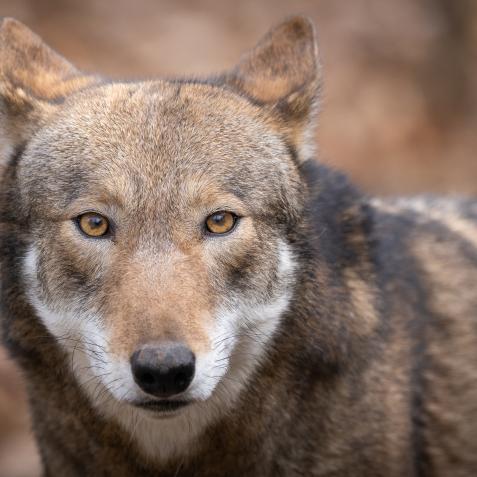
The Greenland shark, one of the longest living animals on Earth, was surprisingly found in coral reefs off the coast of Belize. The Greenland shark most commonly lives in colder waters around Greenland and Iceland and can live to be over 500 years old.

August 01, 2022

Off the southern coast of Belize, a team of Florida International University researchers was surprised to find a unique-looking shark at the end of their reel. These scientists were working with Belizean fishermen to tag tiger sharks when they noticed an ancient-looking black shark.

A Ph.D. candidate at FIU’s Predator Ecology and Conservation lab, Devanshi Kasana explained, “At First, I was sure it was something else, like a six-gill shark that is well known from deep waters off coral reefs. I knew it was something unusual and so did the fishers, who hadn’t ever seen anything quite like it in all their combined years of fishing.”

Kasana reached out to her professor when she realized their discovery was abnormal, and after conferring with several shark experts, they determined that it was most likely a Greenland shark or a hybrid of the Greenland and Pacific sleeper shark.

The Greenland shark excludes scientists and there is quite a bit more to learn about this slow-moving and slow-growing fish. From what scientists do understand, Greenland sharks tend to appear in the icy waters of the Artic and North Atlantic oceans. Their slow-moving tendencies may benefit the species, which have high estimated life spans. Because of the lack of understanding surrounding the Greenland shark, scientists speculate that Greenland sharks may lurk in waters across the globe, where they would be able to live at colder greater depths.
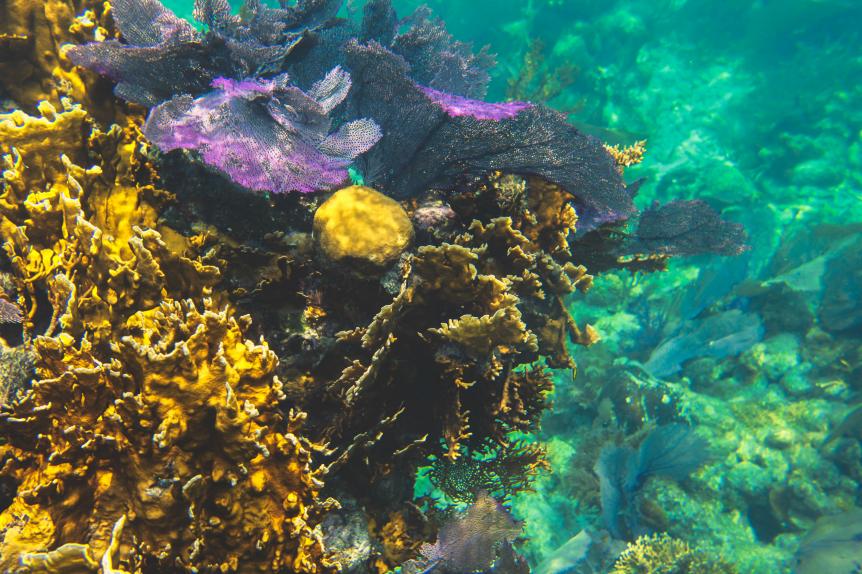
Glovers Reef, Belize

622877744

Glovers Reef, Belize

Photo by: Basia Asztabska

Basia Asztabska

Kasana and the fishermen found the shark in waters where the depth could provide an environment conducive to a Greenland shark’s needs. This area, the Glover’s Reef Atoll, forms a steep slope that drops from 1,600 feet to 9,500 feet deep.

While Kasana and the research team never anticipated the Greenland shark sighting, their discovery shows how the unexpected can pave the way for new learnings.

Next Up

Caring for Endangered Species at Georgia Aquarium

Georgia Aquarium is proud to care for over ten different endangered species, from small poison dart frogs to the largest fish in the sea, whale sharks. Every day, these animals face natural threats as well as human impacts, and as their numbers decrease it affects our planet’s ecosystems.

NASA is Helping Save Sharks

As the battle to save species across the world wages on, conservation efforts are becoming more and more technological in tracking, monitoring and collecting data.And perhaps one of the most advanced techniques is currently being deployed by NASA, an unlikely ally in the fight to save sharks.

The Mission to Save Grizzly Bear Cubs

When a mother bear is killed, what happens to her cubs? A team of scientists may have found a solution — an orphanage for grizzly bears.

Meet the Deep Sea Sharks that Glow in the Dark

The largest bioluminescent creature on land or sea was found in the ocean near New Zealand.

How to Help Florida’s Imperiled Manatees

One morning earlier this spring, a young male manatee was found stranded, starving, and distressed on the beach of the Palm Coast.

Lemurs Can Sing with Rhythm

Researchers found the first nonhuman animal that can keep a beat.

The Largest Living Thing on Earth Is a 3.5-Square-Mile Fungus

The blue whale is the biggest animal on Earth, but it’s not Earth’s biggest life form. No, the blue whale pales in comparison to the actual largest living thing on the planet: the humongous fungus.

Caring for Coral at Georgia Aquarium

Georgia Aquarium is home to a variety of coral species that come in an array of different shapes and colors. The coral reef wall in Georgia Aquarium’s Tropical Diver gallery is one of the largest coral walls in any aquarium. Propagation aquarists at the Aquarium cultivate and transplant live coral from a behind-the-scenes aquaculture pool to the reef wall in their Tropical Diver gallery.

Channel Islands: A Tale of Two Worlds

Channel Islands National Park is one of the least visited national parks in the United States, yet it is only about 20 miles from the coast of Los Angeles and the bustling surf and sand lifestyle of Southern California.

Whale and Krill Populations are the Secret to Healthier Oceans

Oceans rely on their largest species, especially whales, to recycle and regenerate ecosystems. Studies at Stanford University identify the whale as an animal that recharges its own food sources and recycles carbon. Now researchers think they have found a way to seed plankton and krill numbers that will boost whale populations and restore fading sea life.