ShutterRunner.com (Matty Wolin)
'Ice Volcanoes’ Burst Along Lake Michigan
Past due! Lake Michigan’s winter wonders came a bit late this year. Do we blame climate change for this?
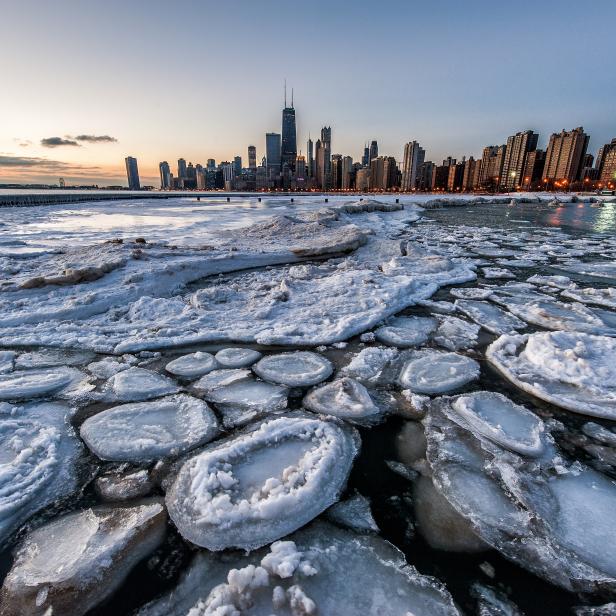
During the summer, locals surround Lake Michigan to cool off from a hot, sunny day. But in the winter, they expect something a little different to form over the lake- ‘ice volcanoes.’ Yes, you read that right! Ice volcanoes are icy mounds created when a wave breaks through the cracks of ice formed along the lake’s surface. They are caused by freezing subzero temperatures, and in this case, the result of two winter storms. Oddly enough, these ice volcanoes were expected to be seen in late January, but are just appearing now.
It was a great day to visit the beach and watch the waves interact with the ice. Here's a couple "ice volcanoes" erupting at Oval Beach on Sunday, February 16, 2020. #miwx #wmiwx pic.twitter.com/B0Vkl18RrN
— NWS Grand Rapids (@NWSGrandRapids) February 16, 2020
Although commonly called ‘ice volcanoes’, the term is a ‘misnomer’ because molten rock and gas are required for it to be volcanic. It’s uncertain where the term originated from, but the reason it’s used commonly is because the icy formations are able to grow in height as they spew more water, causing the liquid to freeze into a cone-shape, thus resembling an ice volcano.
Tom Finley, Director of Education At Schlitz Audubon Nature Center in Wisconsin, revealed there was speculation we wouldn’t get a glimpse of the icy formations this year. According to the National Oceanic and Atmospheric Administration, only 2.4% of the Great Lakes surface was covered by ice by late January, the smallest amount in nearly 50 years; on top of the fact that it was the ninth-warmest January on record. These issues, combined with warming temperatures and rising water levels, have made the sight of ice volcanoes rarer than usual, and their formations now only last a few weeks.
Finley explains, “[t]hough Lake Michigan may look calm under the ice shelf that forms in frigid temperatures, the water is bursting with life and motion underneath. The moving water takes advantage of the imperfections in the ice floating above it.” Once the moving water has found a crack between the lake’s surface and the ice shelf, the holes expand as a wave is formed penetrating the ice, creating an ice volcano. The recipe for success: the colder the water and the stronger the wave will leave you with the ‘conical shape’, resembling a volcano. However, a distinctive difference in warmer water temperature will break the ice volcanoes apart.
Those are some of the best ice volcano photos I have seen, I have seen them on the east end of Lake Erie as well!!
— Tom Niziol (@TomNiziol) February 16, 2020
While this is a common feature of living near Lake Michigan, it is recommended to proceed with caution, be wary of frostbite, and to bring proper equipment such as walking poles and snow cleats.



.jpg.rend.hgtvcom.476.476.suffix/1633031314945.jpeg)