Meet Georgia Aquarium’s two love birds, Charlie and Lizzy!

Meet Georgia Aquarium’s two love birds, Charlie and Lizzy!

Photo by: c/o Georgia Aquarium

c/o Georgia Aquarium

Love is in the Air (and the Water) at Georgia Aquarium

By: Georgia Aquarium

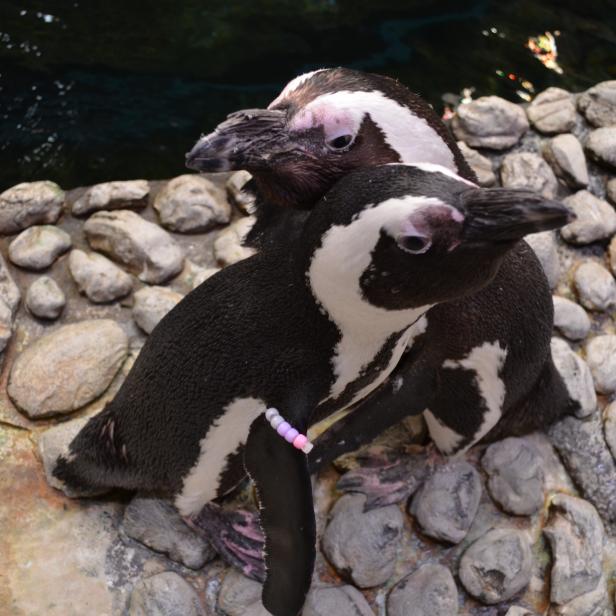
Penguins are among the few animals that mate for life; we call this pair bonding. It must have been “bond at first sight” for Charlie and Lizzy, two African penguins at Georgia Aquarium who have been pair-bonded for about 28 years.

February 14, 2022

Charlie and Lizzy are our two oldest African penguins at the Aquarium and our oldest known penguin pair. Charlie is 36 years old, and Lizzy will be 35 in March. The average lifespan for African penguins in their natural habitat is 10-15 years, so they have far exceeded their life expectancy!

Like many animals, African penguins use body language and vocalizations to attract a mate. They can be seen shaking their heads and making loud mating calls. They also display these behaviors when “flirting” with their bonded partner. Charlie and Lizzy are often seen displaying head shakes, vocalizations, and “flirty eyes” as our trainers like to say.

While Charlie and Lizzy are off-exhibit due to their age and to monitor their health, they are under close watch by our animal care team and often take strolls around the Aquarium’s exhibits. In their natural habitat, African penguins spend their time exploring, foraging for fish, and walking the beaches. We mimic these explorations by taking our penguins on regular walks around our galleries. This allows them to discover new areas outside of their habitat and serves as enrichment. For Charlie and Lizzy, these walks do just that and are a form of exercise.

Charlie and Lizzy’s heartwarming love story is one of our favorites to share. We enjoy watching their relationship continue to flourish as they “flirt” and take romantic strolls around the Aquarium, waddling wing-in-wing.

Next Up

Catching a Glimpse of Comet NEOWISE, a Once in a Lifetime Moment

If you find yourself in a place with clean air and an unobstructed view of the night sky, you will undoubtedly be mesmerized by its starry-depth and beauty.

Are Sharks Coming Closer to Our Shores?

Scientists at the University of Miami Rosenstiel School of Marine and Atmospheric Science have speculated that variables related to high urbanization may be driving higher occurrences of sharks within coastal waters. With high increased levels of urbanization in coastal cities, it’s important for our world to understand how ocean life adapts to the changes in their habitats.

Canada's Wildlife is in Hot Water

Uncharacteristically hot temperatures in Canada and the Pacific Northwest have left people searching for relief. But what about the wildlife? It is only getting warmer, and that has caused irreversible damage and tragic demise to over 1 billion sea creatures.

Beneath the Water in South America’s Wetlands Lurk Hundreds of Swimming Jaguars

Fish-eating jaguars prowl the wetlands of Brazil, Bolivia, and Paraguay exhibiting extremely unusual behavior to scientists.

An Inspiration for All: Rosie the Penguin

Rosie the Riveter, meet your adorable present-day inspiration, Rosie the penguin from the OdySea Aquarium in Scottsdale, Arizona.

Sea Otters Play and Grow at Georgia Aquarium

When visiting Georgia Aquarium, you may see our southern sea otters playing with toy keys, Kongs ™, and carwash kelp, or maybe you’ve seen them lounging in a kiddie pool filled with ice. These are all environmental enrichment devices and are essential to the care and health of our animals.

Species Loss is a Disaster for Wildlife and Humankind

Biodiversity and species loss is a grave threat, facing not only animals and plants but society too. Ecologists say that losing species directly affects human food production, water supply, building materials, and energy sources, so our interactions with and handling of ecosystems must be regulated.

Offshore Wind Farms Present Huge Green Gains and Tricky Challenges

Wind power is one of the most important renewable energy sources for reducing air pollution and climate warming emissions across the planet. Turbine energy has a huge green advantage with a carbon footprint 90 times smaller than coal and 40 times smaller than gas-fired power.

Photographing Sequoia National Park with a Smartphone

As a photographer, I love giving myself technical limitations.

An Otterly Adorable Awareness Week

Our southern sea otters at Georgia Aquarium are furry, energetic, and (of course) adorable. They spend most of their days swimming, playing, and eating, but most importantly they inspire our guests to care for our world’s waters.