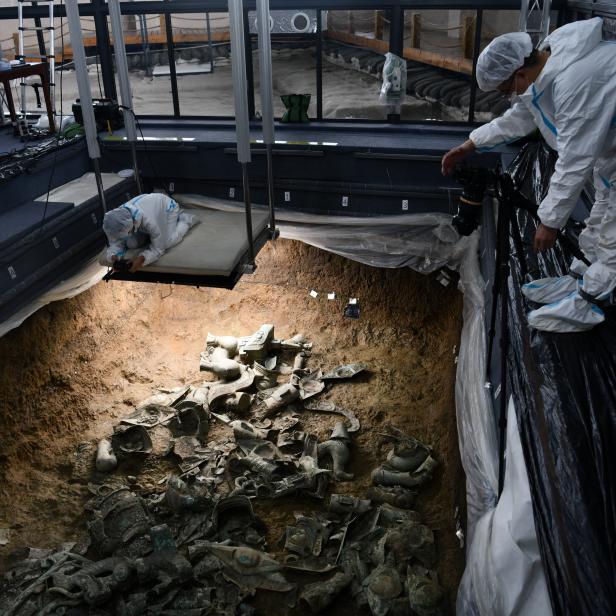
GUANGHAN, CHINA - AUGUST 08: An archaeologist works at No. 8 sacrificial pit of the Sanxingdui Ruins site on August 8, 2022 in Guanghan, Deyang City, Sichuan Province of China. (Photo by Zhang Lang/China News Service via Getty Images)

1413610942

GUANGHAN, CHINA - AUGUST 08: An archaeologist works at No. 8 sacrificial pit of the Sanxingdui Ruins site on August 8, 2022 in Guanghan, Deyang City, Sichuan Province of China. (Photo by Zhang Lang/China News Service via Getty Images)

Photo by: China News Service

China News Service

Does this Incredible New Discovery Mean We Should Believe in Fairies After All?

By: Lucy Sherriff

Archaeologists in China recently unveiled a fascinating new discovery of ancient communities worshiping fairies, after unearthing a “one of its kind” treasure trove at the famous Sanxingdui archeological site.

August 10, 2022

Sanxingdui, which is located in Guanghan, Sichuan, has long been the site of archaeological finds. Researchers have been excavating sacrificial pits at the site since 2020, and have found almost 13,000 archaeological items that date back to the Bronze Age. The ruins cover an area of 12 square km (4.6 miles) and are believed to be the remnants of the Shu Kingdom, dating back some 4,500 to 3,000 years.

In June, another discovery was made, this time a treasure trove of bronze, gold, and jade wares. At least 10 of the bronze wares unearthed had never been excavated before. Experts believe the findings point to the worship of fairies by the people of that time. Among the sculptures found was a bronze box with a green jade vessel. The top and bottom of the vessel are covered with tortoise-shaped reticulate lids, and the sides of the box are adorned with a bronze hinge with handles shaped like dragon heads.
Three-Star Piles, Sanxingdui Ruins, bronze figurine

1403943077

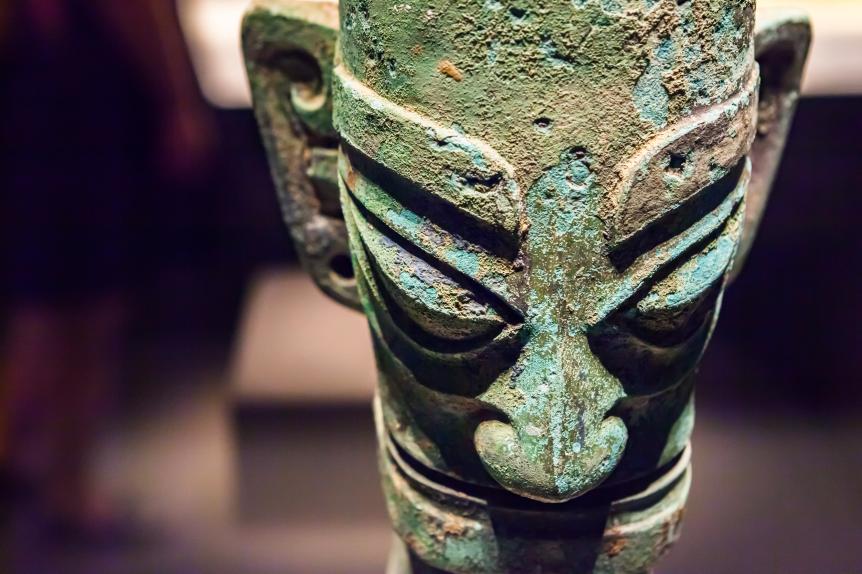
Three-Star Piles, Sanxingdui Ruins, bronze figurine

Photo by: xxwp

xxwp

Bronze heads with gold masks, a bronze sculpture with a human head and snake body, a bronze altar, a giant mythical creature made of bronze, and a dragon-shaped bronze item with a pig nose, were also found.

"The sculptures are very complex and imaginative, reflecting the fairy world imagined by people at that time, and they demonstrate the diversity and richness of Chinese civilization," said Zhao Hao, an associate professor at Peking University who is head of the excavation of the No.8 pit.

So should we be taking fairies seriously? Well…maybe. Although they may not quite be the Tinkerbells and the Fairy Godmothers that you’re thinking of.

The word “fairy” was derived from the term “fae”–Old English–and “fair”–Old French. It refers to women who were healers and enchantresses, such as the Arthurian figure Morgan le Fay.

In Chinese mythology, these fairies are powerful spirits associated with elements of nature: mountains, rivers, the wind, the ocean, and so on.
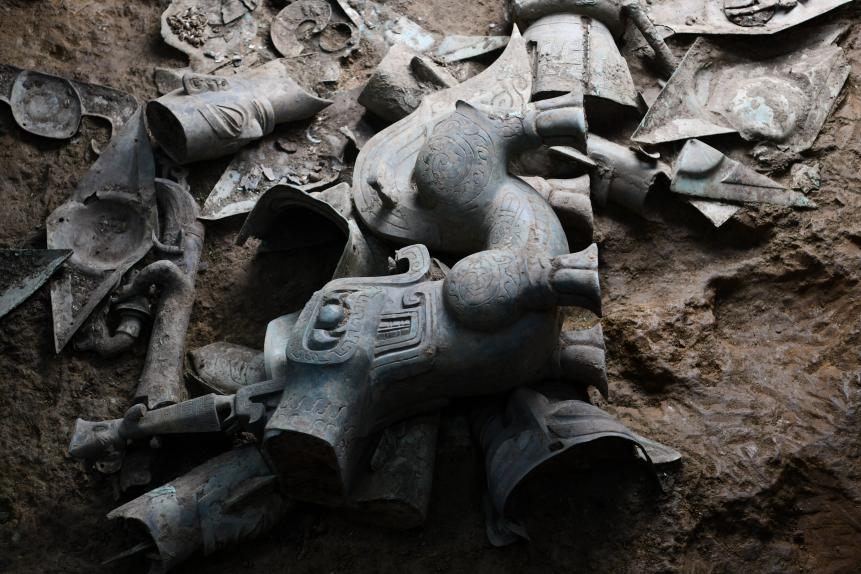
GUANGHAN, CHINA - AUGUST 08: Bronze statue relics are unearthed at No. 8 sacrificial pit of the Sanxingdui Ruins site on August 8, 2022 in Guanghan, Deyang City, Sichuan Province of China. (Photo by Zhang Lang/China News Service via Getty Images)

1413610929

GUANGHAN, CHINA - AUGUST 08: Bronze statue relics are unearthed at No. 8 sacrificial pit of the Sanxingdui Ruins site on August 8, 2022 in Guanghan, Deyang City, Sichuan Province of China. (Photo by Zhang Lang/China News Service via Getty Images)

Photo by: China News Service

China News Service

These spirits can be kind, or cruel, depending on their whims. In the recent discovery, the Sanxingdui artifacts shed more light on this mysterious civilization, which came to its end at the hands of the Qin dynasty around 316BC. These objects are believed to have been sacrificial offerings as a way to communicate with spirit fairies. A report by two archaeologists notes that: “spirits were specifically venerated” during this period.

Fairies are not entities relegated to ancient times, however. In Chinese tradition, the Eight Fairies are deities that are still worshiped. The fairies were human beings who had achieved immortality through the constant practice of Taoism. They appear in numerous Chinese artworks and have the similar artistic appeal that the Seven Dwarfs have to us, Westerners.

Regardless of whether you believe in fairies, spirits, or other entities, the historical significance of these recent discoveries is an unarguably fascinating discovery for all of us.


Next Up

We Finally Know How Tardigrades Survive Deadly Radiation

Learn about tardigrades at Discovery.com

What Could Delay the Historic SpaceX and NASA Launch?

Detailed planning and test after test do not always mean smooth sailing in space flight.

You've Never Seen a Picture of the Entire Milky Way

It's easy to believe that a picture of the Milky Way exists—but it doesn't.

What are the Chances of Life Appearing On…Earth?

Just how lucky are we on Earth? What were the chances that life would arise, let alone lead to intelligence?

We Have Liftoff: Congratulations to NASA and SpaceX

Here's to NASA, SpaceX, Astronauts Bob Behnken and Doug Hurley, and all of the engineers, scientists, and staff involved with the Saturday, May 30th historical launch.

You Don't Get Tetanus From Rust

Rusty nails won't give you tetanus, but find out what does.

What Came Before the Big Bang?

Physicists are still trying to solve this mystery.

William Shatner is going where no 90-year-old has gone before

The Star Trek star will become the oldest person to go to space when he launches aboard a Blue Origin rocket on Wednesday, October 13. Watch live coverage on Space Launch LIVE: Shatner in Space on Discovery and Science Channel starting at 8:30A ET with liftoff scheduled for 10A ET.

Air Conditioning: Reinventing Cool Technology to Reduce Climate Change

Air conditioning (AC) units have become an essential part of modern life, but this simple refrigeration technology has remained relatively unchanged since the 1940s. As climate change effects like rising temperatures and heat waves encourage more AC use, the increase in energy needed to cool us down could easily accelerate climate change.

Wild Climate Ride Expected as Cryptocurrency Popularity Fuels Power Consumption

Bitcoin’s wild speculation and surging popularity has caused scientists and economic analysts to rate the digital cryptocurrency as a danger to the environment. More than 60% of Bitcoin’s mining cost is in the electricity it uses. And as its value rises, so does the entire currency’s energy consumption and its potential impact on climate change.