a0047-000046

Photo by: GK Hart/Vikki Hart

GK Hart/Vikki Hart

Can You Teach a Goldfish to Drive?

A new experiment suggests these household fish actually make good drivers.

February 23, 2022

While it may seem like fish will drive cars when pigs fly, in a new experiment scientists put goldfish’s sense of direction to the test.

Scientists at Ben-Gurion University in Israel taught several goldfish to drive a robotic “car”–essentially the opposite of a submarine, a tank of water on wheels–around a room. Teaching goldfish to navigate such unfamiliar terrain may seem like a fish-out-of-water idea, but they took to it like naturals.

The motorized fish tank was equipped with a camera to track the fish’s position. When the goldfish swam towards one of the walls, the fishmobile drove in that direction.

The researchers trained the fish over a dozen 30-minute sessions to drive to the center of a small room towards a pink board by giving the fish a treat whenever it arrived at its destination. In the first session, the goldfish averaged between 2-3 successful trips. By the end of the experiment, the fish were averaging between 17-18 successful trips per session.

As with humans, some of the fish took their driver’s ed quicker than others– taking faster and more direct paths to their target.

Throughout the experiment, researchers changed up the starting position of the fishmobiles. Even in different locations, the goldfish were still able to reach the pink board. This finding ruled out the possibility that the fish were just memorizing the pattern of movements to get to their reward. These marine animals were actually planning new routes to get to their destination.
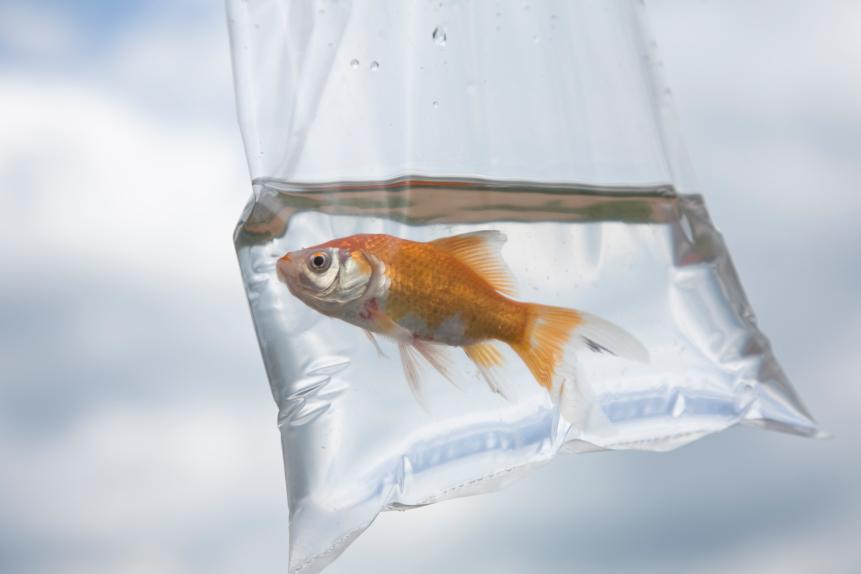
goldfish in a plastic bag

172304777

From fish out of water to accomplished motorists.

Photo by: dageldog

dageldog

From fish out of water to accomplished motorists.

“That was pretty conclusive that the fish actually navigate,” said Ohad Ben-Shahar, coauthor of the study. The animals’ sense of direction and orientation isn’t limited to the water.

After a successful bout of driving school, the team let one of the goldfish take a joyride throughout the entire building. “And it actually started to explore. It went down one of the corridors and started to sneak away,” said Ben-Shahar.

Maybe next they’ll teach a fish how to ride a bicycle.
Next Up

World's First Malaria Vaccine Offers Hope to Millions

Tens of thousands of lives could be saved each year from sickness and death caused by malaria following the World Health Organization (WHO) approval of a first-ever vaccine. Scientists have recommended the RTS,S vaccine for children in sub-Saharan Africa and other high-risk areas to prevent one of the world’s oldest and deadliest infectious diseases.

All Rainwater is Unsafe to Drink According to Study

A study by Stockholm University and ETH Zurich scientists found that all rainwater on Earth is unsafe to drink due to the levels of PFAS, or toxic chemicals. These PFAS or ‘forever chemicals’ are becoming a part of a future reality that humans must, unfortunately, learn to live with.

Waste Heat Can Be Transformed Into Abundant Clean Electricity

Waste heat is a worldwide energy problem most people have probably never heard about. Every machine and power station, even renewable energy like wind and solar, creates heat that is simply lost in the atmosphere. Thankfully, scientists and engineers are devoted to capturing heat and transforming it into useful electricity.

Ultraviolet Light Could Be the Answer to Future Disease Outbreaks

Coronavirus and the pandemic have made people hyper-aware of reducing their exposure to infection indoors by wearing masks, ventilating rooms, and social distancing. But a new way of using ultraviolet light to kill microbes could rapidly reduce virus particles in public spaces and help prevent future disease outbreaks.

There's a Biodiversity Crisis--Here's What You Need to Know

Despite the world slowing down during the pandemic and studies hailing the slowdown of pollution and positive benefits on the environment, there’s one thing that continued full throttle: the globe’s biodiversity crisis.

Can this New 'iTEARS' Technology Help Detect Diseases?

New technology is helping scientists decipher microscopic tear particles to offer clues to what’s going on inside the body. With a simple few drops of tears, this technology can help doctors and scientists detect eye disease and signs of diabetes.

Thousands of Bacterial Enzymes Hold the Key to Plastic Pollution Clean-up

Scientists suggest that people ingest at least 50,000 plastic particles a year. Health issues linked to the way plastic chemicals act on the body include cancer and infertility. And investigations show that we are breathing in 100 times more microplastics in our homes than was previously thought. So what can help tackle plastic pollution?

Scientists Are Resurrecting the Tasmanian Tiger from Extinction

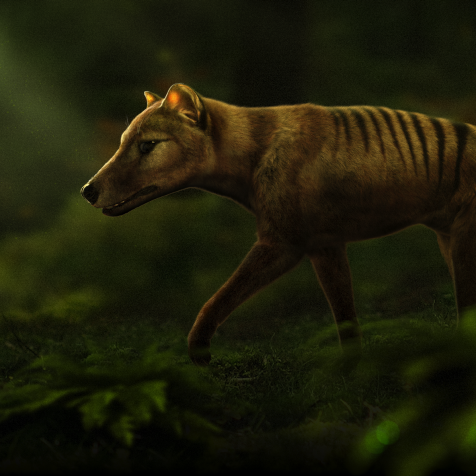
Colossal Biosciences has announced it has begun work on the de-extinction of the thylacine, an iconic Australian marsupial eradicated by human hunting in 1936. Learn how they plan to do it in an exclusive interview with marsupial evolutionary biologist Andrew Pask Ph.D. and Colossal Co-Founder Ben Lamm.

How 3D Print Building is Changing the Future

Building with 3D printing technology is sparking widespread interest in the construction industry. Besides reducing waste and our impact on the environment, it can speed up construction from weeks, or months, to days. Projects that use simple raw materials like soil, straw, and even salt, can be built in a fraction of the time and cost of traditional construction.

Mining e-Waste to Recover Precious Metals and Save the Planet

Electronic waste, or e-waste, has reached unsustainable levels. More efforts are needed to reclaim precious metals from discarded laptops and smartphones.