Curiosity Daily Podcast: Multitasking Is Impossible, How A Flat Earth Would Even Work, and Nearly Every Country’s Name Origin

Learn how a flat Earth would even work; why multitasking is impossible, and what you should do instead; and the four things that nearly every country on Earth is named after.

September 04, 2018

Episode Show Notes:

In this podcast, Cody Gough and Ashley Hamer discuss the following stories from Curiosity.com to help you get smarter and learn something new in just a few minutes:

Please tell us about yourself and help us improve the show by taking our listener survey! https://www.surveymonkey.com/r/curiosity-listener-survey

If you love our show and you're interested in hearing full-length interviews, then please consider supporting us on Patreon. You'll get exclusive episodes and access to our archives as soon as you become a Patron!

Learn about these topics and more on Curiosity.com, and download our 5-star app for Android and iOS. Then, join the conversation on Facebook, Twitter, and Instagram. Plus: Amazon smart speaker users, enable our Alexa Flash Briefing to learn something new in just a few minutes every day!

See omnystudio.com/listener for privacy information.

Next Up

A Guide to Defending the Earth

Let’s say one day astronomers announce that our worst nightmare has come true: a large object is headed towards the Earth with a significant chance of impact. What do we do?

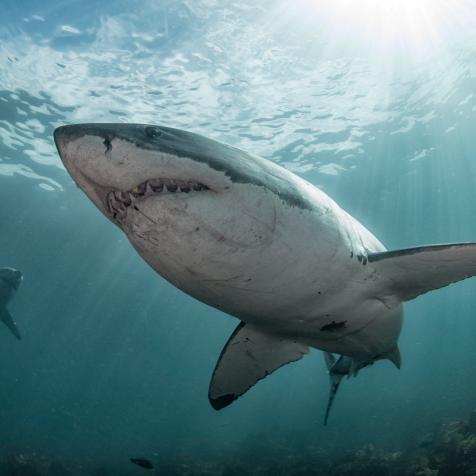
Investigate the Mind of a Shark on 'How to Train a Great White'

See how these apex predators actually think. Will they completely transform our understanding of their intelligence?

Scientists Watch as Stars Quake

The European Space Agency’s Gaia spacecraft has managed to watch stars tremble, their light subtly changing as starquakes ripple through their surfaces. Which is pretty cool, because Gaia wasn’t even designed to do it.

Shark Week: The Podcast - Do Scientists Need to Kill Sharks?

Host Luke Tipple welcomes two guests to discuss how researchers can kill sharks in the name of science – and whether they need to at all. The first is Dr. Neil Hammerschlag, shark researcher and founder of Atlantic Shark Expeditions, and an expert on data-gathering in the field. He’s followed by explorer Fred Buyle, a world-record-breaking freediver whose innovative methods of shark tagging are explored. Plus, our researcher Sierra tells us about how a 50-year study changed our understanding of tiger sharks – and much of the work wasn’t even done by scientists.

Shark Week: The Podcast - How To Have A Career in Shark Science

Shark Week’s Luke Tipple tackles the question “How can I work with sharks?” alongside two experts in the field – and their answers are not always the obvious ones. Luke is joined first by Kelly Link, Associate Curator of the Georgia Aquarium who talks about what it’s like to be an aquarist, how it differs from field work, and how to get yourself noticed. The second guest is Dr. Neil Hammerschlag who goes into detail on what it takes to become a prominent scientist, and what other paths you can take if a PhD isn’t for you. And at the end, researcher Sierra stops by to tell us about the world’s smallest shark.

Shark Week: The Podcast - How Smart Are Sharks?

The discussion turns this week to sharks’ intelligence, and how it varies among species. Host Luke Tipple is joined by Dr. Tristan Guttridge, a behavioral ecologist and veteran of Shark Week whose research has tackled the social smarts, and even personalities, of different kinds of sharks. He sheds light on why we shouldn’t just think of them as dumb fish with rows of razor-sharp teeth. And at the end, our researcher Sierra Kehoe tells us about shark hypnosis.

Shark Week: The Podcast - How Shark Fishing Funds Human Trafficking

Luke Tipple is joined by Pulitzer Prize-winning journalist and author of the Outlaw Ocean Ian Urbina, who has dedicated his life to chronicling crime on the high seas. They discuss the state of our world’s oceans, how nearly 20% of your seafood was likely caught illegally, and the surprising link between modern slavery and the killing of sharks.

Shark Week: The Podcast - How Many Sharks Are Yet to Be Discovered?

Luke Tipple is joined by Shark Week host and all-around adventurer Forrest Galante. They discuss his upcoming special Alien Sharks: South Africa, Forrest’s remarkable talent for finding creatures once believed to be extinct, and how many shark species may still be unknown. Then, our researcher Sierra stops by to tell us about the world’s most prehistoric shark.

Shark Week: The Podcast - How Did a Shark Encounter Survivor Become an Advocate for Their Protection?

Shark Week’s Luke Tipple welcomes professional photographer Mike Coots, who lost his leg to a tiger shark attack when he was only 18. But after his horrific injury, he came to love sharks, and became a lifelong advocate for their safety. Luke and Mike discuss his career, his love for photographing sharks, and how to positively approach the big life-changing moments that can happen to any of us.

Shark Week: The Podcast - Undiscovered Sharks and the State of the Ocean

Luke Tipple invites “The Lost Shark Guy,” Dr. Dave Ebert, who is personally responsible for finding dozens of shark species that were either previously unknown to science or thought to be extinct. He and Luke discuss why shark populations are a direct indicator of how healthy the ocean is, how to find undiscovered sharks, and why diversity in sharks is essential for marine life.