


Tool Use and Language in the Brain, Why Black Holes Get Bigger
Learn how tool use and language work in the brain; and why black holes get bigger due to the expansion of the universe.
February 17, 2022
Tool use and language ability go hand in hand by Grant Currin
- Using mechanical tools improves our language skills. (2021, November 11). EurekAlert! https://www.eurekalert.org/news-releases/934004
- Thibault, S., Py, R., Gervasi, A. M., Salemme, R., Koun, E., Lövden, M., Boulenger, V., Roy, A. C., & Brozzoli, C. (2021). Tool use and language share syntactic processes and neural patterns in the basal ganglia. Science, 374(6569). https://doi.org/10.1126/science.abe0874
- Know Your Brain: Basal Ganglia. (2014). Neuroscientifically Challenged. https://neuroscientificallychallenged.com/posts/what-are-basal-ganglia
Black holes get bigger from the expansion of the universe itself by Briana Brownell
- New study proposes expansion of the universe directly impacts black hole growth. (2021, November 3). EurekAlert! https://www.eurekalert.org/news-releases/933693
- Croker, K. S., Zevin, M., Farrah, D., Nishimura, K. A., & Tarlé, G. (2021). Cosmologically Coupled Compact Objects: A Single-parameter Model for LIGO–Virgo Mass and Redshift Distributions. The Astrophysical Journal Letters, 921(2), L22. https://doi.org/10.3847/2041-8213/ac2fad
Follow Curiosity Daily on your favorite podcast app to get smarter with Cody Gough and Ashley Hamer — for free! Still curious? Get exclusive science shows, nature documentaries, and more real-life entertainment on discovery+! Go to https://discoveryplus.com/curiosity to start your 7-day free trial. discovery+ is currently only available for US subscribers.
See omnystudio.com/listener for privacy information.
Next Up

Get Ready for Puppy Bowl XXII on Animal Planet!
Puppy Bowl XXII premieres Sunday, February 8, 2026, at 2:00PM ET/11:00AM PT with more adoptable puppies from shelters and rescues than ever before.

Watch Ken Jeong & Rei Ami Make a Splash on 'K-Pop Shark Heroes'
They'll use the power of K-Pop to change the way we view sharks forever!

Get Ready for Puppy Bowl XXI on Animal Planet!
Puppy Bowl XXI premieres Sunday, February 9 at 2P ET/11A PT with more adoptable puppies from shelters and rescues than ever before.
Get Ready for Puppy Bowl XX on Animal Planet!
Puppy Bowl XX premieres Sunday, February 11 at 2P ET/11A PT with more adoptable puppies from shelters and rescues than ever before.
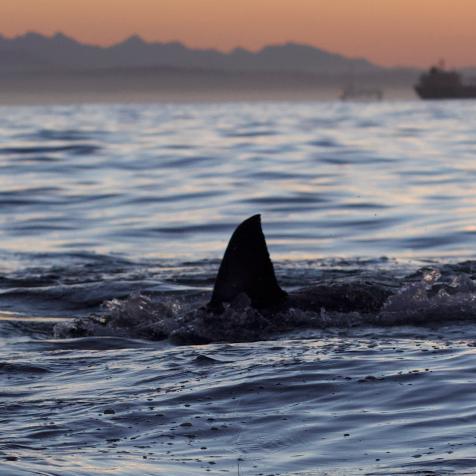
Shipwrecked & Surrounded by Sharks
This week, we do things a little differently, as Shark Week’s Luke Tipple invites Adventure Aaron into the podcast studio to talk about his incredible near-death experience on the open water. Adventure Aaron gets into what it takes to circumnavigate the world in an ocean rowboat, what it’s like to stare eye-to-eye with an oceanic white tip that probably wants you for lunch, and everything else that happened to him when his boat was capsized, and he was lost by himself at sea.
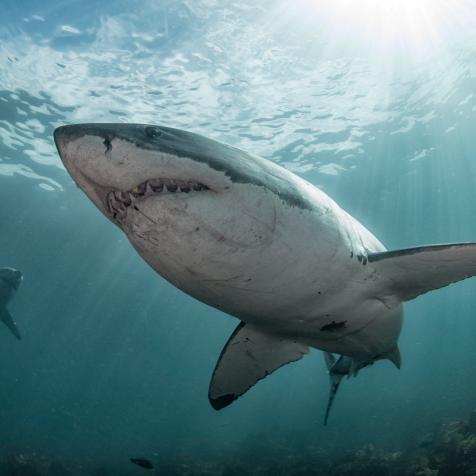
Shark Week: The Podcast - How To Have A Career in Shark Science
Shark Week’s Luke Tipple tackles the question “How can I work with sharks?” alongside two experts in the field – and their answers are not always the obvious ones. Luke is joined first by Kelly Link, Associate Curator of the Georgia Aquarium who talks about what it’s like to be an aquarist, how it differs from field work, and how to get yourself noticed. The second guest is Dr. Neil Hammerschlag who goes into detail on what it takes to become a prominent scientist, and what other paths you can take if a PhD isn’t for you. And at the end, researcher Sierra stops by to tell us about the world’s smallest shark.
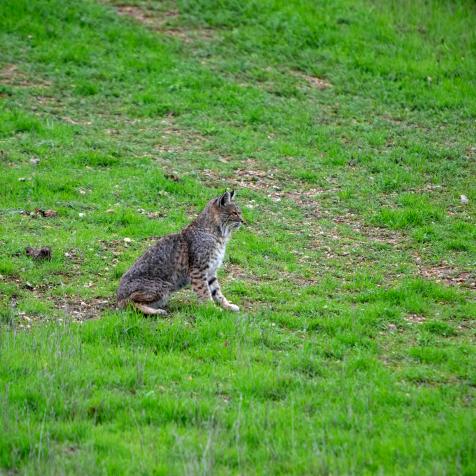
Bobcat on the Hunt
Nature photographer Ian Shive gets a rare close-up of a bobcat hunting ground squirrels in California's Central Coast.


Curiosity Daily Podcast: Why Asthma Gets Worse at Night, Earth’s Largest Living Thing
Learn about a heroic experiment that helps explain asthma getting worse at night; and the largest living thing on earth.
Curiosity Daily Podcast: Psychology of Online Trolls, Rattlesnake Illusions, Blazars
Learn about what online trolls are like in real life; an auditory illusion rattlesnakes use to trick humans; and blazars.