


Curiosity Daily Podcast: The Science of Swearing and What it Says About Our Values
Kids get grounded for swearing, and bad words are banned from television... but why is that the case if most adults swear anyway? Linguist and cognitive scientist Benjamin K. Bergen says that swearing can be funny, cathartic, and even useful! In this rated-PG episode, he explains how the science of swearing can help us understand how our brains process language, and what the worst words tell us about our culture. And the episode is squeaky clean: no swearing included!
May 15, 2018
Episode Show Notes:
More from Curiosity:
- BACKBLAZE: Fully featured 15-day free trial of unlimited cloud backup for your Mac or PC, which you can get for just $5/month
- SKILLSHARE: Two months of unlimited access to more than 20 thousand classes for just 99 cents
- THRIVE MARKET: Get an extra 25% off your first order along with a free 30-day trial
- Swearing Can Literally Dull The Pain
- This 1785 Dictionary of Vulgar Phrases Is a Hilarious Collection of Bad Words from the Past
- The First Barcode Scanned
- Gravitational Lensing Is a Magnifying Glass Made by Gravity
Additional resources from Dr. Benjamin Bergen:
Other studies and resources discussed:
- Swearing, Euphemisms, and Linguistic Relativity | PLOS
- Effect of Manipulated State Aggression on Pain Tolerance | SAGE Journals
- Cursing and gender in a corpus of MySpace pages | Semantic Scholar
- Swearing in English: Bad Language, Purity and Power from 1586 to the Present | Google Books
- Gender, expletive use, and context: Male and female expletive use in structured and unstructured conversation among New Zealand university students | ProQuest
See omnystudio.com/listener for privacy information.
Next Up

A Guide to Defending the Earth
Let’s say one day astronomers announce that our worst nightmare has come true: a large object is headed towards the Earth with a significant chance of impact. What do we do?

Investigate the Mind of a Shark on 'How to Train a Great White'
See how these apex predators actually think. Will they completely transform our understanding of their intelligence?

Shark Week 2026 Kicks Off July 26!
Take a bite out of our 38th annual Shark Week event, starting July 26, 2026! Here's everything we have coming up, only on Discovery.

An Astronomical Review of “Don’t Look Up”
In our annual New Year’s family tradition of struggling to stay awake until midnight, we decided to watch “Don’t Look Up,” the Adam McKay satire starring Leonardo DiCaprio, Jennifer Lawrence, and other fabulously good-looking people.
Shark Week: The Podcast - What is the Status of Sharks in our Oceans?
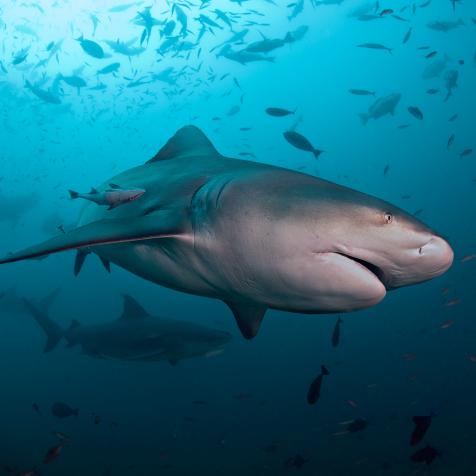
In this season’s final episode, Luke welcomes Emmy-winning filmmaker and conservationist Shawn Heinrichs to discuss the state of sharks in the ocean. They go over how both legal and illegal fishing operations are decimating the ocean’s wildlife, what it’s like to have a hit put out on you for exposing criminal enterprises to the world, and whether or not NOAA’s data on “sustainable” fishing can really be trusted.
Shark Week: The Podcast - How To Have A Career in Shark Science
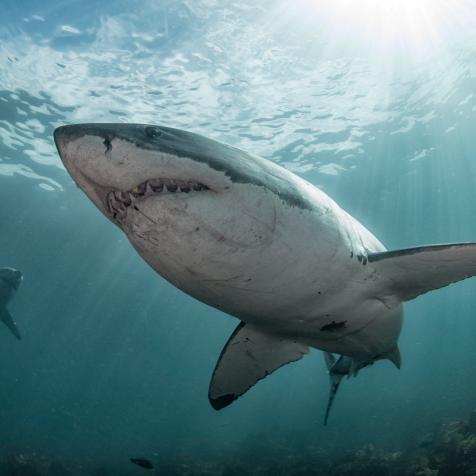
Shark Week’s Luke Tipple tackles the question “How can I work with sharks?” alongside two experts in the field – and their answers are not always the obvious ones. Luke is joined first by Kelly Link, Associate Curator of the Georgia Aquarium who talks about what it’s like to be an aquarist, how it differs from field work, and how to get yourself noticed. The second guest is Dr. Neil Hammerschlag who goes into detail on what it takes to become a prominent scientist, and what other paths you can take if a PhD isn’t for you. And at the end, researcher Sierra stops by to tell us about the world’s smallest shark.

Shark Week: The Podcast - Do Scientists Need to Kill Sharks?
Host Luke Tipple welcomes two guests to discuss how researchers can kill sharks in the name of science – and whether they need to at all. The first is Dr. Neil Hammerschlag, shark researcher and founder of Atlantic Shark Expeditions, and an expert on data-gathering in the field. He’s followed by explorer Fred Buyle, a world-record-breaking freediver whose innovative methods of shark tagging are explored. Plus, our researcher Sierra tells us about how a 50-year study changed our understanding of tiger sharks – and much of the work wasn’t even done by scientists.
Shark Week: The Podcast - Undiscovered Sharks and the State of the Ocean
Luke Tipple invites “The Lost Shark Guy,” Dr. Dave Ebert, who is personally responsible for finding dozens of shark species that were either previously unknown to science or thought to be extinct. He and Luke discuss why shark populations are a direct indicator of how healthy the ocean is, how to find undiscovered sharks, and why diversity in sharks is essential for marine life.
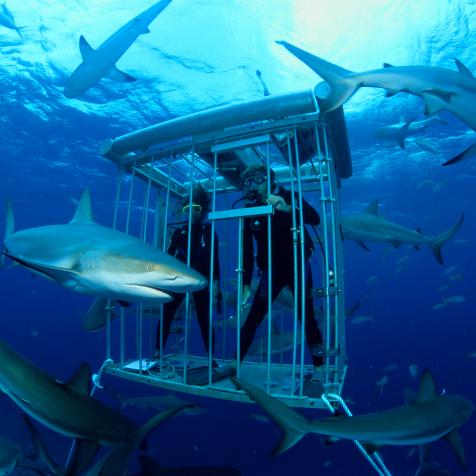
Shark Week: The Podcast - Superstar Kesha Lifts the Gag Order on Saving Sharks
Pop superstar Kesha joins Shark Week’s Luke Tipple on the podcast to discuss her love of sharks, how her music funds her addiction to diving, and how you can find inner peace while under the water. And at the end, our researcher Sierra drops in to tell us that some sharks have teeth in their eyes.
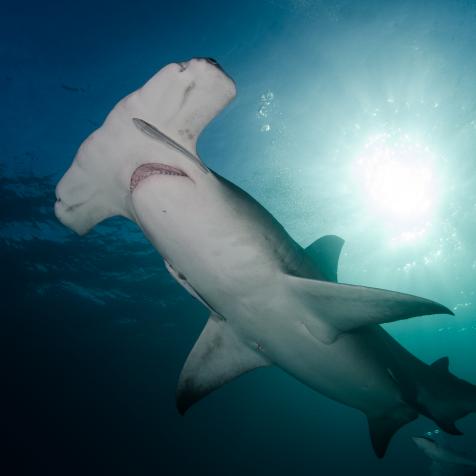

Shark Week: The Podcast - Lights! Camera! TEETH! Making Shark Docs
Shark Week’s Luke Tipple is joined by longtime filmmaker and Emmy-award-winner Andy Casagrande. He’s filmed and appeared in dozens of shark documentaries, and might just be the most prolific shark cinematographer in history. He talks with Luke about his career, the contentious term “shark porn,” and the future of the industry. And at the end, our researcher Sierra talks about the unprecedented ways that sharks are currently endangered.