


Curiosity Daily Podcast: Where Our Emotions Come From and How to Hack Them (w/ Lisa Feldman Barrett) and Tarantula Venom Could Be an Opioid Alternative
Learn about where your emotions come from and how you can hack them, with help from psychology researcher and neuroscientist Lisa Feldman Barrett. Plus: learn why tarantula venom could be an alternative to opioids.
May 14, 2020
Episode Show Notes:
Maybe tarantula venom could be an alternative to opioids by Cameron Duke
- Agwa, A. J., Tran, P., Mueller, A., Tran, H. N. T., Deuis, J. R., Israel, M. R., McMahon, K. L., Craik, D. J., Vetter, I., & Schroeder, C. I. (2020). Manipulation of a spider peptide toxin alters its affinity for lipid bilayers and potency and selectivity for voltage-gated sodium channel subtype 1.7. Journal of Biological Chemistry, 295(15), 5067–5080. https://doi.org/10.1074/jbc.ra119.012281
- Spider venom key to pain relief without side-effects. (2020). EurekAlert! https://www.eurekalert.org/pub_releases/2020-04/uoq-svk041320.php
- Viviane Richter. (2016, February 29). The tarantula’s bite that could stop pain. Cosmosmagazine.com; Cosmos Magazine. https://cosmosmagazine.com/biology/tarantulas-bite-could-stop-pain
- Understanding the Epidemic. (2019). CDC.gov; Centers for Disease Control and Prevention. https://www.cdc.gov/drugoverdose/epidemic/index.html
Additional resources from Lisa Feldman Barrett:
- Watch our full, uncut interview with Lisa Feldman Barrett from the American Association for the Advancement of Science Annual Meeting (#AAASmtg) on YouTube https://youtu.be/MY0ZqmBzd4g
- Pick up “How Emotions Are Made: The Secret Life of the Brain” on Amazon https://amzn.to/3cpMyzl
- Official website https://lisafeldmanbarrett.com/
- You aren’t at the mercy of your emotions (TED Talk) https://www.ted.com/talks/lisa_feldman_barrett_you_aren_t_at_the_mercy_of_your_emotions_your_brain_creates_them
- Follow @LFeldmanBarrett on Twitter https://twitter.com/LFeldmanBarrett
- Other publications by Lisa Feldman Barrett https://amzn.to/2WLC8U7
- Citation for test anxiety study: Jamieson, J. P., Peters, B. J., Greenwood, E. J., & Altose, A. J. (2016). Reappraising Stress Arousal Improves Performance and Reduces Evaluation Anxiety in Classroom Exam Situations. Social Psychological and Personality Science, 7(6), 579–587. https://doi.org/10.1177/1948550616644656
Subscribe to Curiosity Daily to learn something new every day with Cody Gough and Ashley Hamer. You can also listen to our podcast as part of your Alexa Flash Briefing; Amazon smart speakers users, click/tap “enable” here: https://www.amazon.com/Curiosity-com-Curiosity-Daily-from/dp/B07CP17DJY
Next Up

Investigate the Mind of a Shark on 'How to Train a Great White'
See how these apex predators actually think. Will they completely transform our understanding of their intelligence?

A Guide to Defending the Earth
Let’s say one day astronomers announce that our worst nightmare has come true: a large object is headed towards the Earth with a significant chance of impact. What do we do?

Shark Week 2026 Kicks Off July 26!
Take a bite out of our 38th annual Shark Week event, starting July 26, 2026! Here's everything we have coming up, only on Discovery.
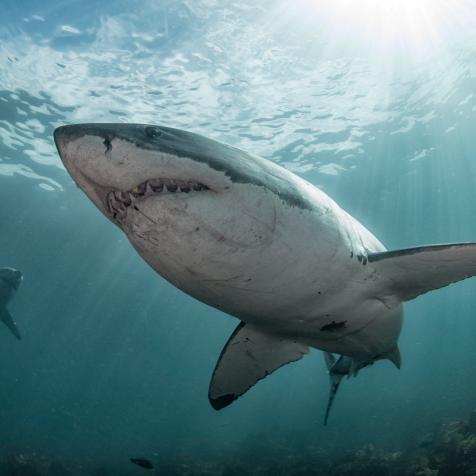
Shark Week: The Podcast - How To Have A Career in Shark Science
Shark Week’s Luke Tipple tackles the question “How can I work with sharks?” alongside two experts in the field – and their answers are not always the obvious ones. Luke is joined first by Kelly Link, Associate Curator of the Georgia Aquarium who talks about what it’s like to be an aquarist, how it differs from field work, and how to get yourself noticed. The second guest is Dr. Neil Hammerschlag who goes into detail on what it takes to become a prominent scientist, and what other paths you can take if a PhD isn’t for you. And at the end, researcher Sierra stops by to tell us about the world’s smallest shark.

An Astronomical Review of “Don’t Look Up”
In our annual New Year’s family tradition of struggling to stay awake until midnight, we decided to watch “Don’t Look Up,” the Adam McKay satire starring Leonardo DiCaprio, Jennifer Lawrence, and other fabulously good-looking people.
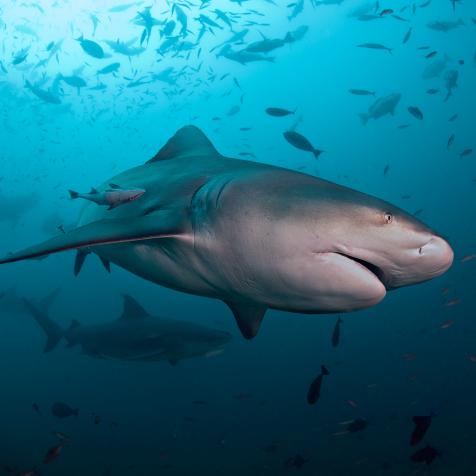
Shark Week: The Podcast - What is the Status of Sharks in our Oceans?
In this season’s final episode, Luke welcomes Emmy-winning filmmaker and conservationist Shawn Heinrichs to discuss the state of sharks in the ocean. They go over how both legal and illegal fishing operations are decimating the ocean’s wildlife, what it’s like to have a hit put out on you for exposing criminal enterprises to the world, and whether or not NOAA’s data on “sustainable” fishing can really be trusted.
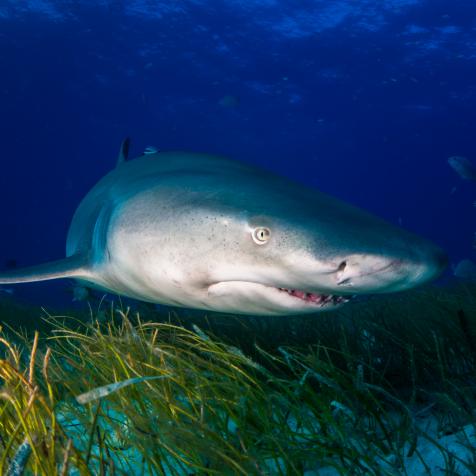
Shark Week: The Podcast - Do You Have the Guts to Be a Shark Handler?
Host Luke Tipple welcomes a pair of divers – Leigh Cobb and Josh Eccles – who have taken their passion for sharks and turned it into a dangerous career. They explore what it takes to swim with sharks for a living, then go into common myths and facts on what to do in the open water – if you ever come face to face with a shark. Plus, our researcher Sierra drops by with a new species of shark discovered in the freezing depths of the ocean.

Shark Week: The Podcast - How Smart Are Sharks?
The discussion turns this week to sharks’ intelligence, and how it varies among species. Host Luke Tipple is joined by Dr. Tristan Guttridge, a behavioral ecologist and veteran of Shark Week whose research has tackled the social smarts, and even personalities, of different kinds of sharks. He sheds light on why we shouldn’t just think of them as dumb fish with rows of razor-sharp teeth. And at the end, our researcher Sierra Kehoe tells us about shark hypnosis.
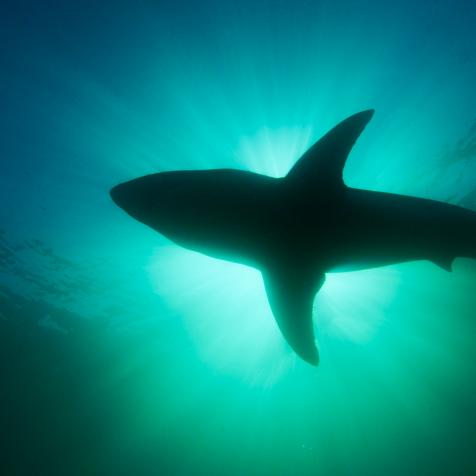
Shark Week: The Podcast - Undiscovered Sharks and the State of the Ocean
Luke Tipple invites “The Lost Shark Guy,” Dr. Dave Ebert, who is personally responsible for finding dozens of shark species that were either previously unknown to science or thought to be extinct. He and Luke discuss why shark populations are a direct indicator of how healthy the ocean is, how to find undiscovered sharks, and why diversity in sharks is essential for marine life.
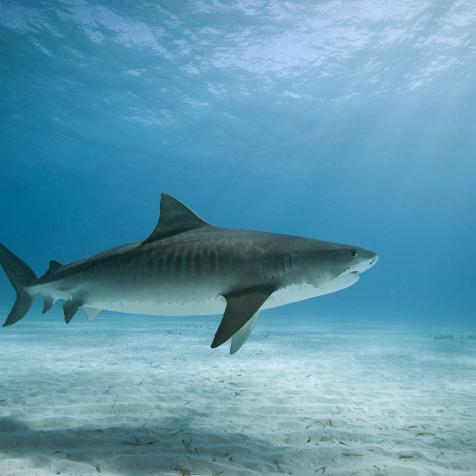

Shark Week: The Podcast - How Did a Shark Encounter Survivor Become an Advocate for Their Protection?
Shark Week’s Luke Tipple welcomes professional photographer Mike Coots, who lost his leg to a tiger shark attack when he was only 18. But after his horrific injury, he came to love sharks, and became a lifelong advocate for their safety. Luke and Mike discuss his career, his love for photographing sharks, and how to positively approach the big life-changing moments that can happen to any of us.