


Curiosity Daily Podcast: You Have Tiny Rocks in Your Ears, How Artists’ Personas Influence Your Music Choices, and Chemotherapy Began as a Chemical Weapon
Learn about why you have tiny rocks in your ears; why the self-congruity effect of music says you may prefer music by artists who have a similar personality to you; and how chemotherapy began as a chemical weapon.
August 04, 2020
Episode Show Notes:
There are tiny rocks in your ears that help you detect motion by Cameron Duke
- Inner Ear “Rock Slides” Lead To Vertigo. (n.d.). NPR.org. https://www.npr.org/2009/04/27/103463398/inner-ear-rock-slides-lead-to-vertigo
- Widmaier, E. P., Vander, A. J., Raff, H., & Strang, K. T. (2019). Vander’s human physiology : the mechanisms of body function. Mcgraw-Hill Education.
- Purves, D., Augustine, G. J., Fitzpatrick, D., Katz, L. C., Anthony-Samuel LaMantia, McNamara, J. O., & S Mark Williams. (2014). The Otolith Organs: The Utricle and Sacculus. Nih.Gov; Sinauer Associates. https://www.ncbi.nlm.nih.gov/books/NBK10792/
- Human ear - Inner ear | Britannica. (2020). In Encyclopædia Britannica. https://www.britannica.com/science/ear/Inner-ear#ref65037
You may prefer music by musicians who have a similar personality to you by Kelsey Donk
- Fans love musicians’ personalities as much as their music. (2020). EurekAlert! https://www.eurekalert.org/pub_releases/2020-07/bu-flm070120.php
- Greenberg, D. M., Matz, S. C., Schwartz, H. A., & Fricke, K. R. (2020). The self-congruity effect of music. Journal of Personality and Social Psychology. Advance online publication. https://doi.org/10.1037/pspp0000293
- Joseph, Barclay, A. C., & Bockorny, K. M. (2014). Self-Congruity: A Determinant of Brand Personality. https://www.semanticscholar.org/paper/Self-Congruity%3A-A-Determinant-of-Brand-Personality-Klipfel-Barclay/02b9cbd55f0fef7fd688c35a801a338bca1a6ee2
Chemotherapy began as a chemical weapon by Cameron Duke
- Evolution of Cancer Treatments: Chemotherapy | American Cancer Society. (2014). Cancer.org. https://www.cancer.org/cancer/cancer-basics/history-of-cancer/cancer-treatment-chemo.html
- Frunzi, J. (February 2007). From Weapon to Wonder Drug. The Hospitalist. https://www.the-hospitalist.org/hospitalist/article/123282/weapon-wonder-drug
- Goldacre, R. J., Loveless, A., & Ross, W. C. J. (1949). Mode of Production of Chromosome Abnormalities by the Nitrogen Mustards The Possible Role of Cross-Linking. Nature, 163(4148), 667–669. https://doi.org/10.1038/163667a0
- Hazell, S. (2014). Mustard gas – from the Great War to frontline chemotherapy. Cancer Research UK - Science Blog. https://scienceblog.cancerresearchuk.org/2014/08/27/mustard-gas-from-the-great-war-to-frontline-chemotherapy/
- Immunotherapy for Cancer. (2019, September 24). National Cancer Institute; Cancer.gov. https://www.cancer.gov/about-cancer/treatment/types/immunotherapy
- Krumbhaar, E. B., & Krumbhaar, H. D. (1919). The Blood and Bone Marrow in Yelloe Cross Gas (Mustard Gas) Poisoning. The Journal of Medical Research, 40(3), 497–508.3. https://www.ncbi.nlm.nih.gov/pmc/articles/PMC2104437/
- Mukherjee, S. (2011). The emperor of all maladies : a biography of cancer. Fourth Estate.
- Smith, J. (2016, January 14). The Grim and Marvelous Story of Chemotherapy. Proto Magazine. http://protomag.com/articles/the-grim-and-marvelous-story-of-chemotherapy
- Smith, S. L. (2017). War! What is it good for? Mustard gas medicine. Canadian Medical Association Journal, 189(8), E321–E322. https://doi.org/10.1503/cmaj.161032
- Wilke, C. (2019, April). From Chemical Weapon to Chemotherapy, 1917–1946. The Scientist Magazine. https://www.the-scientist.com/foundations/from-chemical-weapon-to-chemotherapy--19171946-65655
Subscribe to Curiosity Daily to learn something new every day with Cody Gough and Ashley Hamer. You can also listen to our podcast as part of your Alexa Flash Briefing; Amazon smart speakers users, click/tap “enable” here: https://www.amazon.com/Curiosity-com-Curiosity-Daily-from/dp/B07CP17DJY
Next Up

Investigate the Mind of a Shark on 'How to Train a Great White'
See how these apex predators actually think. Will they completely transform our understanding of their intelligence?
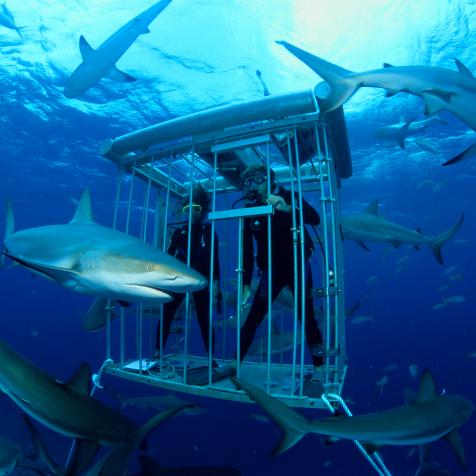
Shark Week: The Podcast - Superstar Kesha Lifts the Gag Order on Saving Sharks
Pop superstar Kesha joins Shark Week’s Luke Tipple on the podcast to discuss her love of sharks, how her music funds her addiction to diving, and how you can find inner peace while under the water. And at the end, our researcher Sierra drops in to tell us that some sharks have teeth in their eyes.

Shark Week: The Podcast - Did Alien Tech Crash-Land into the Ocean?
Host Luke Tipple is joined this week by renowned Harvard professor, Dr. Avi Loeb, who recently led a deep-sea expedition to discover if evidence for advanced alien life crash-landed off the coast of Papua New Guinea in 2014. They discuss the recent Congressional UFO hearings, how the last seventy years of research into extraterrestrial life has been potentially misguided, and the challenges of searching for tiny objects on the bottom of the ocean.

Shark Week: The Podcast - How Smart Are Sharks?
The discussion turns this week to sharks’ intelligence, and how it varies among species. Host Luke Tipple is joined by Dr. Tristan Guttridge, a behavioral ecologist and veteran of Shark Week whose research has tackled the social smarts, and even personalities, of different kinds of sharks. He sheds light on why we shouldn’t just think of them as dumb fish with rows of razor-sharp teeth. And at the end, our researcher Sierra Kehoe tells us about shark hypnosis.
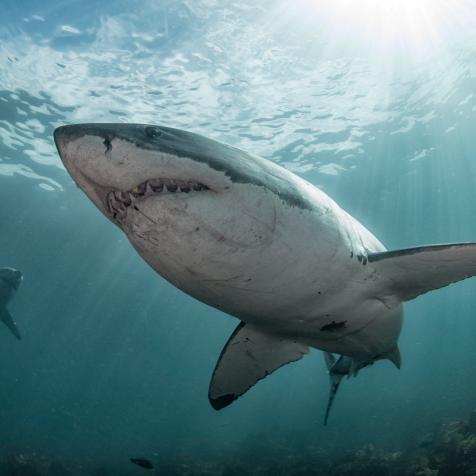
Shark Week: The Podcast - How To Have A Career in Shark Science
Shark Week’s Luke Tipple tackles the question “How can I work with sharks?” alongside two experts in the field – and their answers are not always the obvious ones. Luke is joined first by Kelly Link, Associate Curator of the Georgia Aquarium who talks about what it’s like to be an aquarist, how it differs from field work, and how to get yourself noticed. The second guest is Dr. Neil Hammerschlag who goes into detail on what it takes to become a prominent scientist, and what other paths you can take if a PhD isn’t for you. And at the end, researcher Sierra stops by to tell us about the world’s smallest shark.
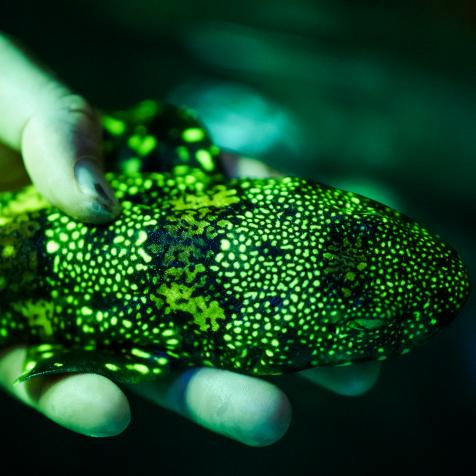
Shark Week: The Podcast - How Many Sharks Are Yet to Be Discovered?
Luke Tipple is joined by Shark Week host and all-around adventurer Forrest Galante. They discuss his upcoming special Alien Sharks: South Africa, Forrest’s remarkable talent for finding creatures once believed to be extinct, and how many shark species may still be unknown. Then, our researcher Sierra stops by to tell us about the world’s most prehistoric shark.
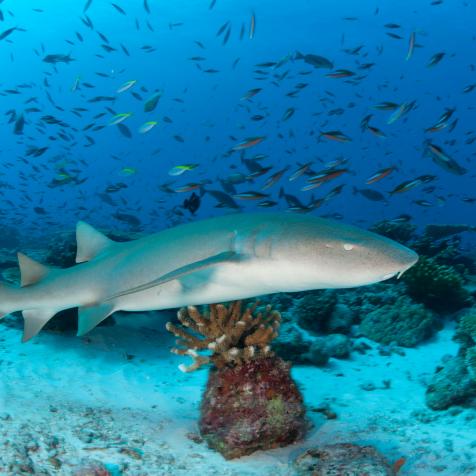
Shark Week: The Podcast - How Shark Fishing Funds Human Trafficking
Luke Tipple is joined by Pulitzer Prize-winning journalist and author of the Outlaw Ocean Ian Urbina, who has dedicated his life to chronicling crime on the high seas. They discuss the state of our world’s oceans, how nearly 20% of your seafood was likely caught illegally, and the surprising link between modern slavery and the killing of sharks.
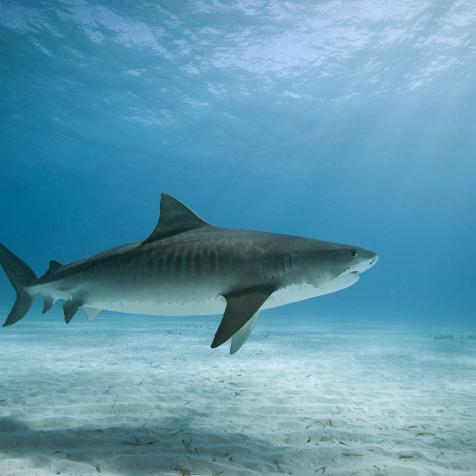
Shark Week: The Podcast - How Did a Shark Encounter Survivor Become an Advocate for Their Protection?
Shark Week’s Luke Tipple welcomes professional photographer Mike Coots, who lost his leg to a tiger shark attack when he was only 18. But after his horrific injury, he came to love sharks, and became a lifelong advocate for their safety. Luke and Mike discuss his career, his love for photographing sharks, and how to positively approach the big life-changing moments that can happen to any of us.
Shark Week: The Podcast - Undiscovered Sharks and the State of the Ocean
Luke Tipple invites “The Lost Shark Guy,” Dr. Dave Ebert, who is personally responsible for finding dozens of shark species that were either previously unknown to science or thought to be extinct. He and Luke discuss why shark populations are a direct indicator of how healthy the ocean is, how to find undiscovered sharks, and why diversity in sharks is essential for marine life.
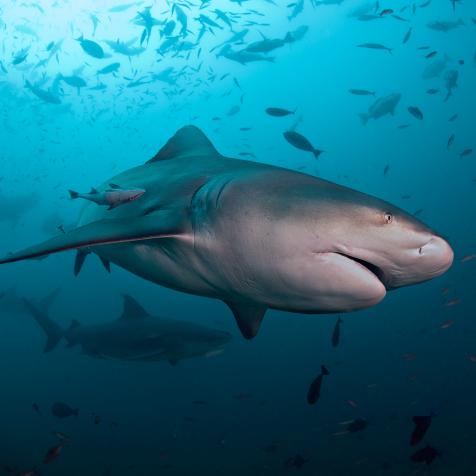

Shark Week: The Podcast - What is the Status of Sharks in our Oceans?
In this season’s final episode, Luke welcomes Emmy-winning filmmaker and conservationist Shawn Heinrichs to discuss the state of sharks in the ocean. They go over how both legal and illegal fishing operations are decimating the ocean’s wildlife, what it’s like to have a hit put out on you for exposing criminal enterprises to the world, and whether or not NOAA’s data on “sustainable” fishing can really be trusted.